Africa overland tour, Nairobi to Johannesburg
Price
£4395 excluding flights
Convert currency:


Duration
94 days
Countries
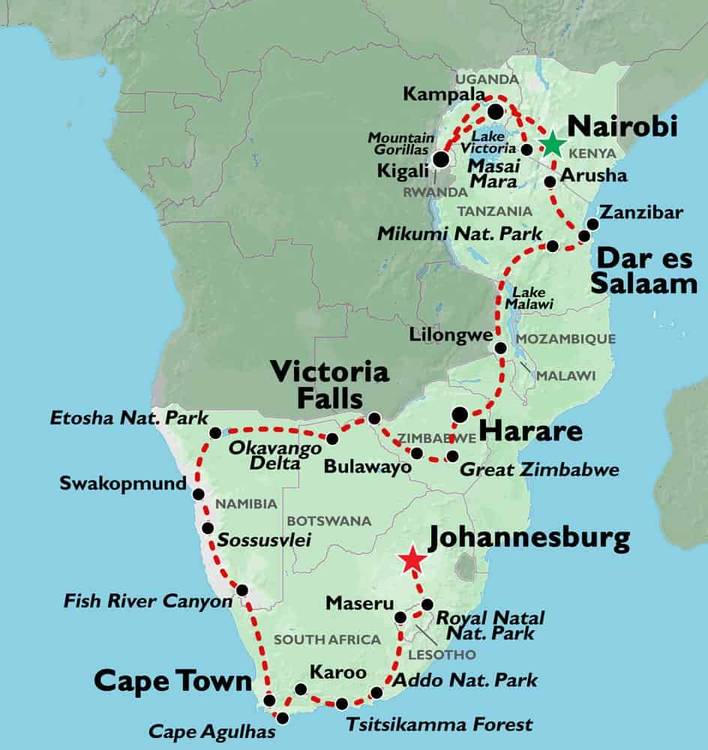
Botswana, Kenya, Lesotho, Malawi, Namibia, Rwanda, South Africa, Tanzania, Uganda, Zimbabwe
Type
Small group
More info
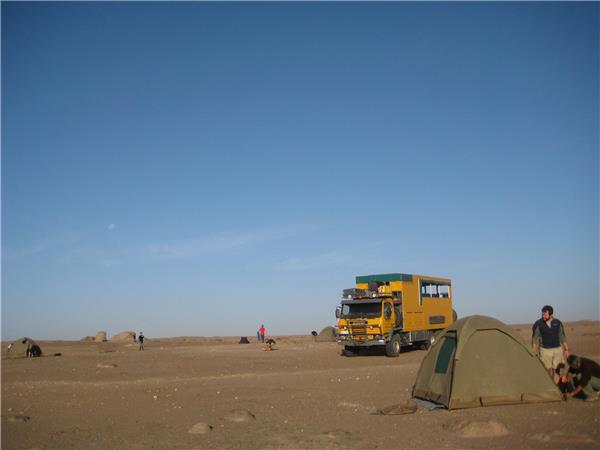
Accommodation is predominantly camping, though there may be opportunities to upgrade this locally where rooms are available.
Please note there is an additional local payment payable at the start of the trip in US Dollars cash: June 2025 - $2460, July 2025 to Nov 2025 - $2560, Jan 2026 to June 2026 - $2580, July 2026 to Sept 2026 - $2680.
Please note there is an additional local payment payable at the start of the trip in US Dollars cash: June 2025 - $2460, July 2025 to Nov 2025 - $2560, Jan 2026 to June 2026 - $2580, July 2026 to Sept 2026 - $2680.
Last minute
Late availability on these dates: 05 Jan

Description of Africa overland tour, Nairobi to Johannesburg
Map
Price information
£4395 excluding flights
Convert currency:
Accommodation is predominantly camping, though there may be opportunities to upgrade this locally where rooms are available.
Please note there is an additional local payment payable at the start of the trip in US Dollars cash: June 2025 - $2460, July 2025 to Nov 2025 - $2560, Jan 2026 to June 2026 - $2580, July 2026 to Sept 2026 - $2680.
Please note there is an additional local payment payable at the start of the trip in US Dollars cash: June 2025 - $2460, July 2025 to Nov 2025 - $2560, Jan 2026 to June 2026 - $2580, July 2026 to Sept 2026 - $2680.
Check dates, prices & availability

Travel guides

Jump aboard our Africa overland travel guide and pretty soon you’ll learn just what overlanding entails and whether it's for you.

Get ready to turn the dial all the way up to 11 on your holiday with our travel guide.
Responsible Travel
As the pioneers of responsible tourism, we've screened this (and every) holiday so that you can travel knowing we've worked to maximise the benefits of your holiday to local people and places, and minimise any negative impacts.
Planet
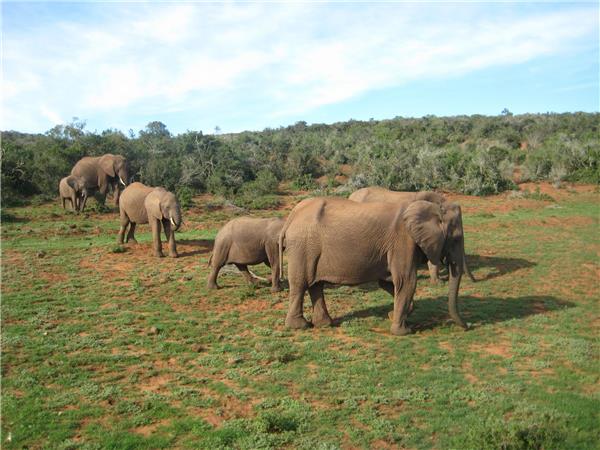
Wildlife: During this trip there are several opportunities to visit projects that support both wildlife conservation and local communities. Perhaps the most iconic animal in East Africa when it comes to conservation is the Mountain Gorilla. Our travellers have the opportunity to trek to see these magnificent creatures in their natural habitat in Uganda or Rwanda and a large part of the trekking permits cost goes towards conserving and protecting Mountain Gorillas through anti-poaching programs and the maintenance of their rainforest environment.Visits to the gorillas are very well controlled by the Parks Authority in order to minimise the potential negative impact on the gorillas. Group sizes are limited to eight; visits last for one hour (and there is only one visit allowed per day) and a distance of seven metres has to be maintained. Every effort is made to ensure that the gorillas are not exposed to human bacteria. Physical contact is not allowed and visitors are not allowed to trek if they are suffering from a cold. A tourist infrastructure has also built up around the gorilla trekking points-providing accommodation, food, transport and souvenirs, creating a lot more local employment.
Other projects our clients can visit include the David Sheldrick Wildlife Trust’s impressive education and conservation project in Nairobi, the Ngamba Island Chimpanzee Sanctuary in Uganda which cares for rescued or orphaned chimpanzees; the conservation centre at Elsamere, home of the Elsa Conservation Trust in Kenya and the Otjitongwe Cheetah Preservation Park in Namibia which seeks to preserve the local cheetah population.
Water: We have a great appreciation of how vital a resource water is, especially in some of the areas we travel through. Due to the camping nature of this trip we carry a lot of our water for cooking, drinking and washing with us. Filling up heavy jerry cans, we find, helps focus the mind on the importance of water conservation!
We also encourage our travellers to bring reusable water bottles from home with them for the trip. These can be filled from the truck's water supplies which helps to minimise the usage of plastic water bottles.
As responsible travelers, we recognize the need to reduce our plastic consumption and provide sustainable alternatives to our customers. That's why we've partnered with Water to Go to offer a fantastic solution.
Water to Go is a company on a mission to tackle the issue of plastic pollution by providing travelers with reusable filter bottles. These bottles are not your average water containers. They are designed with advanced filtration technology that allows you to safely refill your bottle from natural water sources, taps, and even in places where tap water is not typically considered safe to drink.
People
Friends & neighbours: During our overland journey we keep things as local as possible, staying at locally owned campsites, shopping in markets and small shops and using local operators to run our excursions. This directly supports these small businesses and their wider communities.For example, our local Rwandan operator organises our gorilla treks and activities which involve the local community such as banana beer making. Our safaris into the Serengeti and Ngorongoro Crater are run by a company based in Arusha, Tanzania and they employ local drivers and guides.
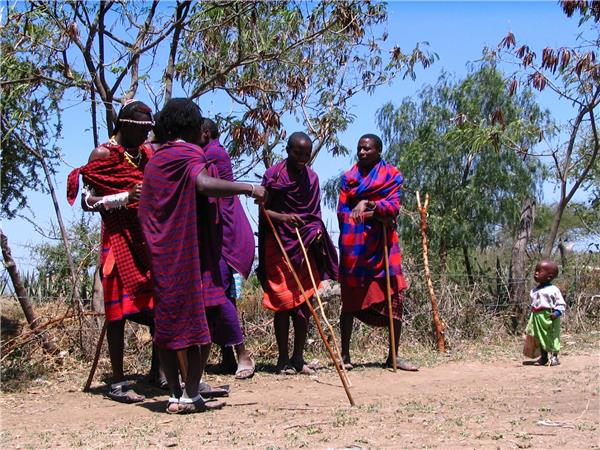
We also try to stay at campsites that also have a commitment to the communities they inhabit and we do what we can to further support their initiatives. The Meserani Snake Park in Tanzania started as a campsite but has become an integral and important part of the local Masai community.
The campsite organises guided walks to local Masai villages - the Masai villagers themselves are the guides and all the profits go to the villages. The campsite has also established a medical centre for the local Masai community and this is partly funded by the profits from an on-site shop selling local Masai crafts. We have donated basic medical supplies to the medical centre and have also made financial contributions to the project.
At Lake Bunyoni, in Uganda our crew and travellers have helped us support a local pygmy village. When possible we have lunch with the villagers. They cook us a traditional meal which we pay for and this helps bring an income into the village. Some of the villagers also make handicrafts which our crew and travellers buy further supporting local skills and traditions and providing much needed income. We have also helped the village purchase some land and materials to build their own school.
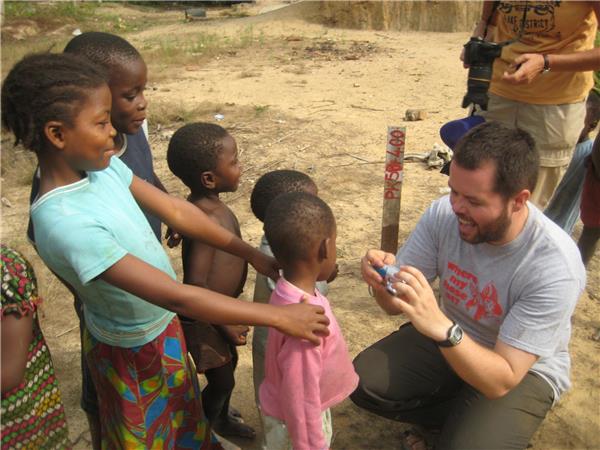
Volunteering & charity: In Zimbabwe, we have been supporting the Hupenyu Hutsva Children’s Home in Harare for a number of years.
We are very proud of our involvement with this Home as we can see the small differences we have made and we know that it has been important to the Home to just know that someone outside even cares about what is happening there. We have donated educational materials, bedding, clothing, sports equipment and computers to the Home.
In 2008 we also funded the installation of a borehole at the Home-enabling them to be far more self-sufficient in food production and enabling the children to learn valuable horticultural skills after our generous travellers donated seeds and gardening tools. Since 2007, we have run an annual 'Kids Week' event, using our trucks and crew to take all the children and staff out on a series of day trips, finishing the week with a big party. Many of the children rarely leave the compound they live on so it is always a big adventure! We're never sure who it enjoys it most though, our crew or the children!
Popular similar holidays

Namibia and Botswana camping safari
From €2990 21 days excluding flights
Camping safari to Namib desert, Caprivi, Etosha & Okavango

Guinea, Liberia and Sierra Leone tour
From £5199 - £5949 16 days excluding flights
Breathtaking mountains, idyllic islands and wild chimpanzees

Cape Town to Victoria Falls small group lodge tour
From €4180 21 days excluding flights
Classic route lodge safari to Namibia, Botswana & Zimbabwe