Azores whale and dolphin watching holiday
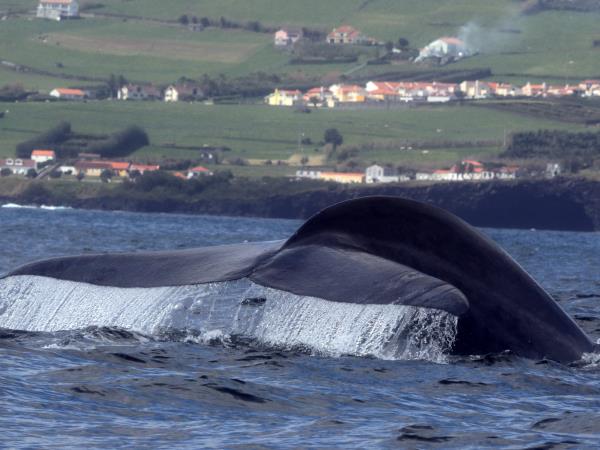
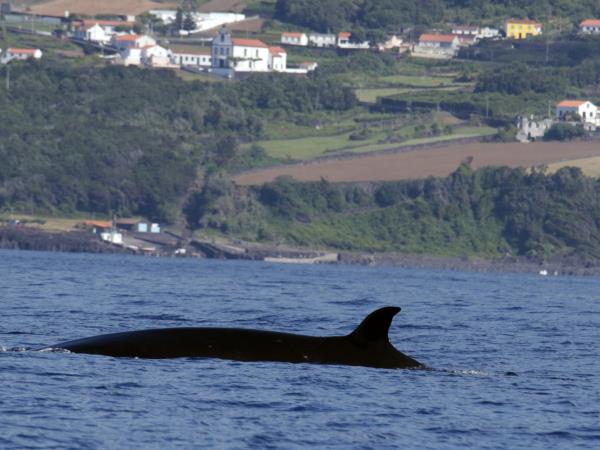
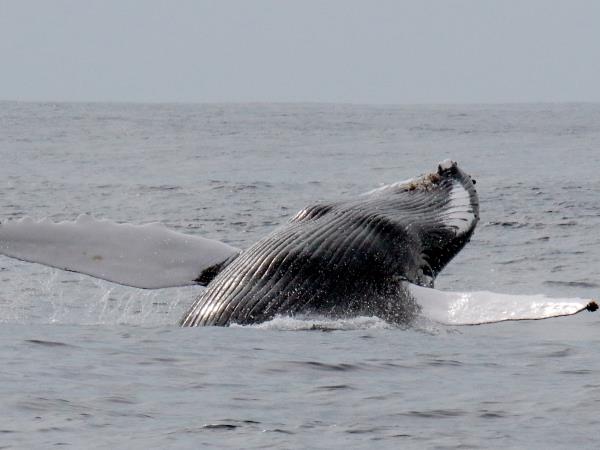
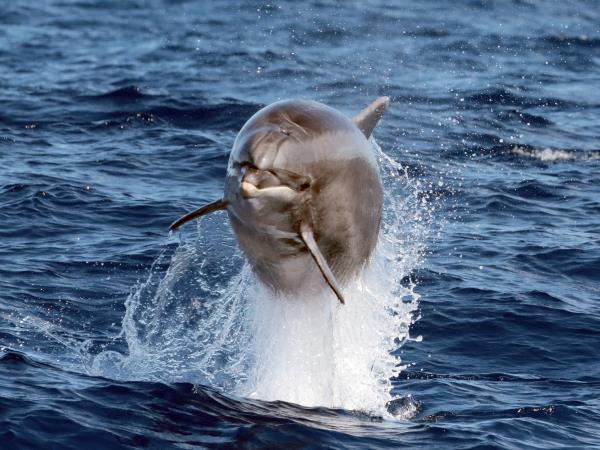
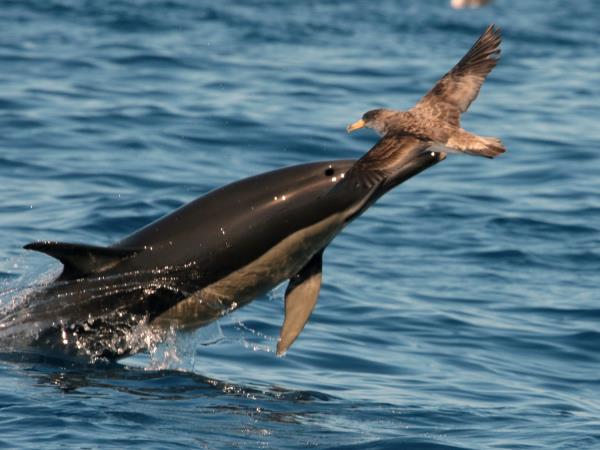
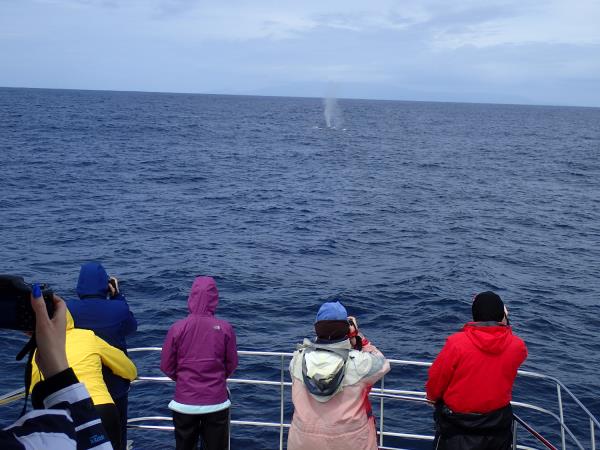
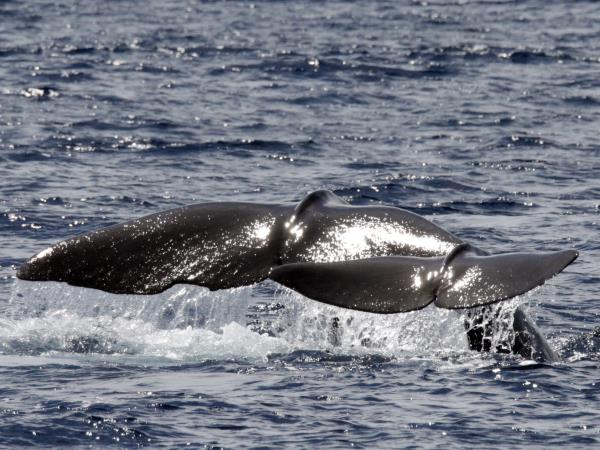
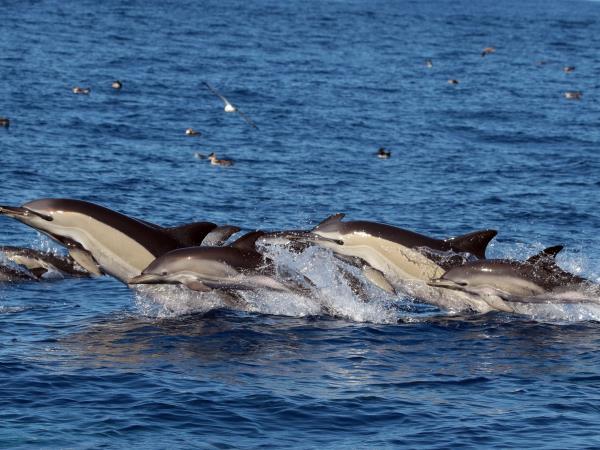
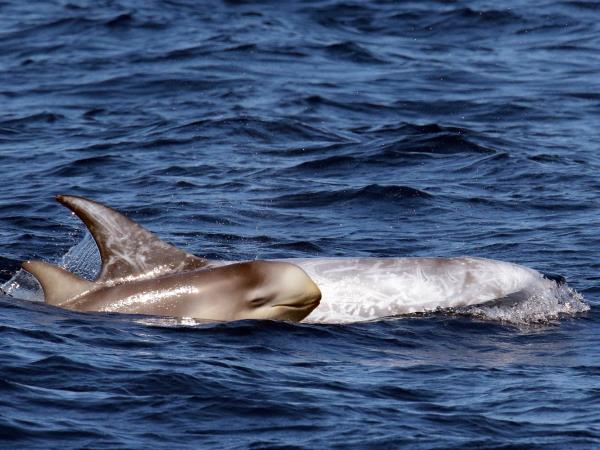
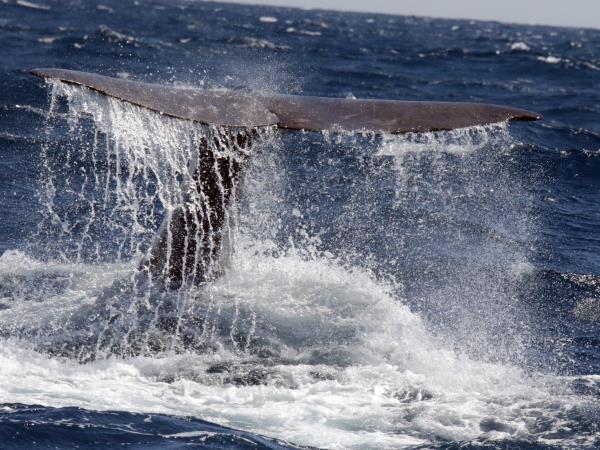
In one of the best places in the world to see cetaceans, this ten-day whale and dolphin watching holiday goes one step further with full days at sea and a chance to contribute to an ongoing research project.
Full days at sea on a 12m stable catamaran Guided by a marine biologist and leading cetacean expert On average six to eight species spotted each holiday Contribute to an ongoing cetacean research project Horta Free time to explore Faial Island
Price
€2445To€2675 excluding flights
Convert currency:


More info
Price includes transfers, 4* hotel, twin room (single w/supplement), B&B basis, 7 evening meals and 6 full days of whale/dolphin watching (weather permitting).
You only need to buy souvenirs, drinks, 2 lunches/dinners & activities on your free days
You only need to buy souvenirs, drinks, 2 lunches/dinners & activities on your free days

Description of Azores whale and dolphin watching holiday
Price information
€2445To€2675 excluding flights
Convert currency:
Price includes transfers, 4* hotel, twin room (single w/supplement), B&B basis, 7 evening meals and 6 full days of whale/dolphin watching (weather permitting).
You only need to buy souvenirs, drinks, 2 lunches/dinners & activities on your free days
You only need to buy souvenirs, drinks, 2 lunches/dinners & activities on your free days
Check dates, prices & availability

Travel guides

With whales in every corner of the ocean, and so many species, how do you begin to plan a trip?

Our guide reveals the best ways to encounter these charismatic mammals in the wild.
Reviews
3 Reviews of Azores whale and dolphin watching holiday
4.5 out of 5 stars
Reviewed on 20 Jul 2019 by Chris Goldthorp
Absolutely amazing!!!! Whales and dolphins galore !!! Also liked the fact that every time at sea was part of research and monitoring of the cetaceans. Read full reviewReviewed on 15 Jun 2018 by Margaret Woskett
It met my expectations and was really enjoyable. I saw lots of whales. Read full reviewResponsible Travel
As the pioneers of responsible tourism, we've screened this (and every) holiday so that you can travel knowing we've worked to maximise the benefits of your holiday to local people and places, and minimise any negative impacts.
Planet
CARBON REDUCTIONUnfortunately with the location of the Azores, flying to the islands is the only option. We make sure that clients know that there are ferries available for inter-island travel, especially in the central group.
The Azores is rich in renewable energy sources. Several islands have geothermal and most now have wind turbines, providing up to 25% of the energy. The hotel does not have a choice in what power they are using, but they have taken measures to reduce consumption. Key cards turn off the electric in the room when nobody is there, bedding is washed once a week and towels on request.
We use local transportation for transfers from the airport with the group sharing a taxi or two. Local buses are not very convenient, with a limited timetable, but there is a circuit in town, which can be used, if walking isn't an option. The boat has new diesel engines, so is more efficient than petrol engines used by RIBs. Unfortunately, electric motors are not yet up to the task of whale watching for a full day.
Since waste disposal on the islands is limited, all of our clients are urged to leave any extra packaging at home. We also ask that they take used batteries back home when they leave. We no longer have a paper brochure or pre-departure booklet. Recycling is done whenever possible, although facilities are limited on the islands.
Electric cars (limited), scooters or electric bikes are available to hire for shore days. Most of the time clients are walking in town to the boat or restaurant, since Horta is quite compact and nowhere is more than 10 minutes away, without big hills.
Vegetarian meals are easily available with locally sourced products. Vegan food is more complicated, with most options being shipped to the islands.
Most of the food that we consume during the tour has been grown or manufactured on the islands, with the exception of some fruit, that is shipped from the mainland. The Azores fishery is listed as one of the sustainable fisheries in Europe, using pole & line to catch most of the species and it doesn't have to travel far to reach your dinner plate. The meat is also sourced locally and in the countryside, you can see the cows in the fields.
ENVIRONMENT and WILDLIFE
Clients are reminded that water is a precious resource and they should turn off the tap, when brushing their teeth, or in the shower while lathering up in order to use less. We encourage guests to use a water bottle filled from a tap or the filtered water available on the dock, rather than drinking bottled water. Onboard drinking water is sourced from a local spring. Local restaurants have turned to serving filtered water or water in glass bottles, rather than plastic.
There are no mammals that are native to the Azores, apart from day flying bats, so there are no re-wilding projects. There are a few areas where native plant species are being planted to recover lost habitats.
We work closely with the Ocean Azores Foundation and the World Cetacean Alliance, which both promote responsible whale watching. While no monetary donations are given, a lot of time and advice has been provided for various projects of these two NGOs.
Our comprehensive pre-departure booklet has some useful tips on how to be an environmentally friendly traveller.
We do not swim with the animals and tell the clients why this particular activity can be very disruptive to the animals. We also make sure that the guests are aware of the local whale watching regulations that are in place to reduce the impact we have of watching the animals. When animals appear disturbed, we point out that behaviour to the clients and explain that we will no longer be following that particular group or individual.
Your guide has more than 30 years experience of Azorean whales & dolphins. Although not originally from the islands, she has spent more time in the Azores than her home country and now has Portuguese citizenship. Over the years, she has acquired a lot of knowledge on ways to approach the various cetaceans that we observe that cause a minimum of disturbance. Since our trips to sea are for the whole day, we do not have to race other boats to get to an animal first; we can take our time. Identification photographs are taken of several species. These photos enable us to track their long-distance movements. Success with sperm whales, showing movements of the females between the Azores, Madeira and Canary Islands and the males from the Azores to Norway, Ireland, Bahamas & Gulf of Mexico. Humpback Whales have been matched between the Azores, Norway, Scotland, Ireland, Canada, and Cape Verde Islands. Several blue whales have been identified in multiple years, indicating a preferential migration route. Students have used bottlenose dolphin photographs for several theses, showing that these animals are resident in the Azores.
We were involved in the creation of the first guidelines for whale watching in the Azores and continue to provide input on issues such as swimming with dolphins to the local authorities.
We participate in local clean-ups of beaches and riverbeds. We share information on the negative effect that plastic rubbish in the sea has on marine life.
The most invasive species are two types of algae and unfortunately, mitigation efforts do not appear to be having much effect. These species have been able to colonize the Azores because the sea temperature is a bit warmer. On land there is a beetle that is destructive to the trees, the government has scent pots that they are attracted to and can then be destroyed. In certain areas on the islands, invasive plants, such as Himalayan ginger and morning glory, are removed to give the endemic plants a chance.
People
LOCAL ECONOMYThe main hotel that we use is locally owned, rather than a chain. If you choose not to use the accommodation included in the tour, we recommend locally owned B&Bs or small self-catering options. The restaurants that we use are all locally owned and employ local staff.
During your stay here, you have a couple of days to explore the islands on your own. We recommend various options, such as island tours, hiking trails and museums you should visit. These are operated by local people.
Options for your shore day meals are discussed the day before, so you can choose to try somewhere new, or go back to one of the local restaurants that we use regularly. Guests are also told where they can buy local crafts, putting money directly into the local economy.
Guests are encouraged to visit local museums which detail the history of the Azores, the culture of whaling and the botanic gardens which highlights the endemic plants of the islands. We make sure clients are aware that scrimshaw (carvings from the teeth and bone of sperm whales) for sale in the shops is not allowed to be transported out of Portugal because it is covered under CITES, the trade in endangered species. We do not want to create a market for these carvings. We point out where they can buy these types of carvings made out of cow bone, wood or vegetable ivory.
EMPLOYMENT, INCLUSIVITY AND DIVERSITY
Over 90% of the company are locals. We employ a local skipper also employ a few local lookouts to spot the animals for us during the tours. Lisa Steiner is employed as the biologist during the tours, and although not locally born, she has spent most of her adult life working with the marine mammals of the Azores and promoting responsible watching of them. She now has Portuguese Citizenship.
The skippers and lookouts are paid above minimum wage and the guide is paid the local minimum wage.
There are no hiring restrictions based on race, gender, sexual orientation or nationality. The only requirement is that at least some English or Portuguese is spoken in order to facilitate communication.
The Azores is a very tolerant place and there has never been any issues for LGBTQ+ visitors that I am aware of.
People with limited mobility or cognitive problems can sometimes be catered for, but they need to contact us for specific details. Many of our clients over the years are a bit hard of hearing, but when made aware of, staff can make sure information has been heard. People with restrictive vision could come, but might not enjoy the tour as much, since we are restricted in how close we can get to the animals. A good sense of balance is the main requirement.
While not specifically a Trip for a Trip scheme, the company does take out disabled and disadvantaged young people for half day trips during the season.
Popular similar holidays

Whale watching in the Azores
From £835 - £1135 8 days excluding flights
Classic whale watching trip in the Azores archipelago

Blue whale watching in the Azores, Pico Island
From £1530 8 days excluding flights
Best time to see Blue Whales on Pico, Azores

Blue Whale Discovery Holiday, Azores
From £995 - £1195 8 days excluding flights
Come see Blue Whales in the Azores