Botswana safari and wild camping


Description of Botswana safari and wild camping
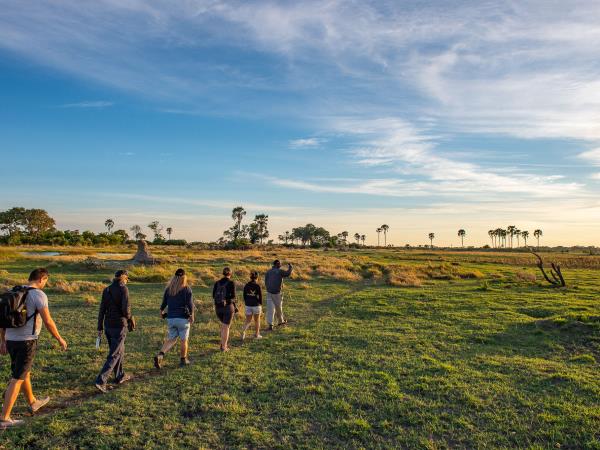
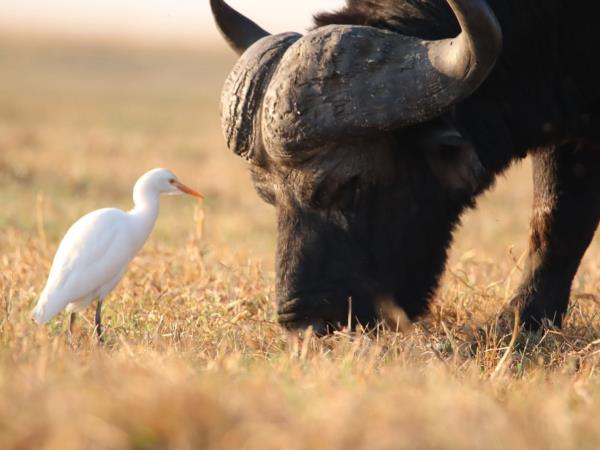
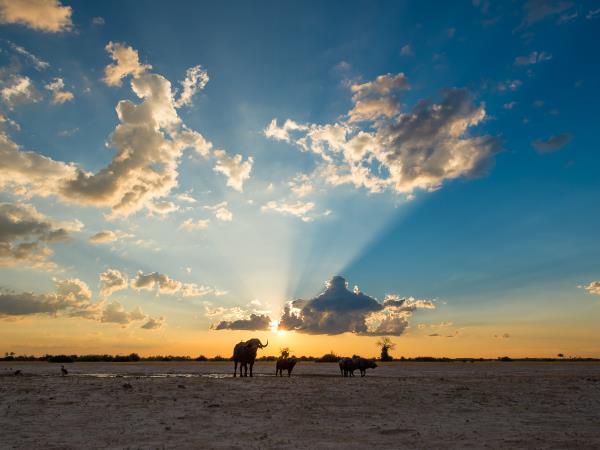
Botswana is considered Southern Africa’s premier game viewing destination. The remote wilderness, limited access for visitors and abundant game make for an exceptional wildlife safari.
Highlights
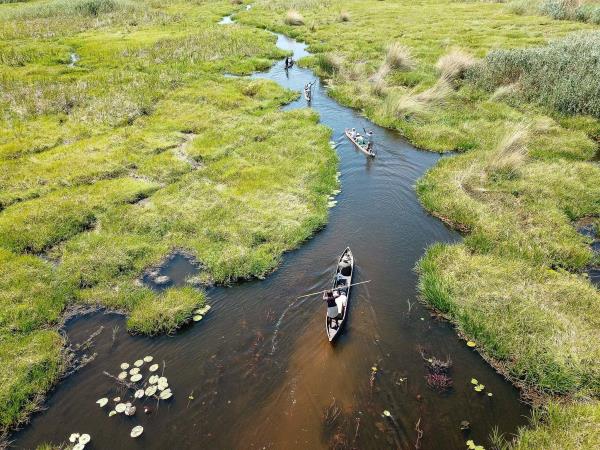
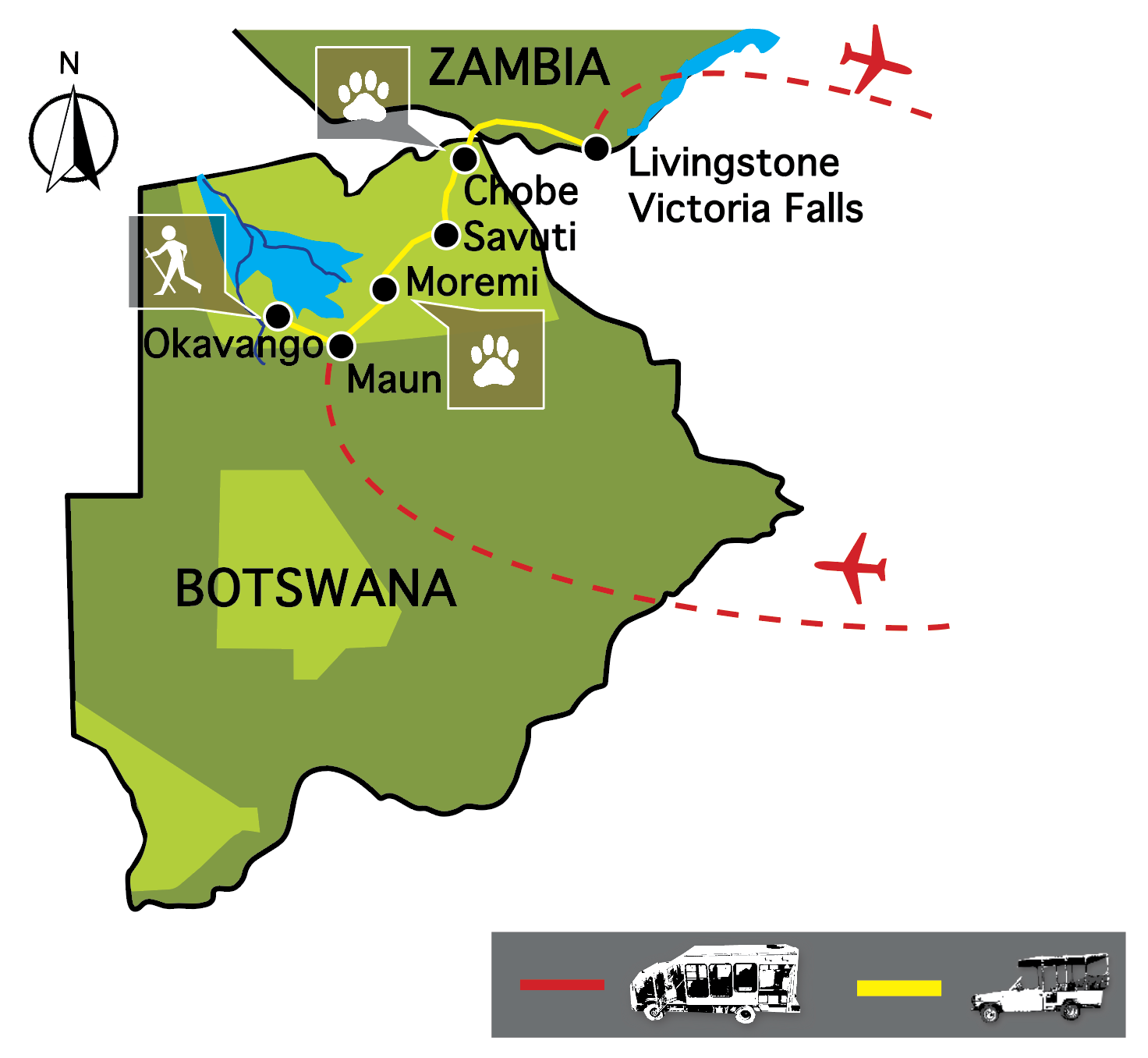
* Okavango Delta–mokoro excursion
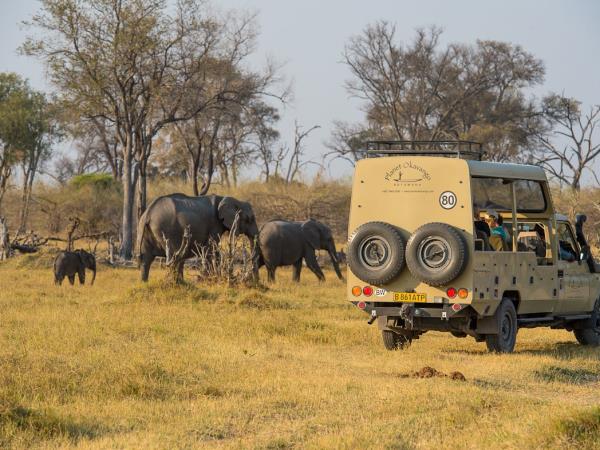
* Moremi Game Reserve–game drives* Savuti–game drives
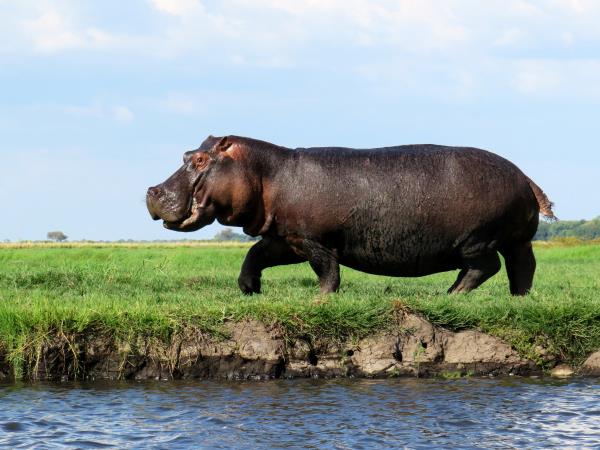
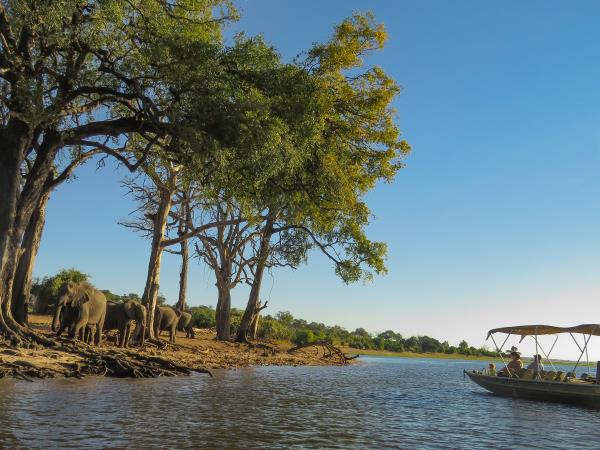
* Chobe National Park–game drive and river cruise
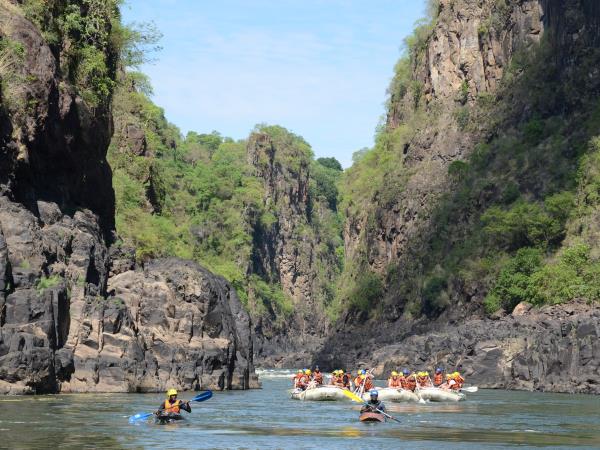
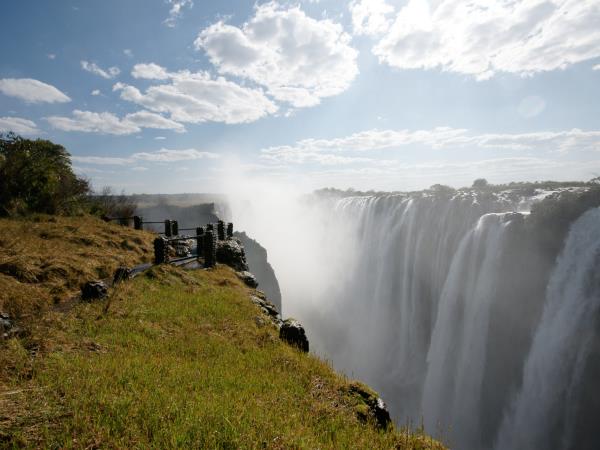
* Victoria Falls–adventure activities
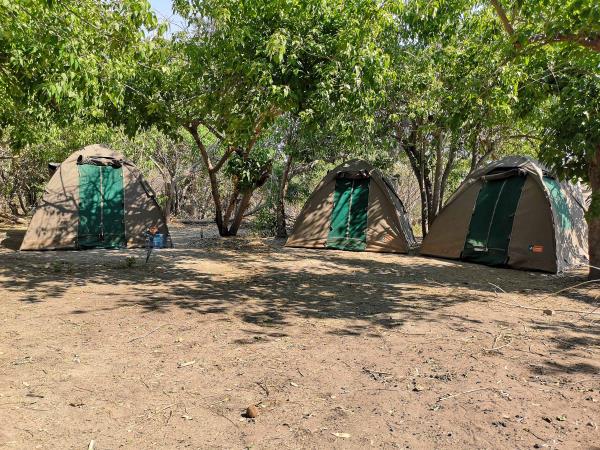
Overnight – 3 nights on safari we stay at designated campsites in national parks and towns. Formal campsites have hot and cold showers, laundry facilities & telephones.7 nights we “camp wild” without fences in the wilderness areas. On these nights the crew will erect a bucket shower (with hot water off the fire) and a pit latrine (with seat!). 2 nights at a lodge in Livingstone with en-suite rooms and air-conditioning. Meals - 12 breakfasts, 9 lunches and 7 dinners will be provided by the crew, prepared at the vehicle and eaten around the campfire except for the last 2 breakfasts at the lodge in Livingstone. Transport for the entirety of this safari you travel in a custom-built 4WD Land Cruiser with 12 forward facing seats (of which 8 are “window” seats). Roll up canvas sides allow you to feel part of the bush. Limited participation - An essential part of your safari is some participation. From putting up your tent to packing the truck in the morning–it’s all part of your adventure and when everyone puts in a little effort the trip will run smoothly. Your tour leaders will do all the meal preparation, but we do ask the clients to help (on rotation) with the washing up. If there are 9 or more clients on the tour, then a supply vehicle and camp assistant travel with the group through the national parks (days 5-10). The camp assistant will help with meal preparation and washing up and make your life a little easier!
Map
Price information
Check dates, prices & availability

Travel guides


Holiday information
Reviews
11 Reviews of Botswana safari and wild camping
Reviewed on 30 Nov 2025 by Massimiliano Marazzi
Really good if you are ready to adapt to campsite way. Team perfect, organization perfect, food good. The host company and his team deserve 5 stars... Read full reviewReviewed on 30 Nov 2025 by Susan Weir
One of the best things I have ever done. Everything was AMAZING! Seeing the wild animals up close. The camping, the fantastic food, and especially our wonderful guide Brian. Read full reviewReviewed on 22 Jun 2025 by Eleanor Smith
Fabulous - although more of an adventure than a relaxed holiday. The knowledge of the guide on plants, birds, animals and the countries and people. The guide helped us feel safe, even when lions were close to our camp and we learnt so much on this trip. Read full reviewReviewed on 22 Jun 2025 by Hannah Aguado Tween
Wonderful! One of the best trips we have been on! The whole holiday was amazing, seeing a large variety of animals and birds with expert guides as well as enjoying the amazing landscapes and sunsets. Read full reviewReviewed on 20 Oct 2025 by Helen Weiss
Excellent trip to visit northern Botswana, stay in campsites that have only your group, and see amazing amounts of wildlife. Read full reviewReviewed on 10 Nov 2024 by Maria Lutring Moser
Absolutely worth the price, it was an exceptional opportunity! Read full reviewReviewed on 15 Dec 2024 by Jeanne Perreault
I loved this trip. The glorious landscapes of Namib deserts, Botswana Delta, happy accident of a compatible group of international travellers, excellent caring, knowledgeable, guides. The itinerary was brilliantly planned, though sometimes rushed. Read full reviewReviewed on 11 Oct 2019 by Toni Busby
Amazing!!!! So well-organised and the guides were so professional. Loved the guides and the healthy food. Read full reviewReviewed on 15 Aug 2019 by Liz Milway
There were SO many highlights. Possibly the most memorable part was our 2 night stay in the Okavango Delta. A short but amazing helicopter flight over the delta (optional, at extra cost) gave us the perfect overview before our mekoro (poled canoe) journey to the island, where the so-called basic facilities proved quite reasonable. Read full reviewReviewed on 27 Aug 2019 by Raphael Renaudeau
The most memorable part of the holiday was being in direct contact with nature and wildlife, amazing skies, great sightings, relaxed atmosphere, very knowledgeable guides, excellent food prepared by our guide Read full reviewResponsible Travel
Planet
Message from co-Founder of this Tour Operator. My name is Bruce and I am a founder of this tour operation. I believe that the old conservation tactic of the setting aside areas of "exclusion" for conservation are outdated.The reality is that in order for effective, sustainable conservation to take place, there needs to be an interest from the society of that country, conscious effort from government and local "buy in" from the local communities. Sadly the world is in a place where economic benefit is the overriding driving force of action and as such conservation is directly linked to economic benefit. Sustainable tourism is therefore absolutely essential for conservation to be effective. Not only for local communities to see value in conservation, but for countries as a whole to place value in protecting their natural heritage.
I believe there is a deep and instinctual link between our humanity and our natural environment. Inherently we all want to know that the wild places are still out there. And Eco-tourism gives us that opportunity, as we so often hear, to "rebalance" or "rejuvenate".
The various promises and commitments detailed below are only a representation of what it is that we do. I sincerely hope that our tours offer our clients an opportunity to experience the wonders of the African continent, and in some small way through focusing itineraries around wildlife and national parks, we contribute to environmental conservation both economically and spiritually.
If you join one of our trips, and have practical feasible suggestions about our responsible travel practices, please contact us. We strive to improve our operation and if we can do more for conservation in Africa, then we're all ears!
Low impact tourism & supporting local communities:
• Small group travel: We specialise in small group travel with a maximum group size of 12 clients & minimum of 4. Small groups ensures a small impact on the destinations we visit when compared to larger groups. Smaller groups create an intimate safari experience, and mean that when we interact with local cultures and stay in environmentally sensitive areas, we do not leave a large footprint.
• Fuel consumption: By travelling in a small group your carbon foot print is approximately ½ of self drive safari. The average pick-up car hire runs on approximately 12ltr/100km with generally 2 people per vehicle and this equates to approximately 6ltr/100km pp. Our average safari truck runs on 25ltr/100km with an average of 9.5 clients per tour and this equates to 2.6Ltr/100km pp. So, by joining a small group tour, your fuel consumption is less than half of doing a self-drive 4WD or pick up trip.
• Cooking: We cook using gas as far as possible and, whenever feasible, avoiding cooking using fire or coal which depletes limited wood resources.
• Wooden carving curios: We do take clients to local curio markets to support the local communities. If they want to buy a carving, we encourage clients purchase only small wooden carvings instead of large pieces. This is in an effort to again conserve the forests around the carving markets.
• Waste: We ensure that we take all of our rubbish out of wilderness areas and use proper waste disposal facilities on all tours (and in the workshop, including oil traps, oil recycling, cleaning products etc).
• Entrance fees: All entrance fees for the national parks in each country are used by the local authorities to maintain the condition and infrastructure of the national parks, and run regular anti-poaching patrols. These are often supplemented by government grants. The national parks support a large number of local community members often providing housing and schooling for the staff families. For us as a tour operator, supporting the various national park boards is an essential element to each tour.
• Accommodation: On all tours wherever possible we use locally owned accommodation establishments which are involved in local responsible tourism initiatives. This provides direct benefits to local communities through employment. We avoid large hotel chains and more commercial properties but opt for simple self-catering lodge, B&B’s and tented camps for accommodation in rural areas. By doing this we create an intimate environment for group away from large scale tourism and the communities around the accommodation benefit directly through employment and this creates pride and further interest in sustainable tourism as the communities have tangible benefits from tourism. Our tours focus on out of the way destinations, and as such, our “spend” is distributed into rural areas.
• Drinking Water: Each client, drinking 5 litres per day from 1 litre plastic bottles produces 100 waste plastic bottles on a 3 week safari. On this calculation, we would pollute the environment (and waste energy resources in plastic production) with over 250,000 plastic bottles per year! So as solution, each of our vehicles has a tank of clean drinking water that is filled up along the journey. This is safe tap water. We do not provide bottle water we encourage clients to drink the local clean drinkable tap water wherever possible in order to minimize the amount of plastic bottle waste produced by the purchase of bottled drinking water.
• Water conservation: We are acutely aware that in many areas that we visit water is a scarce resource. Clients are encouraged to be conscious of water usage and not to take long showers or waste water.
• Wildlife: On all game drives, our trained and qualified guides ensure that our groups interact with wildlife in the appropriate way. Slow movements, no loud noises and to respect the animals “personal” boundaries. Our philosophy is that we are visitors in the amazing places that we visit, and we do not want our presence to impact the wildlife and environment in any negative way. We also enforce a policy of not feeding any wildlife (animals habituated to human feeding will turn aggressive in the future which often results in authorities being forced to kill that animal) and to appreciate the natural state of the areas that we visit and to leave the area in exactly the same condition that it was when we arrived.
• Local guides & communities: On each tour you will travel with two guides for the entire trip. In addition, we also employ local guides for certain activities on tour. These local initiatives help to maintain local cultures and also sustain the ideals of wildlife conservation. Tourism, goodwill and conservation all work together and we aim to maintain the delicate balance at all times! The employment of local guide adds value to our clients visit because they can gain specific local knowledge and expertise from the people who actually live permanently in the area they are visiting. These interactions also give our clients the chance to meet local people and see how tourism is benefiting Africa, piece by piece.
We use local guides at:
Botswana: Okavango Delta, Chobe NP, Ghanzi San Bushman excursion, national parks
South Africa: Mkuzi village walk, Qunu Mandela historical site, Kozi Bay
Swailand: Hlane walking
Lesotho: Malealea Lodge pony trekking guide
Malawi: Boat excursion on Lake Malawi
Mozambique: Dhow excursions
Namibia: Brandberg walk and drives (part of the Tsiseb Community Conservancy), Spizkoppe walk, Gariep River canoeing, Sossusvlei 4WD drivers,
Zambia: Lower Zambezi Canoe excursion, South Luangwa game walks and drives, Vic Falls optional activities
Zimbabwe: Great Zimbabwe Monuments, Matobos NP, Hwange NP, Victoria Falls
For more information on each of the community projects please talk to your guide or contact us.
• Underprivileged Children Groups: We operate a number of tours into the national parks of South Africa for underprivileged children from schools based in Johannesburg, South Africa. PEN Organisation is an independent, non-governmental and social development organisation. Its activities focus on neglected and abandoned children and orphans, as well as disadvantaged families. We try to run these tours as often as possible during the course of a year. We believe that the youth are Africa’s future and that environmental education is important. This opportunity allows them to see for themselves wildlife (perhaps for the first time), nature conservation at work, and also show them employment opportunities that are available in the conservation or tourism industry, and possibly encourage them to follow a career in tourism (for this reason we aim these groups at 14-18 year olds).
• Local crafts and produce: At all local markets where fresh produce and crafts are sold and produced, we encourage the clients to barter (gently and in good humour) with the local people. This not only allows the clients to get involved with the local way of life, and interact directly with the local people, but also provides them a platform to experience local life first hand. Having said that, we explain to the clients by bartering too hard for a good deal might seem like a lot of money at the time, but if the amount being haggled over is converted to either US$, Euro or GBP, it amounts to very little. This is the local livelihood and we advise them to keep this in mind at all times.
• Wildlife Rehabilitation Centre: We assist a wildlife rehabilitation centre in Springs, Johannesburg. Judy Davidson runs a licensed rehab centre from a small holding. A variety of birds are cared for, from injured barbets, doves, and crows to a brown snake eagle, a Gymnogene, and spotted eagle owls. All birds are treated in a small makeshift clinic, and then kept in aviaries until they have recovered. Once able to fly, or care for themselves again, they are moved to a 'flight' aviary, for a period until they have regained strength. They are then released back into the wild. Those birds which are unable to be released are kept in large aviaries and fed through various donations. We assist the project with donations of practical equipment including shade netting, paint and other items on their wish list.
People
Okavango Delta: We use local community 'polers' to take us into the Okavango Delta. The polers have an intimate knowledge of the Okavango Delta, and their employment as guides ensure that the local community benefit from tourism and ensures that these areas are conserved for future generations.The Okavango Delta, 1000th World Heritage Site, is an important wildlife refuge for many animals, both resident and migratory. It attracts thousands of tourists to Botswana annually, and maintaining the pristine nature of the environment is very important to the country. Water from the Delta is integral to the continued sustainability of the Botswana tourism industry. Without water, the environment would no longer support such diversity. There have been many talks about damming upper sections of the Kavango River which feeds the Okavango Delta. Should this go ahead it will disrupt the natural system of the Delta and adversely affect the wildlife and the industry as a whole. Tour leaders will explain all of this to clients so that clients are made aware of what potentially could happen if this plan is implemented. The more people who are made aware of the threats to this ecosystem, the less likely it is to happen. By people visiting the Delta, creating jobs, and allowing the delta to make much needed funds, the less likely it is that the planned dam will go ahead.
Okavango SOS trees project - Okavango Botswana: For hundreds of years, the local communities in and around Botswana's Okavango Delta have used the wood of the sausage tree to craft their traditional mokoro (dugout canoes). The knowledge and skill have been passed down from generation to generation and, up until recently, has been a sustainable practice. With increasing numbers of people visiting the Delta each year, more mokoro are needed and as a direct result, more and more Sausage Trees (Kigela Africana) are being felled and the tree is sadly disappearing from the region. A traditional wooden mokoro will have to be replaced every five years, thereby placing increased pressure on the dwindling Sausage Tree supply.
As a solution we have established a project to encourage polers in the local communities to buy replica fibreglass mekoros, which have a lifespan of approximately ten years, are more stable and are produced with much less negative affect to the environment. As such, sponsorship for each fibreglass mokoro is needed, and a portion of the tour cost will be donated to the project, but we also will offer our clients the opportunity to contribute to this worthwhile cause. Please feel free to contact the our office for more information on the SOS Trees project or if you would like to make any contributions towards this project. It is something that is close to all of our hearts and we have been successful in replacing 30+ (circ. 2015) mekoro thus far.
Wild Camping in Botswana: As a camping tour this means our environmental impact is minimal. We stay in designated campsites, and leave it in a pristine condition. Litter is strictly policed. The potential of creating wildfires is great, so the group is briefed on smoking restriction and how to dispose of cigarette butts.
All camps are un-fenced, so the potential is there for the wildlife to come into camp and clients are briefed as to the restrictions of keeping to camp and not wandering away from the confines of the campsite.
Khama Rhino Sanctuary: The Khama Rhino Sanctuary (KRS) is a community based project that was established in 1992 to assist is saving the endangered rhino, restore the wildlife area (8585 hectares) and provide economic benefits to the local community through tourism. Rhinos were introduced in the sanctuary as it is being used as a breeding centre for the re-introduction of both black and white rhinos into the national parks of Botswana after the natural population had virtually been hunted to extinction by poaches. Proceeds from visitors to the park help with the rhino breeding programme and go to the local community.
While there have been further reintroduction of rhino’s by operators in Botswana by bringing rhino in from South Africa, Khama Rhino Sanctuary is still an integral part of rhino conservation in Southern Africa.
Popular similar holidays

Botswana fly-in safari holiday
From £4195 7 days excluding flights
Experience Botswana on a 6 night fly-in Safari adventure

Botswana wildlife safari
From £3045 - £4215 14 days excluding flights
Explore Botswana and Vic Falls with a guide

Botswana camping safaris
From €2120 14 days excluding flights
Botswana's premier game parks, Okavango Moremi Savuti Chobe