Buddhist Bhutan cultural tour, Black necked Crane Festival
Price
£2795excluding flights
More info
This is the per person group tour price, based on 2 sharing.
The price is subject to change with exchange rate and flight cost fluctuations.
The price is subject to change with exchange rate and flight cost fluctuations.

Description of Buddhist Bhutan cultural tour, Black necked Crane Festival
Price information
£2795excluding flights
This is the per person group tour price, based on 2 sharing.
The price is subject to change with exchange rate and flight cost fluctuations.
The price is subject to change with exchange rate and flight cost fluctuations.
Check dates, prices & availability

Travel guides

We unlock the secrets of the dzongs, Druk Path trek and Buddhist festivals in our Bhutan travel guide.

Responsible Travel was built out of a love of solo travel, and we want to share the joy of it with you.
Reviews
2 Reviews of Buddhist Bhutan cultural tour, Black necked Crane Festival
4.5 out of 5 stars
Reviewed on 09 Dec 2025 by Cathy Samson
1. What was the most memorable or exciting part of your holiday?
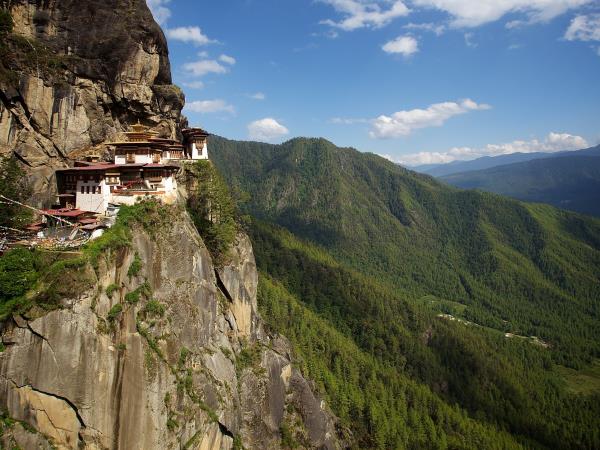
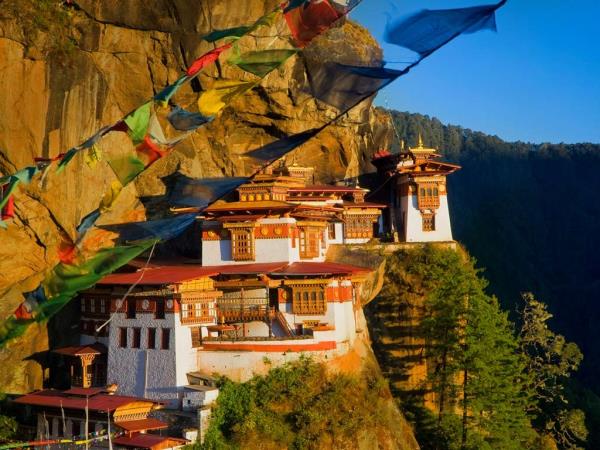
Seeing the black necked cranes, taking part in the festivals and climbing up to Tigers Nest.
2. What tips would you give other travellers booking this holiday?
Bring layers and be prepared for long days.
3. Did you feel that your holiday benefited local people, reduced environmental impacts or supported conservation?
I hope so.
4. Finally, how would you rate your holiday overall?
A fascinating trip. Both very enjoyable and very interesting.
Reviewed on 29 Nov 2024 by Diane Moore
1. What was the most memorable or exciting part of your holiday?
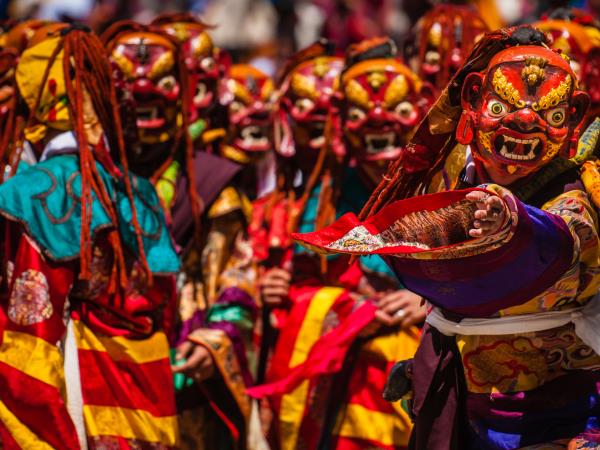
It was a wonderful trip from start to finish. If I had to pick something out I would say that it was the Black-Necked Crane festival which was so colourful and vibrant. Also the hike up to the Tigers Nest Monastery which was absolutely amazing.
2. What tips would you give other travellers booking this holiday?
Book it, you won't be disappointed! It is a trip of a lifetime.
3. Did you feel that your holiday benefited local people, reduced environmental impacts or supported conservation?
I think it contributed to the local economy.
4. Finally, how would you rate your holiday overall?
Amazing!!!
Read the operator's response here:
Thank you for your kind comments. We are delighted you enjoyed our small group trip to Bhutan. It is indeed a magical place. Thank you again for travelling with us.
Responsible Travel
As the pioneers of responsible tourism, we've screened this (and every) holiday so that you can travel knowing we've worked to maximise the benefits of your holiday to local people and places, and minimise any negative impacts.
Planet
We ensure our guides are mindful about protecting the environment in which you travel, and across the many rural locations visited on this trip – including valleys, rural villages and plantations – we rely on their local expertise to advise our travellers well. They do a fantastic job of promoting having a minimum impact whilst travelling, whether in natural or urban environments.CARBON REDUCTION
1)The logistics of this trip have been designed with the environment in mind. This trip features travel primarily by shared vehicle, modern in design for improved fuel economy. This is just one small but significant factor that we consider across all tours to all destinations, not only benefitting local areas. As a small-group overland trip in a small, mountainous country with strict environmental laws (high cost; low impact tourism), carbon generation is as low as it's going to be in the tourist industry.
2)The accommodation for this trip primarily consists of small, eco-friendly lodges. The environmental benefits of small accommodations over large hotels are numerous, and this is a factor we consider across all of our trips to all destinations. Energy consumption is clearly lower in a lodge of 10 bedrooms than it is in a sprawling hotel.
3)Human-powered transport is factored into this tour. Although our clientele tends to be 50+, this itinerary stresses the physical. 6 out of the 10 days involve some form of strenuous walking. Day 10, in fact involves a 5-hr trek to a monastery.
ENVIRONMENT & WILDLIFE
1) Bhutan has long had a policy of controlling numbers to lower environmental impact by means of a sustainable development fee of $200 per night. Sending small groups into Bhutan for 10 days generates '000s for the government to plough back into the natural world in a kind of virtuous circle. Win-win.
2) 5 days of the 10 ascribed for this trip has some element of walking, anywhere from 1-5 hours. Continuing the modus operandi of all visitors and inhabitants of world's mountainous regions, going from A-B on foot inhibits development if large civil engineering projects, such as roads and road bridges. It keeps village life alive, as well as reversing a growing trend of human population increase in rural areas, which disturbs pristine environments.
3) We ask travellers to be vigilant about disposing of waste, and to recycle wherever possible. During the trip guests are routinely asked if they have any waste to dispose of when it is a suitable time in the itinerary. This ensures we make it as easy as possible for our travellers to be ecologically-mindful whilst traveling. We strongly advise all travellers to bring a reusable water bottle - this is an easy way to save plastic waste and is detailed in our ‘What to Bring’ trip notes for all trips to all destinations. Your guide will remind you where and when you can fill up your re-usable water bottle. Similarly, we ask you to be environmentally-conscious in other areas across your trip, for example using climate control and electricity sparingly where possible.
People
LOCAL ECONOMY1) We do our best to ensure that the benefits of our tours reach as widely as possible into the communities where they operate. Our belief is that all operational costs should go directly into the local economy wherever possible. Improving employment opportunities in remote regions is a powerful tool in tourism and something that goes right to the heart of our responsible travel ethos.
2) The effect of imposing the world's highest tourist tax is two-fold. The inverse proportion of high cost and low impact has not only net environmental benefits, but also makes beneficial contributions to local and national economy. Redistribution of wealth flows outward and downward from central government. This means that dzongs can continue to be well-maintained, and communities can receive aid and incentive.
3) This nation famously measure GDP in happiness, not sovereign wealth or economic growth. That changes the calculus somewhat in terms of placing sustainable economic growth at the heart of the tourist industry. When a society revolutionises its way of seeing economics by redefining its value system, exploitation of natives working in the service sector is less egregious than elsewhere in Asia, as government imposes strict controls on who owns what. Bhutan might be materially poor compared to the West, but poverty is relative.
EMPLOYMENT, INCLUSIVITY AND DIVERSITY
1) We firmly believe that they are who make these places special and that they should benefit from our visit. Therefore, as first preference, we use local guides and drivers offered fair pay and working conditions. On this 10-day tour, dozens of Bhutanese working in the service industry will financially benefit from having Western guests pass through. These tourists dollars will feed, clothe and insulate local people. Community benefits downstream.
2) Throughout, we use locally-sourced supplies and visit locally-owned lodges, shops and eateries. We also value investment and ownership on the local level and, as you may know, foreign ownership in Bhutan is strictly governed. The Jakar Village Lodge, in fact, was founded by a retired Bhutanese civil servant.
3) We also support a small portfolio of charities and local grassroots organisations. The Draktsho vocational centre in Kanglung, East Bhutan is an inspiring organisation teaching 120 disabled and disadvantaged young people skills to help them gain self-esteem through their contribution to the community. They desperately need more classroom space. We are aiming to provide them with a brand purpose-built Library and learning block. The building will provide a flexible space adaptable for both the academic and physical education of the children. It will incorporate fully wheelchair accessible toilets. The new Library and Learning block, alongside the new girls’ hostel and dining hall will allow the school to double its capacity.
Popular similar holidays


Bhutan highlights tour, 7 days
From £2217 7 days excluding flights
A Festival & Photographic journey in the Happiness Kingdom

Small group tour to Bhutan
From £1928 - £2850 7 days excluding flights
Discover Bhutan's beauty, history and adventures