Panama and Bolivia small group tour
Price
£6945excluding flights
Duration
27 Days
Countries
Bolivia, Panama
Type
Small group
More info
Price includes: Accommodation • transfers • guiding (We ONLY use LOCAL GUIDES) • breakfast • Maximum group size 12 people • ABTA and ATOL bonded • Single Supplement - £1,345

Description of Panama and Bolivia small group tour
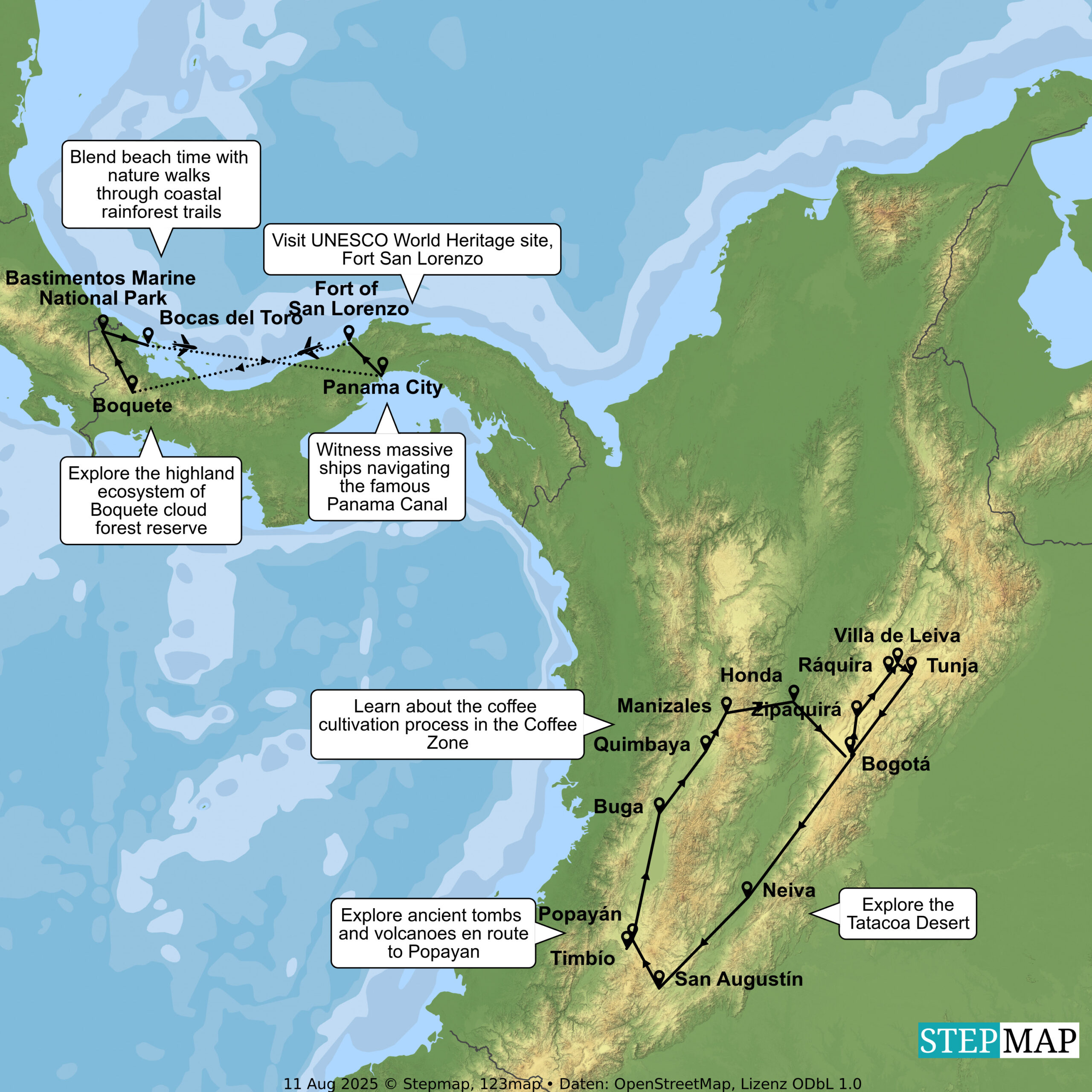
Map
Price information
£6945excluding flights
Price includes: Accommodation • transfers • guiding (We ONLY use LOCAL GUIDES) • breakfast • Maximum group size 12 people • ABTA and ATOL bonded • Single Supplement - £1,345
Check dates, prices & availability

Travel guides

Overshadowed by the canal, coups and Costa Rica, most of Panama has been quietly doing its thing for decades, well off the tourist radar. As our Panam...

Our guide reveals how to make the most of a holiday in one of Latin America's least-visited countries.
Holiday information
Diet:
We can cater for vegetarians on this holiday. Sadly we cannot offer vegan food.
Responsible Travel
As the pioneers of responsible tourism, we've screened this (and every) holiday so that you can travel knowing we've worked to maximise the benefits of your holiday to local people and places, and minimise any negative impacts.
Planet
CARBON REDUCTIONEfforts have been made to limit internal flying where practical and to prioritise overland travel that also enhances the journey experience. While the itinerary does include several necessary domestic flights due to distances and geography, many transitions are undertaken by road or boat, such as travel through the Panamanian highlands, across the continental divide to Bocas del Toro, and extensive overland travel throughout Bolivia, reducing reliance on short hop flights where viable alternatives exist.
Shared local transport is used extensively and is integral to the trip. This includes dugout canoes on the Gatun River, shared boats in the Gulf of Chiriquí National Park, water taxis in Bocas del Toro, and local buses and shared vehicles across Bolivia, all of which reduce per person emissions compared with private transport.
Human powered activities form a meaningful part of the itinerary. Guided walking experiences take place on multiple days, including Casco Viejo, Emberá village visits, hanging bridges and cloud forest trails in Boquete, La Amistad International Park, Bastimentos Marine National Park, Soberanía National Park, Samaipata, Las Cuevas waterfalls, Isla del Sol, Moon Island, and several archaeological and urban walking tours in Bolivia. These experiences reduce transport emissions while deepening engagement with landscapes and communities.
Accommodation choices favour locally owned properties that operate at an appropriate scale for their setting. Several lodges and hotels, particularly in Boquete, Bocas del Toro, Uyuni, the Bolivian highlands, and Isla del Sol, are designed to work with natural conditions, using passive cooling, reduced energy demand, and locally sourced building materials. While not all properties use renewable energy, many minimise energy use through low impact design and limited infrastructure.
Vegetarian options are available throughout the itinerary, and in many locations plant based meals are a natural part of local cuisine. Meals are frequently taken at local restaurants or prepared by communities, such as with the Emberá and Ngäbe Buglé people, increasing the use of seasonal and locally sourced ingredients and reducing food transport emissions.
Travellers are encouraged to reduce the carbon impact of their international flights by choosing lower emission routes and aircraft, using emissions comparison tools provided by airlines and booking platforms, and packing lightly. Guidance is also given on responsible water and energy use while staying in hotels and lodges.
ENVIRONMENT AND WILDLIFE
The itinerary places strong emphasis on protected areas and biodiversity rich landscapes. Entry fees and guided visits are included for numerous national parks and reserves, including the Gulf of Chiriquí National Park, La Amistad International Park, Bastimentos Marine National Park, Soberanía National Park, and several protected high Andean ecosystems in Bolivia. These fees directly support conservation management and park maintenance.
Accommodation partners are selected with consideration for their environmental practices. Several lodges operate in sensitive environments and actively reduce impacts through water conservation, limited use of plastics, waste separation, and integration with the surrounding landscape. In remote areas of Bolivia, properties are built using local materials such as stone and salt blocks, minimising visual and ecological impact.
Local expert guides are used throughout the journey, particularly in forests, marine environments, archaeological sites, and Indigenous territories. These guides are from the local community, professionally trained, and provide interpretation that promotes respect for wildlife, ecosystems, and cultural heritage. Their involvement ensures income remains within local areas while fostering stewardship of natural resources.
The itinerary supports nature conservation indirectly through community based tourism. Visits to Emberá and Ngäbe Buglé communities, locally run coffee fincas, and small scale island operators provide economic incentives to protect forests, rivers, reefs, and mangroves rather than exploit them unsustainably.
Marine and wildlife experiences are conducted responsibly. Snorkelling and boat excursions in Bocas del Toro and the Gulf of Chiriquí follow low impact practices, avoiding wildlife disturbance, respecting coral reefs, and adhering to protected area regulations. Walking based wildlife observation in cloud forests, rainforests, and Andean wetlands reduces pressure on habitats.
Travellers are provided with guidance on reducing their impact on nature, including avoiding single use plastics, staying on marked trails, respecting wildlife distances, not removing natural materials, and supporting conservation minded local businesses. These principles are reinforced by guides throughout the journey.
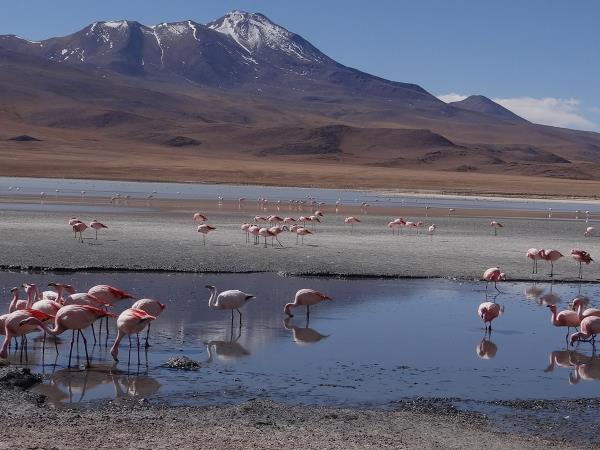
Across Bolivia, visits to high altitude deserts, wetlands, lagoons, and flamingo habitats are managed carefully, using established routes and regulated access to minimise erosion and disturbance in fragile ecosystems. The use of local drivers and guides ensures adherence to environmental regulations in these remote regions.
Overall, the itinerary is designed to be nature positive by directing tourism revenue toward protected areas, conservation friendly accommodations, Indigenous communities, and locally led guiding, helping to support biodiversity protection while offering meaningful, low impact experiences.
People
LOCAL ECONOMYThis itinerary is designed to ensure that a significant proportion of tourism spend remains within local communities across both Panama and Bolivia. The majority of accommodations used are locally owned or locally managed independent properties rather than large international chains. Notable examples include the lodge in Boquete, which is locally operated and embedded within the surrounding cloud forest, small scale hotels in Bocas del Toro that are locally managed, and distinctive locally run properties in Bolivia such as salt and stone lodges in Uyuni, high altitude desert lodges in Siloli and Mallku, and community focused lodges on Isla del Sol. These properties are closely linked to local supply chains and employ staff from nearby communities.
Local economic opportunities are maximised throughout the trip by the consistent use of local guides, drivers, boat operators, and specialist hosts. In Panama, this includes city guides in Panama City, Indigenous guides in Emberá and Ngäbe Buglé communities, park guides in La Amistad, Soberanía, and Bastimentos National Parks, and locally run boat excursions in the Gulf of Chiriquí and Bocas del Toro. In Bolivia, local guides lead visits to archaeological sites such as Samaipata and Tiwanaku, community operated museums, high altitude desert regions, and Lake Titicaca. The itinerary also incorporates visits to local markets, craft centres, coffee fincas, and community museums, ensuring direct financial benefit to artisans, farmers, and small businesses.
Meals are frequently taken in locally owned restaurants and, in some cases, prepared by host communities, such as lunches with Indigenous groups and rural restaurants in Bolivia. This further supports local farmers, fishers, and food producers while reinforcing regional culinary traditions.
EMPLOYMENT, INCLUSIVITY AND DIVERSITY
The trip relies almost entirely on in country partners and local staff. In both Panama and Bolivia, the vast majority of people employed to deliver the itinerary are nationals of the country, with a high proportion drawn directly from local communities in the areas visited. This includes guides, drivers, boat crews, lodge staff, cooks, and support teams in both urban and remote regions.
The itinerary actively creates income generating opportunities for Indigenous and traditionally marginalised communities. This is particularly evident through visits to Emberá and Ngäbe Buglé communities in Panama, where guiding, meals, cultural demonstrations, and crafts are delivered and hosted by community members themselves. In Bolivia, Indigenous communities around Lake Titicaca, the high Andean regions, and rural areas such as Samaipata and Colchani benefit directly from guiding services, accommodation, meals, and craft sales.
All ground operating partners are expected to comply with national labour laws and to pay staff at least the local minimum wage, with many positions, particularly skilled guides and drivers, paid above this level. Long standing partnerships allow for regular monitoring of working conditions and fair treatment.
The trip is inclusive and welcoming, and is suitable for LGBTQ+ travellers. While cultural attitudes vary by region, particularly in rural areas, Panama City, Santa Cruz, La Paz, and other urban centres visited on the itinerary are generally open and tolerant, and partners are briefed to ensure respectful and professional treatment of all guests.
This itinerary is best suited to travellers with a reasonable level of mobility. While it includes walking tours, uneven terrain, high altitude environments, and boat travel, adaptations can be discussed for some sections on a private basis. Due to the nature of the destinations, particularly in remote and high altitude areas, it may not be suitable for travellers with significant mobility, vision, hearing, or cognitive impairments, although we are happy to advise on feasibility and alternatives on a case by case basis.
Our operating partners promote inclusive workplaces, valuing skills and experience without discrimination on the basis of race, gender, nationality, or sexual orientation, and actively support the training and progression of local staff into skilled and leadership roles.
Popular similar holidays

Bolivia tour, tailor made
From £2990 11 days including domestic flights only
Epic Ruins, Salt Flats and adventure

Bolivia small group tour, Lowlands to The Andes
From £3295 15 days excluding flights
Travel from the lowlands towards the high Andes in Bolivia

Peru and Boliva grand tour
From US $3395 - US $3889 12 days excluding flights
Adventurous tour highlighting the best of Peru and Bolivia