Panama and Nicaragua small group tour
Price
£5745excluding flights
Duration
24 Days
Countries
Nicaragua, Panama
Type
Small group
More info
Price includes: Accommodation • transfers • guiding (We ONLY use LOCAL GUIDES) • meals as shown (B=Breakfast, L=Lunch, D=Dinner)• Maximum group size: 12 travellers • ABTA and ATOL bonded • Single Supplement - from £1,255

Description of Panama and Nicaragua small group tour
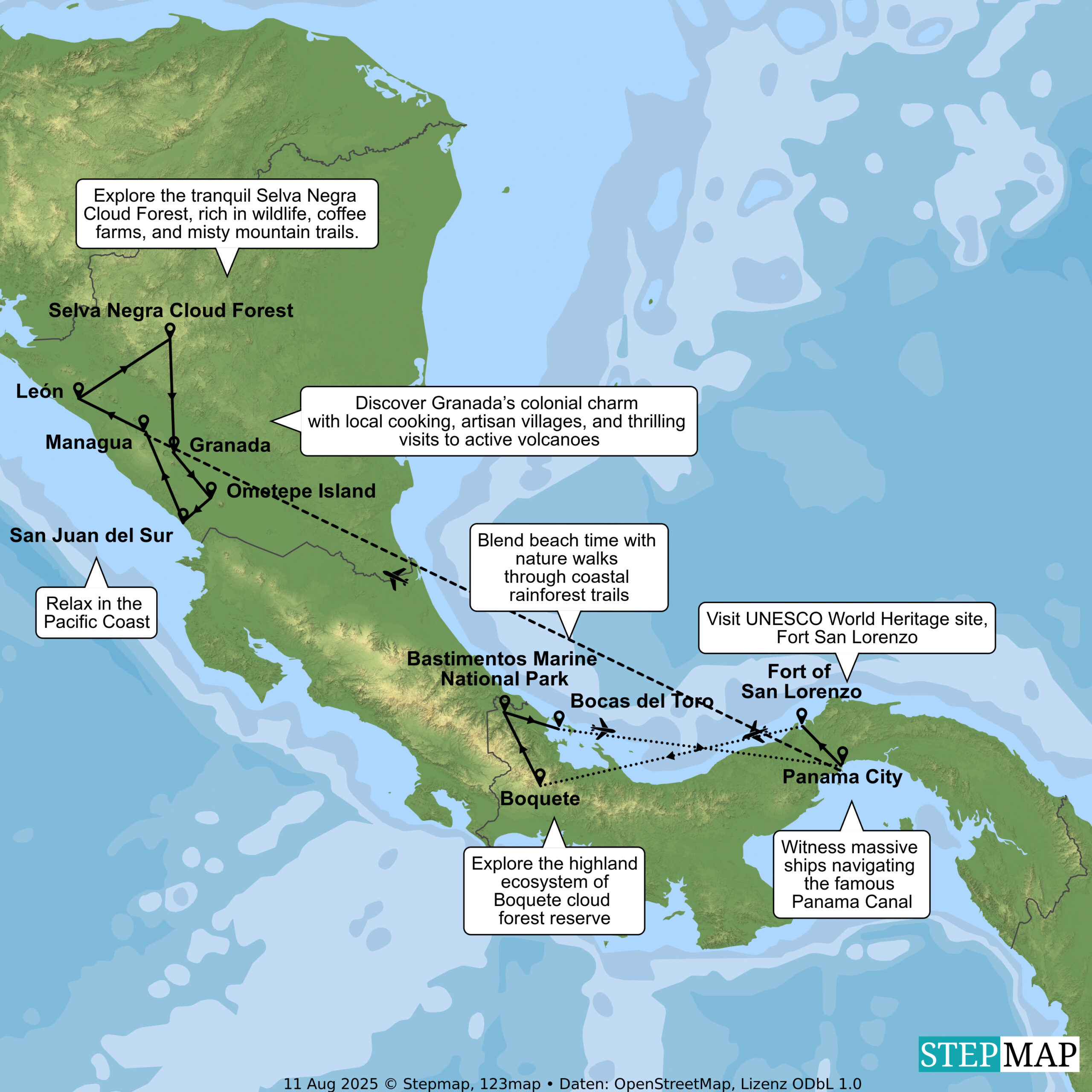
Map
Price information
£5745excluding flights
Price includes: Accommodation • transfers • guiding (We ONLY use LOCAL GUIDES) • meals as shown (B=Breakfast, L=Lunch, D=Dinner)• Maximum group size: 12 travellers • ABTA and ATOL bonded • Single Supplement - from £1,255
Check dates, prices & availability

Travel guides

Luscious, lava and littoral sums up Nicaragua quite neatly. A "poor man's Costa Rica" this is not.

Overshadowed by the canal, coups and Costa Rica, most of Panama has been quietly doing its thing for decades, well off the tourist radar. As our Panam...
Holiday information
Diet:
We can cater for vegetarians on this holiday. Sadly we cannot offer vegan food.
Responsible Travel
As the pioneers of responsible tourism, we've screened this (and every) holiday so that you can travel knowing we've worked to maximise the benefits of your holiday to local people and places, and minimise any negative impacts.
Planet
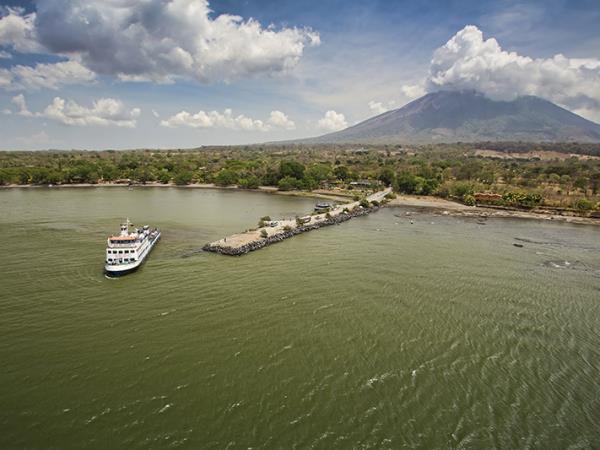
CARBON REDUCTIONInternal flying is kept to a minimum and used only where geography makes overland travel impractical, such as the short flight to David in Panama. The remainder of the journey through Panama and Nicaragua is completed by road, ferry, and boat, including island crossings to Bocas del Toro and Ometepe, which significantly reduces the need for additional flights.
Shared transport is used throughout the itinerary, including minibuses, ferries, water taxis, and shared boats. This approach lowers carbon emissions per person compared with private transfers or charter flights, particularly on island and coastal sections of the journey.
Walking is a core part of the experience on many days, including city tours, rainforest and cloud forest walks, national park trails, and nature reserves in both Panama and Nicaragua. Snorkelling and gentle paddling style activities also feature in marine environments, further reducing reliance on motorised transport.
Accommodation is mainly in small, locally run hotels and lodges rather than large resorts. Many operate with low energy infrastructure, natural ventilation, limited air conditioning, and solar assisted hot water systems, particularly in cloud forest and island locations where energy efficiency is essential.
Vegetarian meals are readily available throughout the trip, and vegan meals can be arranged with advance notice. Food is largely local and seasonal, especially in rural areas, coffee fincas, and fishing communities, reducing food miles and supporting shorter supply chains.
Travellers can be advised before departure on how to reduce their carbon impact by choosing lower emission long haul flights, travelling light, using reusable bottles, moderating air conditioning use, and consolidating laundry during their stay.
Environment and wildlife
The itinerary includes numerous national parks and protected areas, with entrance fees and regulated access supporting conservation management. These include Gulf of Chiriquí National Park, La Amistad International Park, Bastimentos Marine National Park, Soberanía National Park, Juan Venado Nature Reserve, Masaya Volcano National Park, and Mombacho Volcano Nature Reserve.
Wildlife experiences focus on observation and education rather than interaction. Activities include rainforest walks, birdwatching, canopy observation towers, snorkelling over coral reefs, and mangrove exploration, with no captive animal attractions included.
Accommodation is selected with consideration for environmental management practices such as water conservation, plastic reduction, recycling, and low impact construction, particularly in sensitive rainforest and island environments.
Local nature guides are used throughout the trip, including in national parks, marine reserves, and volcanic landscapes. These guides are based in the regions visited and are trained in local ecology, birdlife, marine environments, and conservation practices.
Travellers are provided with guidance on reducing their impact on nature, including staying on marked trails, maintaining respectful distances from wildlife, using reef safe sunscreen, and avoiding contact with coral or sensitive habitats.
Island and forest ecosystems in Panama and Nicaragua are vulnerable to invasive species. The trip addresses this through controlled access to protected areas, guide led activities, and visitor guidance on cleaning footwear and equipment and avoiding the transport of organic material between regions.
People
LOCAL ECONOMYThis itinerary is strongly focused on locally owned accommodation and services, ensuring that the majority of trip expenditure remains within Panama and Nicaragua. Most hotels used are independent, locally run properties rather than international chains, particularly in Boquete, Bocas del Toro, León, Selva Negra, Granada, Ometepe Island, and San Juan del Sur. Notable examples include small lodges in the highlands and cloud forest, and locally managed island hotels in Bocas del Toro and Ometepe, where ownership and staffing are rooted in the surrounding community. Even in larger cities such as Panama City and Managua, selected hotels are locally operated and integrated into the neighbourhood economy rather than resort style enclaves.
Local economic opportunities are maximised throughout the journey by employing resident guides, drivers, and boat operators in each region. Cultural visits directly support community income, including time spent with the Emberá and Ngäbe Buglé communities in Panama, where guiding, transport, performances, and meals are provided by the community itself. In Nicaragua, local markets, family run restaurants, coffee fincas, and small scale farms are visited, ensuring that spending supports producers and artisans rather than external suppliers. Craft markets, cooperatives, and village based experiences form a recurring part of the itinerary, particularly in León, Granada, the Pueblos Blancos, and Boquete.
EMPLOYMENT, INCLUSIVITY AND DIVERSITY
The trip is operated almost entirely by in country partners, with the vast majority of staff employed being nationals of Panama and Nicaragua. Guides, drivers, lodge staff, boat crews, cooks, and community hosts are overwhelmingly recruited from the local area in which each activity takes place, ensuring strong local employment and deep destination knowledge. This includes rural and island communities where tourism income can be especially important.
Income generating opportunities are created for groups that are often underrepresented in mainstream tourism. Indigenous communities such as the Emberá and Ngäbe Buglé are directly involved as hosts, guides, performers, and cooks, with fees paid directly to the community. Women are prominently represented in craft production, food preparation, market trading, and small scale hospitality, particularly within coffee fincas, family run lodges, and cultural projects. These encounters are designed as respectful exchanges rather than staged performances, helping preserve cultural heritage while providing sustainable income.
All ground operating partners are expected to comply with local labour laws, including payment of at least the national minimum wage, and in practice many roles are paid above this level due to skills, experience, and the specialised nature of guiding and hospitality work. Partners are selected for their ethical employment practices and long term relationships with staff.
The trip is inclusive in outlook and suitable for LGBTQ+ travellers. Panama and Nicaragua both have visible LGBTQ+ communities, particularly in larger cities and tourist areas, and the itinerary uses accommodations and suppliers known for their professional, respectful approach to all guests. While this is not a specialist accessibility tour, many elements are suitable for travellers with a reasonable level of mobility. Walking is a core part of the experience, especially in historic centres and natural areas, and some activities such as volcano hikes are optional. Where possible, alternatives are offered, allowing travellers to opt out of more physically demanding activities and enjoy time at leisure instead.
Popular similar holidays

Nicaragua highlights, small group tour
From £2195 13 days excluding flights
Explore the largest Central American country of Nicaragua

Nicaragua holiday, Cobbled Streets to Coral Reefs
From £2390 10 days excluding flights
Visit Nicaragua's cities, homestays, volcanoes, and islands

Nicaragua & El Salvador tour
From £3865 - £4060 19 days excluding flights
Central American adventure, away from the tourist trail