Trans Africa overland expedition, 23 weeks
Price
£7995To£8495 excluding flights
Convert currency:


Duration
164 days
Countries
Angola, Benin, Cameroon, Congo, DR of the Congo, Gabon, Gambia, Ghana, Guinea, Guinea Bissau, Ivory Coast, Liberia, Mauritania, Morocco, Namibia, Nigeria, Senegal, Sierra Leone, South Africa, Togo, Western Sahara
Type
Small group
More info
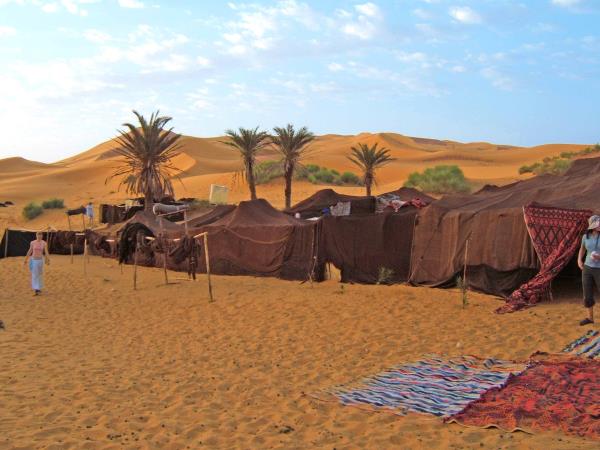
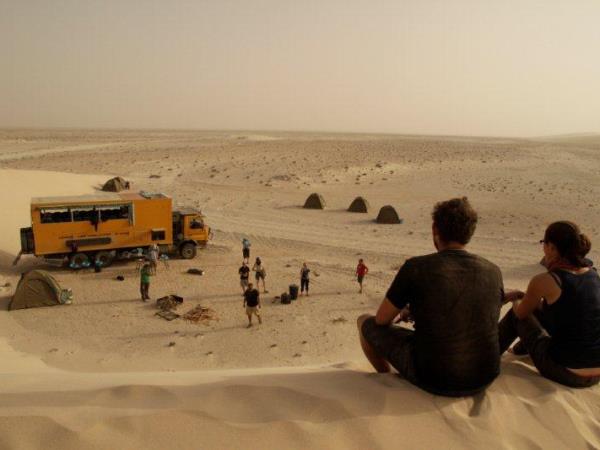
Accommodation is predominantly camping, though there may be opportunities to upgrade this locally where rooms are available.
Please note there is an additional local payment payable at the start of the trip in US Dollars cash: 2025 - $2400, 2026 - $2600
Please note there is an additional local payment payable at the start of the trip in US Dollars cash: 2025 - $2400, 2026 - $2600

Description of Trans Africa overland expedition, 23 weeks
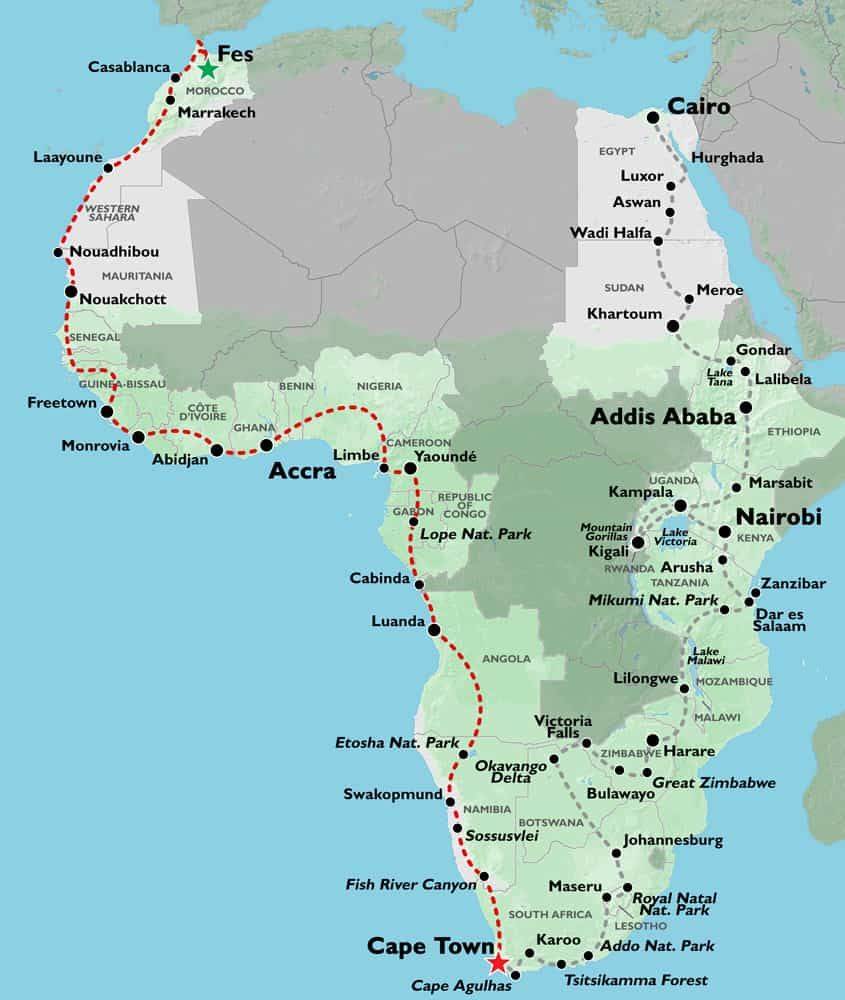
Map
Price information
£7995To£8495 excluding flights
Convert currency:
Accommodation is predominantly camping, though there may be opportunities to upgrade this locally where rooms are available.
Please note there is an additional local payment payable at the start of the trip in US Dollars cash: 2025 - $2400, 2026 - $2600
Please note there is an additional local payment payable at the start of the trip in US Dollars cash: 2025 - $2400, 2026 - $2600
Check dates, prices & availability

Travel guides

Jump aboard our Africa overland travel guide and pretty soon you’ll learn just what overlanding entails and whether it's for you.

Get ready to turn the dial all the way up to 11 on your holiday with our travel guide.
Responsible Travel
As the pioneers of responsible tourism, we've screened this (and every) holiday so that you can travel knowing we've worked to maximise the benefits of your holiday to local people and places, and minimise any negative impacts.
Planet
Water: We have a great appreciation of how vital a resource water is, especially in some of the desert and semi-desert areas we travel through on this journey. As we are frequently camping in the bush with no facilities on this trip, we carry a lot of our water for cooking, drinking and washing with us. We find that filling up heavy jerry cans, helps focus the mind on the importance of water conservation! Water for drinking, cooking and basic hygiene is prioritised over showering which may have to wait for a few days until we reach a location with running water.We also encourage our travellers to bring reusable water bottles from home with them for the trip. These can be filled from the truck's water supplies which helps to minimise the usage of plastic water bottles.
Energy: On this trip, our accommodation for most nights is under canvas (or under the stars!), often wild camping in the bush with no facilities. This means our energy consumption is kept to a minimum - importantly, there is no chance of leaving taps running or lights on! Having minimal lighting and no heating or air conditioning can make our travellers more aware of their energy use and how much is really needed and is often wasted.
We always leave wild camping areas as we found them (or better than we found them), ensuring we leave as little trace of our presence as possible.
As responsible travelers, we recognize the need to reduce our plastic consumption and provide sustainable alternatives to our customers. That's why we've partnered with Water to Go to offer a fantastic solution.
Water to Go is a company on a mission to tackle the issue of plastic pollution by providing travelers with reusable filter bottles. These bottles are not your average water containers. They are designed with advanced filtration technology that allows you to safely refill your bottle from natural water sources, taps, and even in places where tap water is not typically considered safe to drink.
People
Friends & neighbours: We purchase food locally, with the majority from markets and roadside sellers. This also gives our travellers opportunities to meet and engage with local people. Additionally, we advise our clients that they can support the economies of the communities they are travelling through by using local shops, cafés and restaurants. Our tents are purchased locally in order to support the local economy and to reduce the environmental impact of international transportation. Many of the sites our travellers can visit and activities they can take part in during the trip employ local guides, including Tiwai Island Wildlife Sanctuary, the Mount Cameroun trek, Lope National Park and Robben Island.Local crafts and cultures: Our travellers are encouraged to support local craftspeople both in our detailed pre-departure information which they receive before travel and by our crew whilst on the road. We also provide guidance in our pre-departure information on bargaining responsibly and paying what you think an item is worth, rather than trying to bargain as low as possible. The difference of a pound or two is minimal to us but for a local artisan it could mean the difference between whether their family eats that night or not.
Our pre-departure information also gives further guidance to our travellers about Responsible Travel which is re-emphasised by our Tour Leader at the start of the trip. Clients are, for example, advised about respecting local customs particularly in terms of dress and behaviour; water conservation; respecting and conserving wildlife and their habitats and not purchasing endangered species products.
Popular similar holidays

Namibia and Botswana camping safari
From €2990 21 days excluding flights
Camping safari to Namib desert, Caprivi, Etosha & Okavango

Guinea, Liberia and Sierra Leone tour
From £5199 - £5949 16 days excluding flights
Breathtaking mountains, idyllic islands and wild chimpanzees

Cape Town to Victoria Falls small group lodge tour
From €4180 21 days excluding flights
Classic route lodge safari to Namibia, Botswana & Zimbabwe