São Tomé and Príncipe travel guide
Once known as the Chocolate Islands, because cocoa was the main product of its colonial years under Portuguese rule, this stunning, tropical, dual island nation now has its eye on a much less tangible resource: the creative power of its youth. Because over 70 percent of the population of São Tomé & Príncipe, just 250km off the coast of Central Africa, is under 20 years old. This is the generation that has a chance to finally remove the shackle marks left by its colonists, where bonded labour was too long the norm.
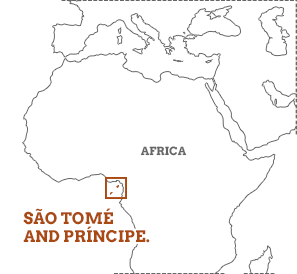

In São Tomé & Príncipe, we don't need to be too rich. The greatest richness should be focussed on our way of being: welcoming, living and sharing.![]()

– João Carlos Silva, São Tomé plantation owner and cultural visionary
Only gaining independence from Portugal in 1975, many of the younger generation now recognise that the future is about preservation, not exploitation. Preservation of the rainforests, volcanic terrain, endemic wildlife, Sãotomean culture and coastal paradise. The fermentation of cocoa beans is an important part of the chocolate making process. And in many ways, as our São Tomé and Príncipe travel guide shows, responsible tourism is still in its fermentation stage here. Managed carefully and slowly, the end result will not only be democratic but also totally delectable.

São Tomé and Príncipe is...
a two island nation, although most tourism is on São Tomé. It doubles up on everything though. Beauty, friendliness and rainforest: nothing is done by halves.
São Tomé and Príncipe isn't...
a resort destination. It has hung on to its own identity, architecture and style, thankfully.
Things to do in São Tomé & Príncipe …

Sao Tome & Principe holiday
A wonderful break on the tropical isles, Sao Tome & Principe
From
£3579
14 days
ex flights


Sao Tome tour
Unique culture and pristine nature in a tropical paradise.
From
£2699 to £2799
8 days
ex flights


Contact Us
Call us for a chat about our holidays. We are happy to discuss your holiday and help in any way we can. No bots, queues or awful hold music.

01273 823 700
Call us until 6pm
Calling from outside the UK

Things not to do in São Tomé and Príncipe …
More Sao Tome & Principe articles

Do during the dry seasons: there are two. One thing's for sure, it never gets cold.

Welcome to the centre of the world. These two equatorial islands are full of diversions.

This African Galapagos has an extremely high concentration of endemic wildlife.

A handful of luxury eco-lodges make brilliantly romantic destinations.


