Sudan travel guide
As of May 2023, travel is not recommended to Sudan. Armed conflict has broken out due to a rift in the country’s military leadership. With ceasefires not being observed and civilians being targeted, many countries are now taking steps to repatriate their citizens.
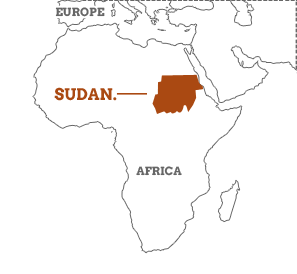
Sudan is one of those countries that you have to dig out your atlas to check exactly where it is, with vague memories from school that the Nile, Red Sea and Sahara cut through it. As well as civil war, that has been a feature here for almost 40 years, with names like Darfur still sending shivers down our spines. Although peace now prevails, with the exception of certain regions such as Darfur which is about 800km from the Sudanese sites visitors are vying for.
Sudan is one of those countries that you have to dig out your atlas to check exactly where it is, with vague memories from school that the Nile, Red Sea and Sahara cut through it. As well as civil war, that has been a feature here for almost 40 years, with names like Darfur still sending shivers down our spines. Although peace now prevails, with the exception of certain regions such as Darfur which is about 800km from the Sudanese sites visitors are vying for.

People wear hearts on their sleeves in Sudan. And welcomed us into their hearts and homes too. In fact, the omnipresent Sudanese smile will always be imprinted on my mind.![]()

But Sudan is a place where you have to look beyond both the atlas and media archives. Instead look out into the vastness of its deserts, back into the history of its Nubian people and their ancient civilisations, at its nomadic tribes and now predominantly Arab population. Each proud stewards of the most extraordinary landscapes, from the black basalt, volcanic mounds that rise up out of the Bayuda Desert to the proliferation of pyramids, which segue in and out of the sands like magnificent mirages. All real and all terrifically untouched by tourism.
Read more in our Sudan travel guide
Read more in our Sudan travel guide

Sudan is…
dichotomous. First, it is devoid of tourists, but yet it has more pyramids than Egypt. Second, it has had centuries of civil strife, and yet the people are forever smiling and welcoming.
Sudan isn’t…
for you if desert exploration, long journeys and wild camping aren’t your thing. Oh, and if you crave an ice cold beer. Not for you either. All alcohol is illegal.
Things to do in Sudan...
Our top trip

Complete Africa overland expedition, 47 weeks
The ultimate Trans African overland camping adventure
From
£10995
300 days
ex flights
Small group travel:
2026: 26 Oct
2027: 25 Oct
2026: 26 Oct
2027: 25 Oct
Contact Us

Call us for a chat about our holidays. We are happy to discuss your holiday and help in any way we can. No bots, queues or awful hold music.

01273 823 700
Call us until 6pm
Calling from outside the UK


Things not to do in Sudan…
More Sudan articles

Sudan is very, very hot, and very, very dry; the best time to visit is December to February when it's cooler.

Its pyramid construction outlived that of ancient Egypt by centuries, yet Sudan’s Meroe Pyramids get very few visitors.


