Western Sahara travel guide
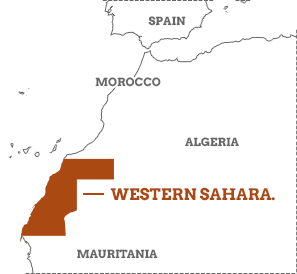
There are two reasons to visit the non-self-governing Western Sahara territory. The first: you’re interested in emptiness. Few tourists explore this disputed, desert region. The majority of Western Sahara is currently under Moroccan occupation, inhabited by Moroccans, and often visited via Morocco. The culture of the original tribes – known collectively as the Sahrawi – is increasingly marginalised. Since the 1970s, many Sahrawi have been forced to live in permanent refugee camps in Algeria, having been pushed out of Western Sahara.

Its ochre palette is both beautiful and inhospitable – but it’s not the desert that is the main threat to existence here, but conflict, mining – and climate change, which expands the already limitless-seeming expanse.![]()

There’s another reason to come to the Western Sahara – and that’s because you know the seemingly empty desert is actually filled with wildlife. Safari here means discovery upon miraculous discovery by torchlight. Think like a fennec fox: sleep in the day, and stay up late for the chase. It’s not empty here, but full of surprises.
Read on in our Western Sahara travel guide.
Read on in our Western Sahara travel guide.

Western Sahara is…
a pleasant surprise for wildlife watchers.
Western Sahara isn’t…
for city culture – the beauty’s in the desert.
Things to do in Western Sahara

Western Sahara overland tour, Marrakech to Bissau
Travel from North Africa through the Sahara to the tropics
From
£9799 to £10299
4 weeks
ex flights

Western Sahara desert wildlife tour
Spot Fennec foxes & Sand cats in the Sahara
From
£1995
8 days
ex flights

Sahara rare wildlife tour
Search for rare mammals in the Western Sahara
From
£2195
8 days
ex flights

Morocco and western Sahara tour
Amazing scenery and nomadic tribes in Morocco's deep south.
From
£3199 to £3249
12 days
ex flights

Fes to Accra overland adventure, 11 weeks
Unique West African overland adventure
From
£4595 to £4795
75 days
ex flights

Trans Africa overland expedition, 23 weeks
Overland camping adventure: Gibraltar,West Africa to Cape Town
From
£7995 to £8495
164 days
ex flights


Contact Us

Call us for a chat about our holidays. We are happy to discuss your holiday and help in any way we can. No bots, queues or awful hold music.

01273 823 700
Call us until 6pm
Calling from outside the UK


Things not to do in Western Sahara
More Western Sahara articles

Find out when is the best time to visit Western Sahara with our guide to the climate of the area.

Fennec foxes and sand cats... can you keep this spectacular Western Sahara wildlife watching trip under wraps?


.JPG)
