Timor-Leste travel guide

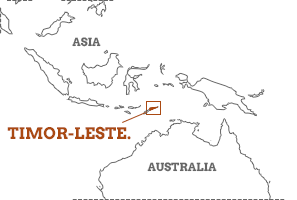
Timor-Leste is one of the world’s unsung tourist destinations, with visitor numbers low in spite of its impressive natural credentials. Asia’s newest nation, it gained independence from Indonesia in May 2002, and saw a long UN peacekeeping operation conclude in 2012, leaving the country at peace and ready for travel trailblazers to explore its beauty.
Head for a true off-the-beaten track adventure in a country blessed with rugged mountains, ancient traditions and jaw-dropping underwater landscapes
This island was never attached to another landmass and was instead pushed to the ocean’s surface by tectonic activity. Just a short way from shore, the surrounding reefs plunge to deep depths, revealing the country’s key attraction: its diverse and thriving waters. This underwater world will leave you reeling: you can snorkel above barely touched reefs, spot whales, dolphins and dugongs as they make their way from the Indian to the Pacific Ocean, and scuba dive into scenes of unparalleled biodiversity. On land there are forested slopes teeming with birdlife, jungle caves tattooed with ancient rock paintings and crumbling Portuguese colonial towns, where sipping homegrown coffee and shooting the breeze with the locals is practically mandatory. Find out more in our Timor-Leste travel guide.

Timor-Leste is…

home to some of the best snorkelling and diving on the planet.

Timor-Leste isn’t…

dangerous. Now at peace the country welcomes intrepid travellers with open arms.

Things to do in Timor-Leste…

Timor-Leste is part of the Coral Triangle, so good scuba diving is plentiful, including offshore from the capital, Dili, and around remote Jaco Island. The cream of the crop is Ataúro Island, which has incredible coral walls and rich marine life, and can be explored on small group diving or marine conservation expeditions. En route from Dili you might see schools of dolphins racing alongside your boat, while from September to December humpbacks and other whale species surface off the coast. For divers and snorkellers, visibility peaks at the tail end of the dry season, in September and October. Unreliable public transport and some crazy driving conditions can make Timor-Leste difficult to travel around. While people do travel independently here, we recommend that you join a small group or tailor made tour. You’ll travel in a private vehicle and enjoy the services of tour leader or an expert local guide, reducing the chances of anything going wrong and ensuring that if it does, help is close at hand. Remnants of and monuments to Timor-Leste’s rich history are strewn throughout the country, from millennia-old cave paintings, to faded architecture from the country’s time as a Portuguese colony. You should also take time to get to grips with the country’s recent troubled past while you’re here. Learn about the 24-year fight for independence from Indonesia at the Resistance Museum in Dili, visit the Santa Cruz Cemetery, where over 250 civilians were massacred by Indonesian soldiers in 2001, or visit the city’s Chega! Museum, set in old Portuguese prison cells where resistance leaders were once locked up.

Our top trip

East Timor holiday

East Timor holiday

Asia’s newest nation starts to reveal its secrets

From £2745 14 days ex flights
Small group travel:
2026: 4 Jul
2027: 3 Jul

Contact Us

Responsible Travel, Travel Team

Call us for a chat about our holidays. We are happy to discuss your holiday and help in any way we can. No bots, queues or awful hold music.

Responsible Travel, Travel Team

Things not  to do in Timor-Leste…

Timor-Leste is barely a blip on the international tourism scene. That’s part of its appeal, so you shouldn’t forget your spirit of adventure when you visit. Road conditions and infrastructure can be poor and hotels, especially outside of Dili, tend to be simple. However, accommodation will be clean and comfortable and a valuable part of the cultural experience. Miss out meeting local people. Several different ethnic groups call Timor-Leste home, and spending time with them will make a visit here all the richer. You could watch traditional weavers at work in the seaside village of Com, visit remote, coffee-producing mountain communities, or spend time in Lospalos, a leafy gem that’s home to the Fataluku people, whose sacred totem houses represent a link between past and present. Homestays are possible throughout the country and offer a valuable window onto Timorese life. Spend all your time on the coast. Timor-Leste’s forested peaks make it excellent hiking territory, and getting about on foot is one of the best ways to get to know the people and the landscape. The country’s premier hiking trail is the route up to Mt Ramelau, which looms large at 2,986m. To make the most of the experience, camp in the foothills and set off in the early hours to make sure you reach the summit for the most spectacular of sunrises, with mountains unfurling in every direction and a vast sweep of coastline visible in the distance.
Written by Nana Luckham
Photo credits: [Page banner: yeowatzup] [Guide icon: Tanushree Rao] [Is/isn't: Kate Dixon] [Happy women laughing: Jaya Ramchandani]