Honduras travel guide

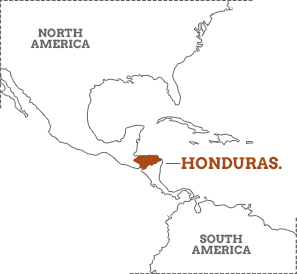
Honduras is overlooked by many Central American travellers, shunned in favour of Mexico’s beaches, Guatemala’s Mayan ruins and Costa Rica’s wildlife. Yet a closer look at this country reveals that it can compete with the best of them, often for a fraction of the price, and a fraction of the crowds. The fact that it has been overlooked actually works in many travellers’ favour, as Honduras offers a far more authentic glimpse into Central American life than many of its neighbours.
News headlines focus on Honduras’s troubled cities, but in its mountains, beaches, and ruin filled jungles, all that disturbs the peace is the squawk of macaws and the beat of Garifuna drums.
While many tours race through, stopping only to marvel at the Mayan ruins in Copán, extending your time in Honduras allows you time to soak up the atmosphere in cobbled and colourful colonial villages, with a cup of locally grown coffee or hot chocolate. Offshore, the island of Roatán sits atop the world’s second largest coral reef, making for superb diving and snorkelling.

Honduras is…

the original Banana Republic, as coined in 1901. Bananas remain one of is biggest exports.

Honduras isn't…

dangerous, as long as you travel sensibly. The countryside, villages and islands are generally trouble free.

What to do in Honduras…

It’s difficult to imagine how Spanish sailor Diego García de Palacio must have felt when he stumbled across Copán in 1570. Excavation work didn’t begin until the 1940s, but even a cursory glimpse at the remains of this Mayan city would be enough to know he was onto something quite incredible indeed. The site was abandoned around 1200, following over 2,000 years of occupation, and today we know plenty about its history and inhabitants thanks to the detailed glyphs which cover the ruins. There are some 1,800 symbols carved into the staircase alone, making this the longest Mayan inscription in the world. Central America is a cluster of colourful nations, with shared histories and languages but many important differences, too. We recommend taking advantage of their compact size, and signing up to a small group overland tour, which will zigzag between Caribbean and Pacific coasts, via colonial cities, gently puffing volcanoes, bird filled cloud forest and Maya and Aztec ruins. Bring your cossie. And your mask, and fins, and waterproof camera… Honduras’s Bay Islands offer marine adventures aplenty, being perched beside the world’s second longest coral reef, and lapped by warm, clear Caribbean waters. You can see plenty of vivid marine life with just a mask and snorkel, but as this is one of the cheapest destinations for scuba diving, including PADI certifications, why not go a bit deeper?

Contact Us

Responsible Travel, Travel Team

Call us for a chat about our holidays. We are happy to discuss your holiday and help in any way we can. No bots, queues or awful hold music.

Responsible Travel, Travel Team

What not to do in Honduras…

While thousands of tourists visit Copán and Roatán each year without incident, Honduras is unstable and demonstrations can kick off at any time. Its cities, most notably San Pedro Sula, have the highest murder rates in the world. Organised tours won’t visit the most dangerous areas, and your tour leader will keep abreast of planned demonstrations, but please take warnings seriously and don’t wander around cities alone. The risks are very real. Overpack. Most people visit Honduras as part of longer overland trips, so expect to be moving around a lot. Maneuvering a heavy backpack or oversized suitcase is not going to be fun, especially in 30 degree heat. Internal flights to Roatán may also have luggage weight restrictions, so check with your holiday company before departure. Best pack light and do laundry en route. Honduras offers phenomenal wildlife encounters, from seeing macaws flit around the ruins of Copán, to swimming with dolphins off the Bay Islands. However, animal welfare is not always guaranteed, especially if you book local excursions separately from your tour company. It goes without saying, but don’t feed or handle wildlife, and report any guides who encourage this. If swimming with dolphins, ask questions about local regulations and guidelines, whether you’ll be accompanied by marine experts, and how the boat drivers ensure the dolphins are not negatively impacted. The most enjoyable trips – for you and the wildlife – are always the ones in which the animals don’t feel threatened, and are allowed to behave naturally.
Written by Vicki Brown
Photo credits: [Page banner: kristin klein] [Bananas: Rick Barrett] [What to do in Honduras: Erin Simmons]