Panama travel guide
The Panama Canal is one of the world’s greatest engineering feats, an achievement which transformed much of the world, let alone parts of Panama – bringing construction, cargo and cash. Lots of cash. Perhaps this is why it is so surprising to discover then that for all its glitz and glamour, much of this country remains unchanged by tourism, clad in rainforest, undeveloped beaches and mangrove swamps.
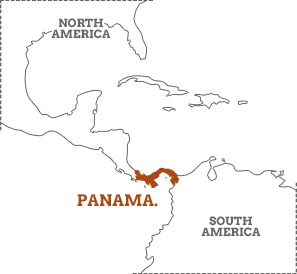

This skinny isthmus links North and South America, Pacific and Caribbean. But travellers are waking up to Panama being more than a place to pass through; it's a worthy destination in its own right.![]()

Though barely larger than Ireland, Panama manages to shelter one in 10 of all the world’s bird species within its forests and coasts, along with manatees, caiman, spider monkeys and sea turtles. Panama City is a soaring jungle of glass skyscrapers, and just a couple of hours away live Indigenous communities, who travel by dugout canoe, weave bags and baskets from forest fibres, fish for food and speak one of seven native languages unique to this country. Read more in our travel guide.

Panama is...
a haven – but not just for tax dodgers. It shelters 1,000 bird species, including 52 hummingbirds alone.
Panama isn't...
the home of the Panama hat. They come from Ecuador but were worn by workers on the Canal – hence the name.
Things to do in Panama…

Panama holiday, cloudforests to the Caribbean
Amazing wildlife, traditional cultures and tropical islands
From
£2915 to £3299
12 days
ex flights

Panama holidays, Snorkelling reefs & jungle trails
Panama's cities & coast via coffee, volcano, jungle & beach.
From
£2895
15 days
ex flights

Panama and Nicaragua small group tour
Panama & Nicaragua, cultures, rainforests & volcanoes
From
£5745
24 days
ex flights

Costa Rica & Panama tour
Adventure, culture and pure beach bliss in Central America
From
£1465 to £1805
12 days
ex flights

Panama tour, Essential Panama
A diverse & exciting journey through Panama
From
£2595
10 days
ex flights

Colombia and Panama small group tour
Explore Colombia & Panama's history, nature & traditions
From
€6545
4 weeks
ex flights


Contact Us
Call us for a chat about our holidays. We are happy to discuss your holiday and help in any way we can. No bots, queues or awful hold music.

01273 823 700
Call us until 6pm
Calling from outside the UK

Things not to do in Panama
More Panama articles

The best time to go to Panama is in December to April dry season – although “dry” is a relative concept, especially on the soggy but oh-so-hot Caribbean coast. Read on to find out about our top things to do in Panama, and get travel advice from our Panama experts.


