Armenia travel guide
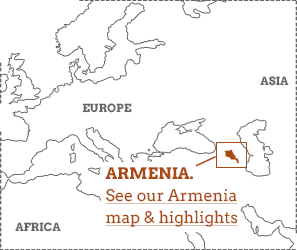
Situated on the continental confluence of the Silk Road, Armenia is often overshadowed by its larger Eurasian neighbours. This is good news for cultural travellers as it has remained largely untouched by tourism, especially the rural towns and mountain villages. Armenia shares much religious and cultural heritage with each of its neighbours, although Orthodox Christian Georgia is looked upon more like a brother than the predominantly Islamic nations of Turkey and Azerbaijan. Their similarities and differences can be explored with Caucasus multicountry tours.

Armenia has often served as a pawn in the games of great empires, leading to a tangled, fascinating and often tragic history.![]()

Scattered everywhere you’ll find monuments to the country’s strong Christian faith, with the world’s oldest cathedral, Etchmiadzin, and the UNESCO listed Geghard Monastery, just two examples of the church’s significance to the Armenian people. Aside from the ecclesiastical architecture it’s the landscapes that capture attention, with Lake Sevan, the Lesser Caucasus and the dominating snow capped peaks of Mount Ararat across the Turkish border, creating iconic backdrops to accompany cultural tours. Find out more in our Armenia travel guide.

What we rate & what we don't in Armenia
Underrated
Multicountry Caucasus tours
Combining a trip to Armenia with either Georgia, Azerbaijan or both, allows for fascinating comparisons between the Caucasus countries. Each has taken its own path after regaining independence, and there are substantial differences not only in religion, but many cultural aspects too. To get the most of a multicountry tour, travelling overland, you really need to allow a minimum of two weeks.
Tavush
Thickly forested, and dotted with nature preserves where mineral springs gently trickle, the north eastern province of Tavush is among the most beautiful corners of Armenia. Dilijan National Park is a major highlight – it was once used as a royal hunting ground. Even in a country that still sees few visitors, the tourism infrastructure in Tavush is especially undeveloped. Which is, of course, all part of its charm.
Lavash
This salted and unleavened flatbread is baked in clay ovens, and can be tasted throughout the country, especially during festivities. Lavash is no ordinary bread though. It’s considered by UNESCO to be an expression of traditional Armenian culture, crops up regularly in folktales, and was historically an essential ration for soldiers on the battlefield. You’ll see people using the bread as a napkin or a spoon, and when dried it’s also used during the Eucharist in Armenian churches.
Rated
Lake Sevan
An enduringly popular holiday resort for Armenians and visitors alike, Lake Sevan lies in the east of the country, close to the border with Azerbaijan. It’s a pretty vast expanse, the largest body of water in the Caucasus region in fact, and is where you’ll find the only beaches in landlocked Armenia. You’ll find all the standard pursuits here, from boat trips to jet skiing and sailing, and the various fish dishes you’ll find at the lake are pretty special.
Religious sites
Built in the 4th century AD, Etchmiadzin Cathedral is the spiritual centre of Armenia, as well as the oldest cathedral in the world. The views across to Mt. Ararat over the Turkish border are magnificent. But Armenia is dotted with hundreds of other significant religious sites, many of them well preserved and frequently located amid spectacular scenery, including the monasteries of Geghard, Khor Viap and Tatev. Most itineraries will feature at least a handful of these sites.
Wine tasting
Besides being one of the earliest Christian civilizations, Armenia’s other claim to fame is that it was the first country to produce wine. You’re rarely more than a stone’s throw from a small, locally owned winery in Armenia where you’ll be readily welcomed in for a tasting. Armenian brandy, which many contend should be called cognac, is a more recent arrival and also widely produced.
Overrated
Summer holidays
Summer can be uncomfortably hot in Armenia, especially in cities such as Yerevan. If you’re planning a trip in June, July or August then we recommend an itinerary that will also take you to parts of the country where it’s more refreshing. Luckily, Armenia is mountainous, and the air is always crisper up high. You can also head to popular summer resorts such as Lake Servan or Jermuk, if you’re don’t mind more of a crowd.
Speaking English
The idea that English is the universal language. Unless you’ve made at least an attempt to learn some basic Armenian or Russian, you’ll be pretty dependent on your guides outside big cities. English is more widely spoken among younger generations, but a smattering of the local lingo is always appreciated. Here’s a phrase you’ll probably use a lot: shat ha’megh e. Translation: 'It’s very tasty.’
Early nights
... in Yerevan, anyway. The capital has cast off its Soviet shackles and embraced a youthful, cosmopolitan outlook. Handsome boulevards are lined with pavement cafes that are often open late into the evenings, and there is an enthusiastic nightlife scene – jazz is especially popular, and there are plenty of underground bars and clubs where you can watch skilled musicians jamming away. Yerevan even has its own three-day jazz festival in October.


Armenia holiday, Ancient Armenia
The best of Armenia from stunning churches to local culture
From
£1399 to £1539
7 days
ex flights

Azerbaijan Georgia and Armenia holiday
Enjoy the uniqueness of three colorful Caucasian countries
From
£2169 to £2522
17 days
ex flights

Armenia walking holiday, small group
Armenia walking tour, mountains and forests with sightseeing
From
£1329
11 days
ex flights

Armenia, Georgia and Azerbaijan highlights tour
Three stunning countries in one unforgettable tour
From
£1640 to £1909
13 days
ex flights

Azerbaijan, Georgia & Armenia tours
Discover the unexplored territories of The Caucasus
From
£4430 to £5295
15 days
ex flights


Contact Us
Call us for a chat about our holidays. We are happy to discuss your holiday and help in any way we can. No bots, queues or awful hold music.

01273 823 700
Call us until 6pm
Calling from outside the UK

Food, shopping & people in Armenia
Eating & drinking
Armenia is one of the world’s oldest wine producing regions. Every time a local winemaker pops a cork on their own vintage, they’re decanting centuries of knowledge, and you can taste it in every drop.
Some regions have their own roadside food specialities. Around Dilijan you might picnic on barbecued corn on the cob. Approaching the Tatev Monastery, beekeepers sell jars of sticky gold.
Sujuk is an ancient sausage and an Armenian delicacy. There is also a sweet version containing grapes, nuts and flour that you may see hanging in markets.
People & language
Armenia’s population is almost entirely homogenous, but after nearly 70 years of rule from Moscow, it’s not only the architecture that still bears Soviet influences. Many Armenians use Russian as a second language, with English increasingly spoken in cities. There are around 11 million Armenians, but almost two thirds of them make up the diaspora which was spread after the 1915 genocide. Armenians take a lot of pride in their hospitality to visitors, perhaps a legacy of the country’s Silk Road past.
Hi / Hello – Bar’ev
Please – Khnt’roomem
Thank you – Shnorakaloot’yoon
Wine / Water – Gi’ni / Jhur
Please – Khnt’roomem
Thank you – Shnorakaloot’yoon
Wine / Water – Gi’ni / Jhur
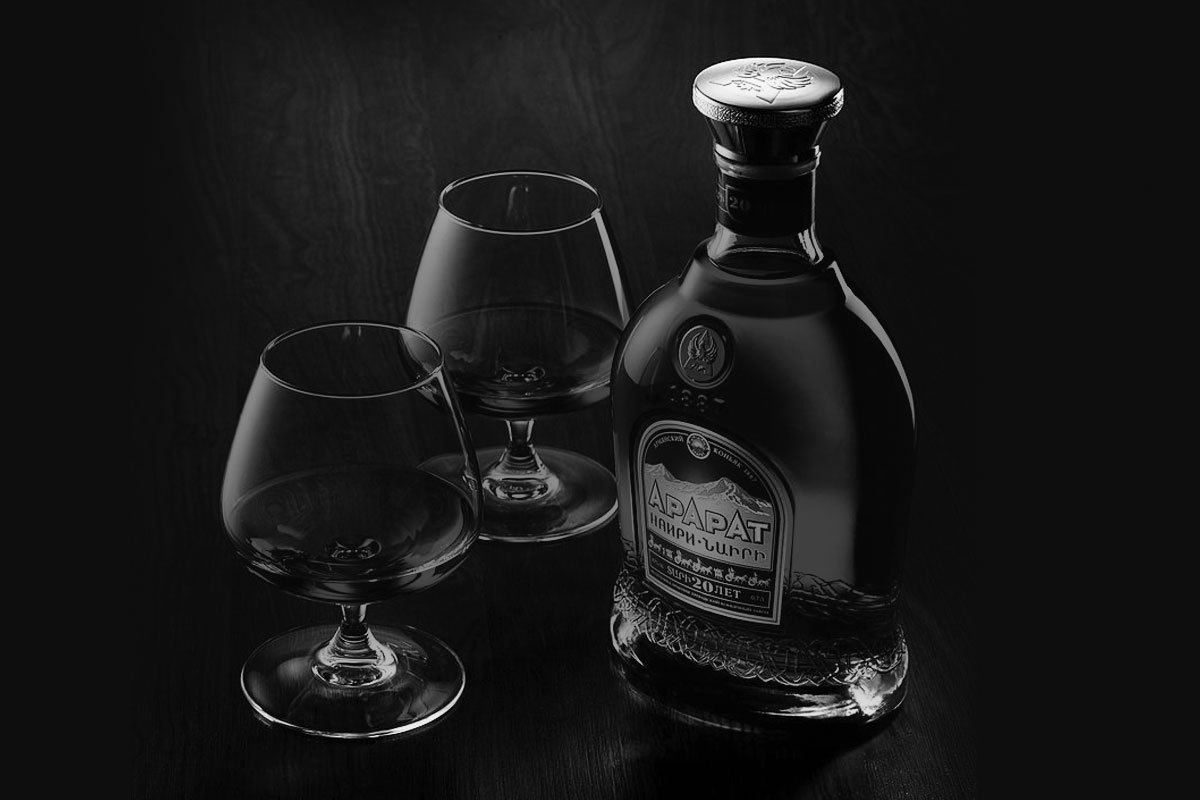
Winston Churchill was such a fan of Armenian brandy that legend has it Stalin sent him 400 bottles of the stuff. Every year.![]()
Gifts & shopping
Yerevan has a modern retail sector, but head for the open air Vernissage market at weekends. You’ll find souvenir artworks here, and handicrafts such as carpets, jewellery and Russian nesting dolls. The quality does vary, so be picky.
Duduks are an indigenous, flute-like reed instrument known for their haunting music. Traditionally made from apricot wood, they are intrinsically bound up with the national identity.
Wine tasting is a popular activity, but for a stronger tipple, then the best place to start with brandy is Yeravan’s ARARAT Museum. ARARAT is owned by the Yerevan Brandy Company, Armenia’s most prestigious distillers.
For better or worse the Kardashians are probably the most famous celebrities with Armenian heritage, but others include Cher and tennis legend Andre Agassi.![]()
How much does it cost?
Adult ticket on Wings of Tatev ropeway: £7
10-year-old bottle of Ararat brandy: £23
Ride on the Ferris wheel in Victory Park, Yerevan: 75p
Barbecued trout dish at a good Lake Sevan restaurant: £10
A note on tipping: During the Soviet era, leaving a gratuity was not customary in Armenia. Today, in Yerevan certainly, a tip of around 10-20 percent is considered normal.
A brief history of Armenia
Among the most unlikely facts about Armenia is that its national symbol, Mt. Ararat, is actually now in Turkey. That inconvenient fact aside, Ararat has been Armenia’s ‘holy mountain’ since pre-Christian times, and some even say that Noah’s Ark is buried somewhere up there. It shouldn’t really be any surprise that Armenians can be a little stubborn on points such as this. After all, the small, mountainous country is bordered on every side by larger neighbours, not all of which it gets along with very well. Read more
More Armenia articles

Our tips on the best time to visit China, month by month, with our cultural pick from the Chinese calendar.


Armenia is more than just ancient monasteries – although they are, of course, the focus of many trips here.

You don't have to be deeply devout to be curious about the churches and monasteries.

The Armenian capital of Yerevan is home to a third of the country’s population and dates back to the 8th century.

Explore in the furthest reaches of Eastern Europe with these two fascinating nations.

Appreciate the often vast cultural differences between neighbouring countries.

Armenia is great for families, allowing for a mix of activities, culture and relaxation.

What’s the food like? And what to pack? Plan your holiday with confidence with our expert advice.

Responsible travel here means respect for the communities and the environment.


