Bulgaria travel guide

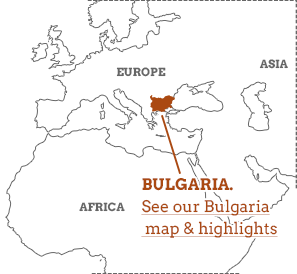
Discovering the mountains, lakes and cultural capitals of Bulgaria is like unearthing a secret treasure trove. The UNESCO sites of Rila Monastery, the Thracian tombs of Kazanlak and Sveshtari, and Pirin National Park add to the adventure of exploring in the far reaches of Eastern Europe. The capital, Sofia, has long been renowned for its leafy charms with parks and gardens adding to the enchantment of the Alexander Nevsky Cathedral and high-end retail therapy along Vitosha Boulevard.
Less an entrance to Asia, more a cul-de-sac to the Black Sea; Bulgaria boasts the Balkans' highest peak, Mt Musala, as well as Europe's most affordable capital city, Sofia.
Escaping to Vitosha Nature Park on the outskirts of the capital is always an option although time spent in the ski resorts of Bansko or Razlog is also worthwhile, especially outside the busy winter season. From the former city of the tsars, Veliko Tarnovo, to Europe's 2019 Capital of Culture, Plovdiv, much of Bulgaria remains off the typical tourist trail but there's no telling for how long.
IS/ISN'T

Bulgaria is...

part of Europe, but not as you know it.

Bulgaria isn’t...

to be rushed. It's not very Bulgarian to rush.

WHAT WE RATE & WHAT WE DON'T IN BULGARIA

Underrated

Bears

Until the early 1990s ‘dancing bears’ were commonplace in Bulgaria. Belitsa Bear Sanctuary in the Rila Mountains now means home to former performers. Belitsa is a beautiful forested sanctuary – not a zoo. Brown bears are also still roaming wild in Bulgaria. Treks and hides in the Rhodope Mountains make small group bear watching holidays an excellent excuse to go down to the woods today.

Train travel

Slowly creeping along tracks flanked by pine covered mountains en-route to UNESCO monasteries and 4th century Thracian tombs, is the best way to make the most of Bulgaria in between evenings off the rails in traditional towns and villages. Train travel in Bulgaria gets you closer to the people as you practise your languages, try different dishes and watch the world rock by your window.

Traditional crafts

From the workshops and church paintings in the city of Veliko Tarnovo to wood carving, icon painting and swirling horas (folk dances), Bulgaria's traditional crafts provide real insight into its land and people. Base yourself in the region of Troyan – right at the heart of a world-renowned pottery scene – and discover the spirit of Bulgaria through hands on experiences and an English speaking local guide.

Family holidays

Take your family on a wild week in Bulgaria and you might be surprised at just how readily they commit to life on the farm surrounded by mountains and the mooing of 500-odd cows. The Arda Valley in the Eastern Rhodope Mountains makes an ideal location for outdoor activities with river kayaking, mountain biking and vulture spotting sandwiched between sightseeing in Sofia and Plovdiv.
Rated

Walking

There are fantastic hiking trails in Bulgaria, not least within Pirin, Rila and Central Balkan National Parks. Vitosha Nature Park is also just on the outskirts of Sofia so there are no excuses not to tie your laces and head for the hills. Cable cars still run outside of winter and offer amazing views from hiking routes, panoramic ridges, glacial lakes and the highest peak in the Balkans, Mt Musala.

Winter holidays

You can't beat Bulgaria for wrapping up warm and enjoying the still of a pine forest covered in a blanket of snow. Some of Bulgaria's best snow shoe trails are to be found within its national parks including Malyovitsa in Rila, Bezbog in Pirin and the Stara Planina Mountains in Central Balkan. Also, if you're in Sofia, it's just a 45-minute ride by public transport to the Vitosha Mountains.

Monasteries & churches

Bulgaria bridges the gap between Turkey and the rest of Europe and nowhere is this more in evidence than within the ecclesiastical architecture. Eastern Orthodox Christianity meets the Ottoman Empire with Rila, Bachkovo and Troyan monasteries just a few of the historical highlights. The settings for many of Bulgaria's monasteries take you literally and metaphorically into the clouds.

City sightseeing

Plovdiv – the 2019 European Capital of Culture – is the second largest in Bulgaria and holds some incredibly important Roman archaeological sites and numerous examples of Bulgarian Renaissance style architecture. Couple a cultural tour of the Old Town with easy access to Sofia and the Rhodope Mountains, and Plovdiv is all set to become your best loved Bulgarian base.
Overrated

Bottled water

There's no need to purchase plastic bottles of water in Bulgaria. Cities, like Sofia and Plovdiv, are well known for their free water fountains. Escape into the mountains and water becomes even fresher with roadside spring points providing places to refuel. Just take a reusable water bottle with you and you're all set. Tap water is also safe to drink in the majority of Bulgaria but where's the fun in that, eh?

Beach resorts

There's nothing that Bulgarians like more during the summer than to head to the Black Sea. Although there are several quiet and relatively untouched stretches of sand – such as Irakli, Karadere and Krapets – there are also plenty of overcrowded beaches that have fully embraced the title of 'Euro party capital'. Avoid Sunny Beach and Golden Sands unless you like crowds, noise and tourist tat.

Five star service

Despite a sometimes gruff exterior, Bulgarians are generally very warm and welcoming. Just remember tourism is still a relatively new industry, particularly up in the mountains. Some staff at smaller hotels aren't trained to five-star standards. However, they will have a genuine desire to see guests comfortable and enjoying home grown seasonal fruit, veg and rakiya (potent fruit brandy), as one of the family.

Haggling

Getting a bargain at the flea markets of Sofia or the handicraft stalls of Plovdiv can be fun. A bit of haggling is often an interesting way to interact with local people as well as getting a locally made souvenir – always check labels for authenticity. Just remember that away from the larger towns and cities, you'll find some of Europe's poorest people so please don't haggle them down to the last Lev.

Contact Us

Responsible Travel, Travel Team

Call us for a chat about our holidays. We are happy to discuss your holiday and help in any way we can. No bots, queues or awful hold music.

Responsible Travel, Travel Team

FOOD, SHOPPING & PEOPLE

Eating & drinking in Bulgaria

Banitsa (filo pastry layered with goat cheese) and patatnik (baked mashed potatoes with herbs, cheese and eggs), are a couple of Bulgarian classics to try in the mountains.
Bulgarian cuisine is quite meat focused with grilled lamb and pork kebabs and moussaka (beef with potatoes instead of aubergines), mainstays on most restaurant menus.
Vegetarians needn’t despair too much, as fruit, veg and salads are always amazing. Shopska (tomatoes, cucumbers, onions, peppers and parsley with crumbled sheep cheese) is a fine example. Another veggie option is tarator, a cold yoghurt soup with cucumbers, garlic, dill and walnuts.
Melnik is one of Bulgaria’s (and Winston Churchill’s) favourite red wines. The Struma Valley and the vineyards surrounding the tiny town of Melnik are picturesque places for a tasting tour.

People & language

Approximately 85 percent of Bulgaria’s population identify as being Bulgarian, with large Turkish and Roma minorities. The national language stems from southern Slavic with the older generation also speaking Russian and the younger, English. The Cyrillic alphabet originated in Bulgaria and is used on signs – sometimes with English alongside.
You are welcome – Molya
Cheers – Nazdrave
Thank you – Blagodarya
Very delicious – Mnogo vkusno

Gifts & shopping

Handmade rose oil and soap are definitely worth adding to the shopping list as are a few bags of mursalski mountain tea and a couple of jars of homemade jam or herbal-infused honey.
Wood carved shepherds’ flutes (duduks), hand woven lace, and pottery items (especially in Troyan) make classic Bulgarian souvenirs – just check labels to ensure local and ethical origins.
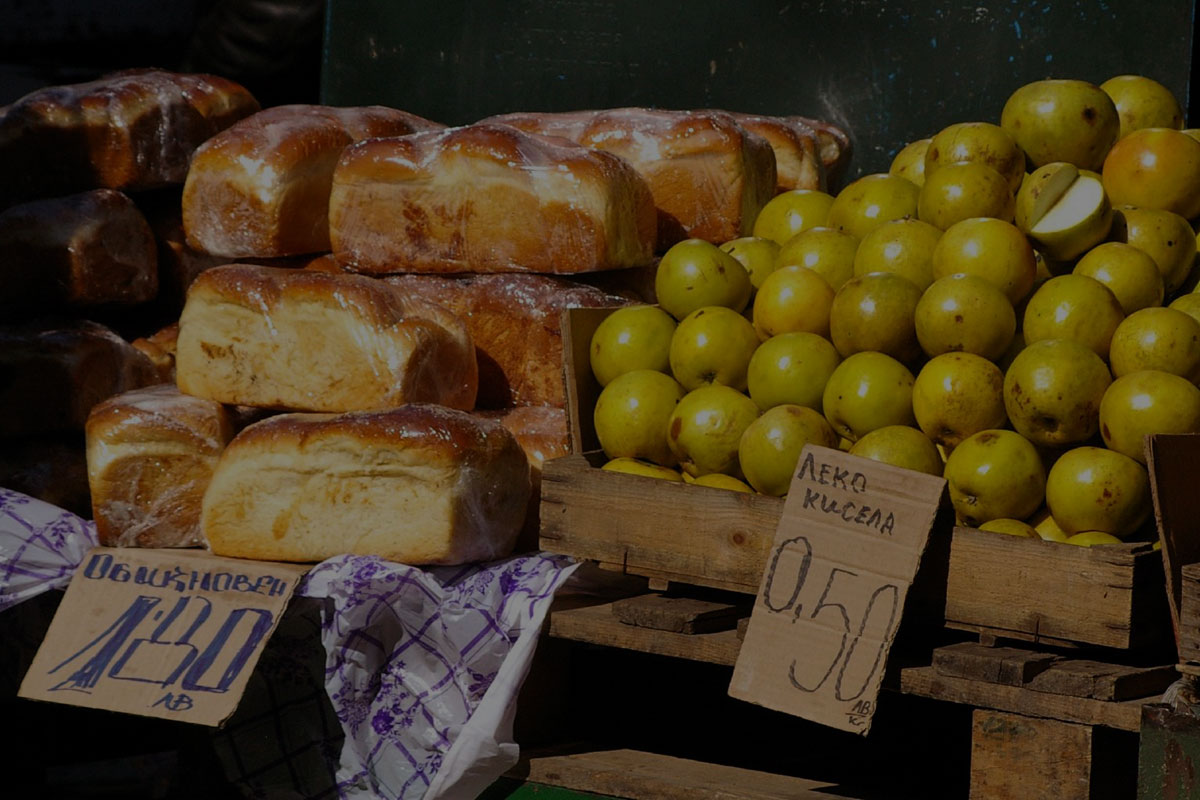
Sofia’s Central Market is over 100 years old and sells anything and everything; you’ll also find plenty of flea markets, antique markets and the Women's Market (Zhenski Pazar) which was originally run solely by women.
– Jenny Aitken, from our supplier Tucan Travel

How much does it cost?

Litre of petrol: 96p
500ml of Bulgarian beer (Boliyarka, Shumensko, Zagorka, Astika) in a restaurant: £1.50
A meal for two with drinks in a mid-range restaurant in Sofia: £15 - £30
Street food (kebabs, pizza slice, bagels): 50p - £1.00
Bottle of table wine in Melnik: £5.00
Written by Chris Owen
Photo credits: [Page banner: Detelina Petkova] [Bulgarian traditional dress: Donald Judge] [Underrated: Richard Lee] [Rated: David Stanley] [Overrated: Donald Judge] [Casserole: tak.wing] [Cheesey: tak.wing] [People: Donald Judge] [Lace: Vicki Burton] [Sofia Ladies Market - bread and fruit: Donald Judge] [Bar - Sofia: Klearchos Kapoutsis]