Faroe Islands travel guide
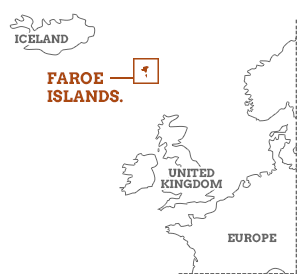
If wild landscapes, bracing sea breezes and cosy, turf-roofed villages are your style, then the Faroe Islands should be your next Nordic adventure. Originally settled by Celtic Christian Monks and Norwegian Vikings in the ninth and 10th centuries, this archipelago of 18 rugged islands, halfway between Iceland and Scotland’s Shetland Islands, may officially be part of the Kingdom of Denmark, but it has a character all of its own. Whipped by the fierce winds of the North Atlantic and home to a population of just under 50,000 people – who are far outnumbered by sheep and seabirds – it has its own language, parliament and flag, as well as a fierce sense of national pride.

You’ll see grass-roofed wooden houses everywhere in the islands, from pint-sized seaside villages to the buzzing capital city of Tórshavn.![]()

The Faroe Islands are built for outdoor adventures. Coastal hiking trails offer dizzying sea views, climbers scale mountainous landscapes straight out of Middle Earth and boats take visitors beneath soaring volcanic cliffs to view colonies of nesting seabirds. But these islands have a modern, creative streak, too, and are home to a forward thinking foodie scene, a thriving artistic community and a handful of vibrant summer festivals. For the moment the islands are untouched by mass tourism, but get there quickly – they’re unlikely to remain under the radar for long.

Faroe Islands are….
a chance to get back to nature, with untamed landscapes and fantastic hiking trails.
Faroe Islands aren’t…
for sunseekers. It’s cloudy and windy with a healthy dose of rainfall.
Things to do in the Faroe Islands…

Faroe Islands self drive tour
A culinary road trip adventure to the Faroe Islands
From
£3085
8 days
inc UK flights

Faroe Islands photography holiday
Magical photo holiday in wild & remote northerly islands
From
£4150 to £4500
10 days
ex flights

Scotland to Spitsbergen cruise
Aberdeen to Spitsbergen via the Faroes and Jan Mayen
From
£9196
14 days
ex flights

Faroe Islands small group tour
Group tour exploring the remote Faroe Islands
From
£3595
8 days
inc UK flights


Contact Us
Call us for a chat about our holidays. We are happy to discuss your holiday and help in any way we can. No bots, queues or awful hold music.

01273 823 700
Call us until 6pm
Calling from outside the UK

Things not to do in Faroe Islands…
More Faroe Islands articles

You go to the Faroe Islands for the stunning landscapes, not the weather.

Many locals argue that their annual whaling is a long-held and sustainable cultural tradition.

Really, every holiday to the Faroe Islands is a bird watching trip, at least in part.

Meet the communities that make the Faroe Islands such a special place to visit.


