Malta travel guide
Due to Malta’s central Mediterranean location it has long proved desirable from both a strategic and traveller perspective. Since Phoenician times, settlers have used the island as a maritime base becoming part of an eclectic historic legacy spanning some 7,000 years. Malta’s capital city, Valletta, is a UNESO World Heritage Site and once described by Disraeli as equalling any European capital when it comes to noble architecture. But that was before WWII, of course, when poor old Malta’s strategic position did it no favours at all with the subsequent Siege of Malta resulting in the entire island being awarded the George Cross for bravery.
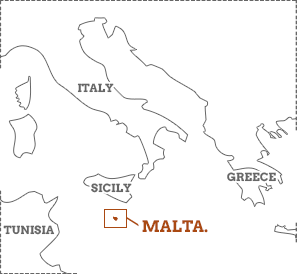

The maltese archipelago has welcomed tourists since the 70s and the island of Malta has been developed accordingly, especially around the coast; rural gozo, however, remains refreshingly untouched.![]()

The Maltese are extremely proud of their heritage and although links to the UK have resulted in British tourists as well as the occasional red phone box, reading up on the island’s history is really worthwhile.

Things to do in Malta...

Holiday to Malta and Gozo
Enjoy the highlights of Malta, Gozo on a fascinating tour
From
£1395 to £1795
8 days
ex flights

Malta and Gozo & Sicily holiday
Explore the diverse islands of Malta, Gozo and Sicily
From
£3565 to £3995
16 days
ex flights

Gozo family activity holiday in Malta
Family activity week on the beautiful Maltese Island of Gozo
From
£1445
8 days
ex flights

Gozo walking holiday, Malta
Explore, swim and soak up Gozo's tranquil atmosphere
From
£1039 to £1639
8 days
inc UK flights

Gozo short break walking holiday
Explore Gozo's impressive coastline and cobbled streets
From
£759 to £1019
5 days
inc UK flights

Malta, Gozo and Sicily small ship cruise
A cruise brimming with opportunities for outdoor adventure.
From
£3043 to £5000
8 days
ex flights


Contact Us

Call us for a chat about our holidays. We are happy to discuss your holiday and help in any way we can. No bots, queues or awful hold music.

01273 823 700
Call us until 6pm
Calling from outside the UK


Things not to do in Malta...
More Malta articles

A glance at our temperature and rainfall chart will show you the best time to visit (clue: pretty much all year round).

Discover why Gozo is great for family activities – all thanks to this Maltese archipelago island putting family centre stage.

Find out more about the Maltese bird massacre, as local hunters take advantage of a legal loophole.


