Papua New Guinea
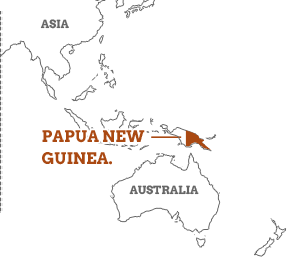
‘Adventurous’, ‘pioneering’ and ‘expedition’ are words that are frequently used when describing travel to Papua New Guinea. If this Pacific nation is tricky to get to, it is even harder to penetrate; steep mountains, dense vegetation and sparring tribes – many uncontacted – have ensured that much of its territory remains largely unexplored by outsiders. But as our Papua New Guinea travel guide reveals, the rewards for those who do make it here are simply phenomenal. PNG is a kind of lost world, with some 780 bird species (including 76 endemic), far-flung tropical islands and thriving coral reefs presenting a paradise for nature lovers. Culture fans, too, will be in their element; PNG’s 850 languages make it the most linguistically diverse country on the planet, and hikes with spirit guides, fire dances, mask festivals, ‘Mudmen’ villages and tasty meals cooked in the earth are wonderful ways to discover its rich traditions. More active travellers can take on the Kokoda Track: the greatest long distance hike you’ve never heard of.

PNG’s Highlands were once assumed to be uninhabited, but were subsequently found to be home to over a million people. This is a territory that keeps even its biggest secrets well hidden.![]()


Papua New Guinea is...
home to 34 species of birds of paradise, almost all of which are endemic to its forests and mangroves.
Papua New Guinea isn’t...
an island. It comprises half of the island of New Guinea – shared with Indonesia – as well as dozens of smaller islands
What to do in Papua New Guinea...

Papua New Guinea small group tour
Stay with tribes and visit a festival in Papua New Guinea
From
£9260 to £9995
14 days
ex flights

Papua New Guinea, Goroka Show and Tribal Lands
The very best of Papua's diverse traditional cultures
From
£6795 to £7495
12 days
ex flights

Goroka Show holiday in Papua New Guinea
Small group tour to attend the Goroka Show
From
£6175
10 days
ex flights

Papua New Guinea sea kayaking holiday
Unique sea kayaking adventure in Papua New Guinea
From
£2395
9 days
ex flights

Melanesia small ship cruise 2026
Exploring Papua New Guinea, Solomon Islands & Vanuatu
From
US $14375
18 days
ex flights

Luxury South Pacific Cruise, Papua new Guinea & beyond
Cruise to the heart of remote islands in the Pacific
From
£6425 to £7449
17 days
ex flights


Contact Us

Call us for a chat about our holidays. We are happy to discuss your holiday and help in any way we can. No bots, queues or awful hold music.

01273 823 700
Call us until 6pm
Calling from outside the UK


What not to do in Papua New Guinea...
More Papua New Guinea articles

The best time to go to PNG is in the dry season from April to October.


Papua New Guinea’s birdlife can’t be beaten for abundance and colour.

PNG is home to around 750 tribes, each with its own distinct beliefs and customs.

The Goroka Show is one of the largest tribal gatherings on the planet.

A glimpse into the astonishing mix of island communities that jigsaw Papua New Guinea.


