French Guiana travel guide

Despite Emmanuel Macron once referring to French Guiana as an island, it’s actually a small country in northeast South America. While its neighbours Guyana and Suriname gained independence from their European rulers in the 20th century, French Guiana remains a département of France, with the Euro as its currency. This has shaped the makeup of its tiny population of 250,000, with two-thirds of adults born elsewhere.
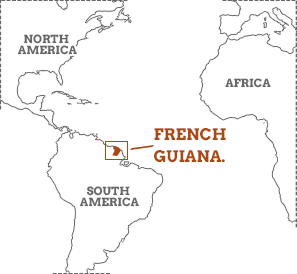
Far from being a little slice of Gallic style in South America, French Guiana is a complex blend of European money, harsh colonial history and humid rainforest.
French Guiana is dominated by rainforest and overshadowed by a history of slavery, racism and penal servitude. Napoleon III founded an island prison colony here in 1852; legendary inmates included Henri Charrière, author of Papillon. In recent decades, money has flooded into the European Space Centre, but the Guyanais argue that more is needed for the country as a whole, with many rural Indigenous and Maroon villages leading a subsistence lifestyle. Travel in French Guiana is about squaring up to its history and inequalities, with the thrill of venturing to a country rarely on South American itineraries.

French Guiana is…

a weird mix of French wealth and dense, untamed rainforest.

French Guiana isn’t…

easy to explore. Only a few places along the coast are readily accessible.

Things to do in French Guiana…

Come prepared for rain. With the exception of dry, sunny September and October, which receive around 40mm of rain each, the rest of the year in French Guiana is wet. Sometimes it rains seven times a day and we’re not talking light showers, but short, drenching downpours. Often, these only last 10 minutes, but if you don’t have adequate waterproofs, you can be soaked to the skin in two minutes. Combine with other countries. With much of the country covered by rainforest, most travel within French Guiana concentrates on the coast. Here, you’ll find a handful of sights – enough to fill a few days – but this isn’t an ideal destination to visit in isolation. Instead, see French Guiana as a fascinating component of a multi country tour that might include neighbouring Suriname and also Guyana, where you can experience rainforest and river lodges, see Kaieteur Falls, meet Amerindian communities and explore the regional capitals, Georgetown and Paramaribo. Explore French Guiana’s colonial history – it continues to inform modern life here. The earliest French settlement was in Cayenne in 1643. The Dutch, British, Brazilians and Portuguese all fought over the country, but France resumed control in the mid 19th century. Penal settlements were established here, with the first convicts arriving in 1852, until closure in 1953.

Contact Us

Responsible Travel, Travel Team

Call us for a chat about our holidays. We are happy to discuss your holiday and help in any way we can. No bots, queues or awful hold music.

Responsible Travel, Travel Team

Things not to do in French Guiana

With little tourism infrastructure, few good roads and a wild interior, French Guiana is not an easy place to travel around independently. It’s much easier to book onto an organised small group tour that will explore the entire region, taking in other countries including Guyana, Brazil and Suriname, and arranging all accommodation, transport and guides for you. French Guiana is a department of France, with French laws and currency, so don’t forget to bring some Euros. Brush up on your French, too, as it’s the national language, with Creole also widely spoken but English scarcely at all. Come on a budget. French Guiana is one of South America’s wealthiest and most expensive corners. Household goods are 12 percent more expensive here than in mainland France (many are imported from France), but wages lower for most people [1]. In 2017, local demonstrations highlighted a lack of investment from the mainland in health, education and tackling violent crime. Protesters accused the French government of pumping money into the Centre Spatial and ignoring the people. For the traveller, these inflated prices coupled with French Guiana’s remote location means visiting is not a bargain option. Don’t take risks with personal safety. Violent crime has been rising in French Guiana since the late 2000s, especially in Cayenne. Your tour leader can advise on the safe parts of town, but as always, keep valuables out of sight and don’t wander around alone after dark.
Written by Joanna Simmons
Photo credits: [Page banner: Bernard DUPONT] [Is/isn't : Didwin973 ]