Peru travel guide
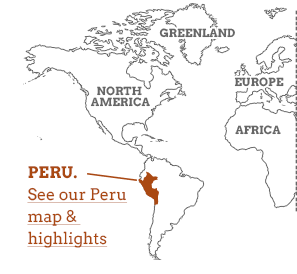
The name 'Peru' conjures up images of jagged mountain peaks circled by rare condors, the mysterious Nazca lines, sacred Lake Titicaca and its Aymara-inhabited floating islands, and one of the continent's biggest draws: Machu Picchu and the Inca Trail. It's easy to view a Peru holiday as a voyage into the lost Inca kingdom of the Andes, whose modern inhabitants - the Quechua - are living descendants of its pre-colonial past.

This epic nation is a South American microcosm, complete with all its most sacred and seductive riches.![]()

But don't underestimate Peru's diversity. Over half of the country is blanketed by the Amazon, hosting some extraordinary species-rich environments, and its coastline is a 2,500km desert, with the highest sand dunes on earth. Its cuisine is influenced as much by its coastline as by its native potatoes and quinoa, and its cities are an energetic mix of the modern and the ancient, with Spanish architecture perched on top of Inca stonework, and glass-fronted buildings overlooking colonial plazas. Read on in our Peru travel guide.

Peru is/isn't
Peru is...
much more than just the Inca Trail. There are deserts, beaches and jungles...
Peru isn't...
for anyone who feels queasy at the sound of panpipes
What we rate & what we don't
Underrated
New-look Lima
When a city grows in popularity based on its culinary offerings, you know you're onto a good thing. Overlooked in favour of its Andean counterparts, Lima is an eclectic, modern city which offers colonial architecture alongside surfing, world-class restaurants, craft markets and wild nightlife. Look out for music stores selling charangos (Andean lutes) and quenas (bamboo flutes) - the shopkeeper might be able to give you a quick lesson.
Pearly white Arequipa
It's worth spending a couple of days of your Peru holiday exploring this UNESCO World Heritage Site's white rock buildings, majestic archways, vast Santa Catalina convent and the San Camilo Market, all under the shadow of a snow-capped volcano. It's a worthy rival to Cuzco for the nation's colonial crown. It's also the birthplace of many of Peru's best dishes, and its restaurants are suitably superb.
Slow travel
If you rush to tick off Peru's biggest sights you'll miss its magical highlights. Fly straight out of Lima and you miss Peru's most cosmopolitan city. Take the bus right out of Machu Picchu and you miss wandering back the next morning, before the crowds arrive. Take a daytrip to Titicaca's islands and you miss its most spellbinding sight - a golden sunrise over the sacred lake.
Exotic wildlife
Peru's wildlife is much more than condors and llamas. There are 104 known 'life zones' on the planet - and thanks to Peru's varied geography it contains a phenomenal 84 of them. Species include giant otters, spectacled bears, pink river dolphins and 1,800 birds - the second highest of any country in the world. Many habitats are endangered, so choose a responsible guide for your Peru holiday and tread lightly.
Rated
Lake Titicaca
The highest navigable lake in the world, at a breathtaking 3,800m, Lake Titicaca straddles the border of Peru and Bolivia and once here, you'll realise why the Incas saw it as the birthplace of the sun, moon and the first humans. Its seemingly endless, sapphire waters stretch into the horizon, and the high mountain air is sparklingly clear.
Taste explosion
Influenced by the Andes, Amazon and Pacific, as well as the Spanish, Chinese and Incas, Peru's cuisine deserves its rave reviews. Beyond the much-praised ceviche, there's a cornucopia of treats, from fancy restaurants to streetside stalls selling pasty-style empanadas, fresh tropical fruit juices, spicy aji de gallina, nutty-flavoured quinoa and stir-fried lomo saltado. Always choose local dishes, for freshness and flavour.
The Andes
A mythical world of snow-capped peaks, smoking volcanoes, swirling condors and sacred, hidden valleys, the Andes spark everyone's imagination. The Peruvian section of this mighty mountain chain is particularly special, as it is liberally sprinkled with Inca and pre-Inca ruins, which can be reached by ancient stone paths. As well as superb hiking trails, the mountain biking is some of the world's most technical and exciting.
Machu Picchu
It's an obvious one, but no one is ever disappointed by the Inca's Lost City, and everyone who emerges through the Sun Gate is just as awestruck as the explorer who rediscovered this mountaintop treasure a century ago. Even the sheer number of tourists fails to dull the impact, and the Inca stonework - cut to perfection and requiring no cement - is mindblowing.
Overrated
Fake Peruvian culture
Any successful tourist attraction runs the risk of losing its spirit once it becomes popular - and Quechua culture is an unfortunate example of this. While there are still many genuine markets, communities and traditions, the sad fact is that those located along the Gringo trail - particularly the floating Uros Islands - are likely to be merely tourist shows: mass-produced, inauthentic and exploitative of both locals and visitors.
Aguas Calientes
Originally a remote railroad town without electricity, Aguas Calientes now receives over 1,500 visitors a day thanks to its proximity to Machu Picchu. While this is great in terms of local employment, it also means inflated costs all round - for the hotels, restaurants and crafts - without the high quality to justify it.
The “poor man’s Galapagos”
The Ballestas Islands are rather wonderful, with basking fur seals, penguins and blue-footed boobies. However, whoever nicknamed them "the poor man's Galapagos" has unfortunately built up an unreasonable expectation of these scraggy little rocks, and one that they simply can't live up to. Appreciate them for what they are, and contribute to their much-needed conservation during your holiday to Peru - but if you want the Galapagos, go to Ecuador.
Nazca lines
One reason the creation of these vast glyphs remains a mystery is that they can only be properly viewed and appreciated from the air. Unfortunately for the modern traveller on holiday in Peru, that means an exceptionally environmentally unfriendly flight; a large fee for 30 minutes in the air; and a high chance of sickness as the plane banks left and right to allow views out of both sides.

Peru adventure holiday, private departure
Private Peru tour with day treks, rafting, cycling & culture
From
£3500 to £4000
15 days
ex flights

Peru, Ecuador & Galapagos adventure holiday
Your private adventure from Machu Picchu to the Galapagos
From
£5500 to £6900
23 days
ex flights

Peru walking and cultural holiday
Trek the cultural sites and mountain scenery of Peru
From
£2930
10 days
ex flights

North Peru luxury tailor made tour
A mystical desert, whale-watching & pre-Incan settlements
From
£4350
10 days
ex flights

Hiking the Inca Trail holiday
An unrivalled combination of history and spectacular scenery
From
£1570 to £1875
8 days
ex flights

Inca Trail adventure holiday
Discover Cuzco and the Sacred Valley on this Incan adventure
From
£833 to £1155
7 days
ex flights


Contact Us

Call us for a chat about our holidays. We are happy to discuss your holiday and help in any way we can. No bots, queues or awful hold music.

01273 823 700
Call us until 6pm
Calling from outside the UK


Food, shopping & people
Eating & drinking in Peru
Try a tangy Pisco Sour, made with Pisco, lemon juice and egg white.
Quinoa is a tasty, protein-packed grain. The staple, sacred food of the Incas, it is native to the Andes.
Ceviche is Peru's most famous dish. Fresh, raw fish is marinated in lime juice and spiced with chilli and onions. Don't make the Gringo mistake of having it for dinner - true Peruvians only eat this at lunchtime.
Cuy is a Peruvian staple that may be less appetising to visitors - it's guinea pig. And it's usually served whole.
People & language
Peruvian culture varies by altitude. The highlands are the stronghold of the Quechua - descendents of the Inca - while the lowland forests have many smaller native groups. Peru's official languages are Spanish, Quechua and Aymara, but at least a dozen more languages are spoken in the Amazon.
You'll see the word "Inti" a lot. It means 'sun' or 'Sun God' in Quechua.
Lateness is a national trait - to try and encourage punctuality, emphasise the "hora inglesa" - 'English time'!
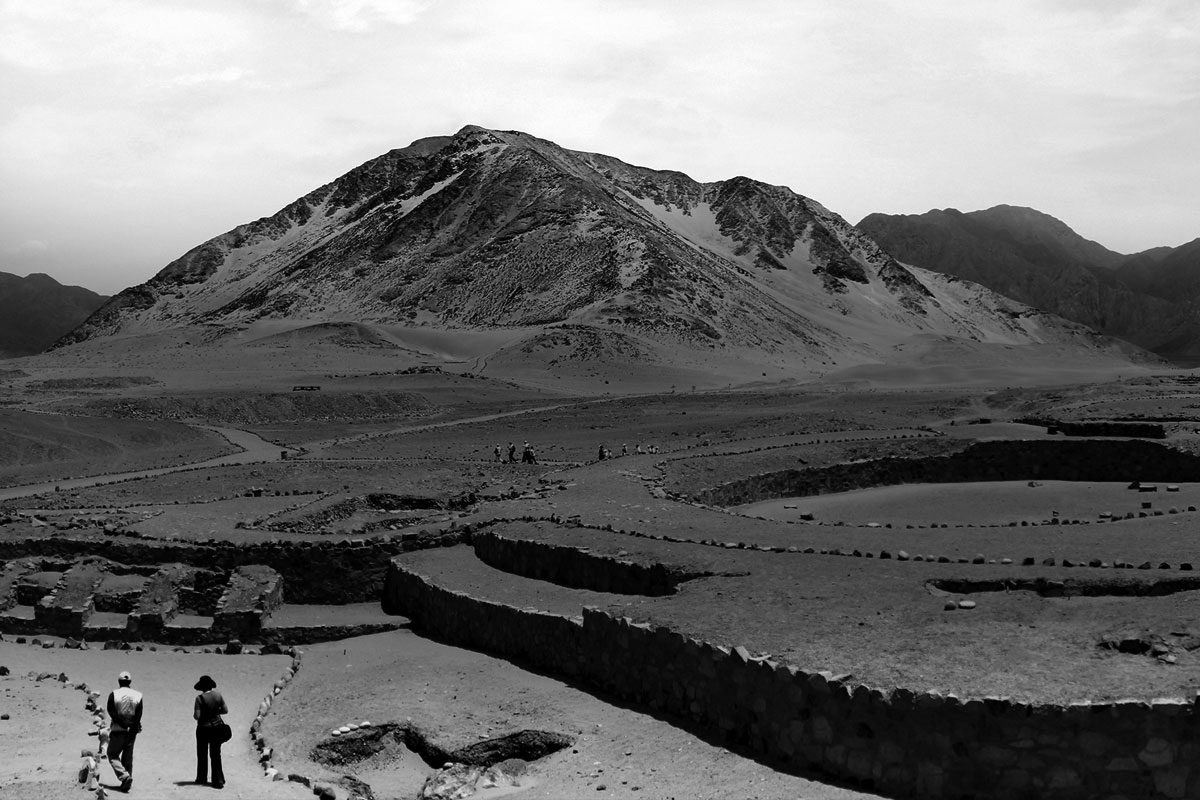
The great Inca Empire was actually a mere blip on the continent's 5000-year cultural history - their rule lasted barely a century.
![]()
Gifts & shopping
Alpaca wool hats, jumpers, scarves, ponchos and blankets are ubiquitous in Peru. Knitted items here are high quality and wonderfully warm, but you get what you pay for - a "bargain" may well be fake.
Colourful textiles handwoven on traditional backstrap looms capture the vibrant spirit of Peru's indigenous people. Try and buy direct from craft cooperatives. Cheaper items on markets will be mass-produced, and possibly imported.
Peru's jewellers use intricate filigree techniques, weaving and soldering thin gold and silver threads to create beautifully detailed earrings, bracelets and necklaces.
The humble potato originated in Peru - hence the local expression of national pride: 'I'm more Peruvian than the potato!' ![]()
How much does it cost?
Standard train journey from Machu Pichcu to Cuzco: £55
A whole, roasted guinea pig: £10.50
Ceviche in a restaurant: £5-£12
Large bottle of Cuzqueña beer: £1.40
Real alpaca shawl or jumper: From £40
More Peru articles

Peru has a climate that varies significantly with its altitude. Our rainfall and temperature charts offer a useful guide.

Here are the classic highlights, including Inca trekking, and combining Andes and Amazon...


Peru’s Inca Trail is just one tiny section of over 40,000km of trails that crisscross the former Inca Empire.

The Nazca Lines in Peru remain one of the country’s great mysteries. Find out how to see them by land or air.

Community homestays, brightly woven handicrafts and spectacular island hikes are Lake Titicaca’s calling cards.


Machu Picchu will delight children as much as parents, as will long-lashed llamas.

Cross the border at Lake Titicaca and see Bolivia and Peru together.

This guide is for you if you want to rediscover Machu Picchu, explore the Amazon or get off the beaten track.

A page packed to the rafters with sound, practical advice from our South America experts and past travellers.

Porters' rights are one of the most important Peru responsible tourism issues.

Find all of our Peru guides in one place, for particular places such as Machu Picchu, and different holiday types.


