Angola travel guide

Angola may take up a lot of space on the map of southern Africa, but it’s almost invisible to travellers. This former Portuguese colony is only just opening up to tourism, after 27 years of war left it cut off from the world. The war began after Angola won independence from Portugal in 1975 and continued until 2002. It was a civil conflict and a proxy Cold War. The Soviet Union, Cuba, South Africa and the USA were all involved and vied for mineral and oil resources.
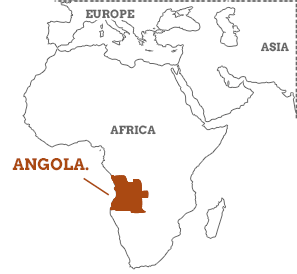
Angola’s civil war kept the country closed to tourists, and inadvertently preserved the lifestyles of the many tribespeople living in the south of the country.
Today, the conflict is over, but high prices, a tricky visa application process and almost zero infrastructure outside Luanda, the capital, mean travelling here is challenging. It’s an expedition rather than a holiday, organised by experts with local contacts who are able to tread respectfully into a world rarely seen by visitors. The privileged, intrepid few who come here discover desert oases and prehistoric rock art. They can see towns built under the Portuguese, Angola’s former colonisers and, most fascinating of all, visit tribespeople following traditional lifestyles.

Angola is…

a fascinating, unexplored chunk of southern Africa.

Angola isn’t…

an easy option. There’s barely any tourism or infrastructure.

Things to do in Angola…

Head southwest. As Angola’s civil war rumbled on, it became just as much about controlling the diamond mines and oil fields of the country’s centre, north and east as about politics. As the southwest provinces of Huila, Namibe and Cunene had no such resources, they were left alone. This not only makes them landmine free, it means the tribespeople living here remain broadly uninfluenced by the outside world. Meet the people. Angola has some 90 ethnic groups, with many living in the southwest and still observing ancient practices, with women typically maintaining their traditional dress more than men. The Mucubal women wear a wicker framed ompota headdress and girls have their upper teeth sharpened and lower teeth removed. Interestingly, teeth sharpening is thought by some anthropologists to be a cultural hangover from the 1570s when Portuguese slavers began shipping huge numbers of Angolans to Brazil. Slaves were valued for the quality of their teeth, so tribes resorted to despoiling them. The women of the Muila tribe coat their hair with a red paste called oncula and wear massive collars, created using beads and ostrich eggs, covered with a mix of mud, cow dung and herbs; the vilanda set of necklaces worn once married can’t be taken off. Himba women, meanwhile, coat their braids and skin in butter fat and ochre, creating a reddish sheen. Bring patience and a sense of humour. You’re travelling in a remote part of the world, with little infrastructure, and different standards and attitudes. Things may not go to plan, but a positive attitude is helpful when faced with practical difficulties.

Our top trip

Angola holiday, Expedition to Angola

Angola holiday, Expedition to Angola

Discover the amazing tribal traditions of southern Angola

From £4149 to £4349 11 days ex flights
Small group travel:
2026: 5 Jul, 4 Oct
2027: 11 Jul, 3 Oct

Contact Us
Responsible Travel, Travel Team

Call us for a chat about our holidays. We are happy to discuss your holiday and help in any way we can. No bots, queues or awful hold music.

Responsible Travel, Travel Team

Things not  to do in Angola…

Come on a budget. Angola may be amongst Africa’s least explored countries, but that doesn’t mean it’s cheap. The oil boom has made Luanda one of the most expensive cities on the planet, although costs outside the capital are lower. Organised tours require a high level of expertise and local contacts, too, so visiting Angola is more expensive than other African countries. When it comes to people, don’t point and shoot. The tribespeople you’ll meet in Angola are extremely photogenic, often wearing unique traditional dress and jewellery, but don’t assume they’re happy being photographed; the older generation and particularly women may not be comfortable with having their picture taken. Imagine you can visit Angola independently. Angola is a challenging destination, which sees barely any tourists, so you’ll need the organisational support of a specialist tour operator to travel here. There is very little accommodation outside the capital which means you’ll often be camping, with no bathroom facilities, and roads are poor or non-existent. A tour will provide a local guide who speaks Portuguese and some local languages, a vehicle, all catering supplies and tents. It will also have built up relationships with local tribes, so you can meet them and camp near their villages. Come for the wildlife. Pre-war Angola was one of the finest places in Africa to see animals, but most were shot for food during the war and the country’s rhino were poached for their horns.
Written by Joanna Simmons
Photo credits: [Page banner: David Stanley] [Is/Isn't: Malcolm Manners] [Do/Don't: Rempros]