Cape Verde travel guide
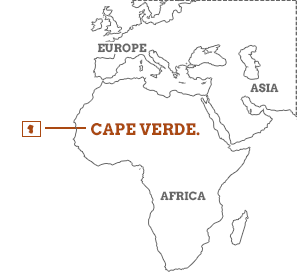
This relatively little-visited archipelagic nation, made up of ten volcanic islands lying 500km off the West African coast, is fortunate in so many ways. Geologically it’s part of what is known as Macaronesia, along with The Canaries and the Azores. This word translates from the Greek, rather aptly, as ‘islands of the fortunate’. They are also fortunate in that they have a rich Creole cultural heritage with superb food, music and sense of fun. They are fortunate with their climate, with year round sunshine and glorious temperatures.

Here I saw the glory of tropical vegetation... It has been for me a glorious day, like giving to a blind man eyes, he is overwhelmed with what he sees and cannot justly comprehend it![]()

- Charles Darwin in Cape Verde, 1832
And last but not least, they have the fortune of not having been totally ravaged by mass tourism, because hiking up through these dramatic volcanic landscapes, down to long, empty sandy beaches and back up again through vertiginous valleys is where fortune definitely favours the brave. And that fortune is found in unique and very much untouched Cape Verdean beauty.
See our Cape Verde travel guide for more details

Cape Verde is...
just six hours from the UK, with beaches, hiking and sun all year round. And it is still a very well kept secret
Cape Verde isn't...
Cape Verde anymore. Its official name is Republic of Cabo Verde, going back to its Portuguese roots.
Things to do in Cape Verde...

Cape Verde Island cruise
Cruise the islands of this little visited Archipelago.
From
£2109
8 days
ex flights

Cape Verde Archipelago small ship cruise
Enjoy small ship cruising around the Cape Verde Islands.
From
£2252 to £2339
8 days
ex flights

Cape Verde walking holiday
Walk between old villages and sugarcane terraces
From
€1525 to €1575
7 days
ex flights

Cape Verde guided tour
Colonial towns, vibrant markets & outstanding views
From
£2749 to £2849
10 days
ex flights

Cape Verde, women's empowerment holiday
Meaningful Cape Verde holiday highlighting females in agriculture
From
€1295 to €1495
7 days
ex flights

Cape Verde walking tour
Explore nature and landscapes of Cape Verde
From
€1395 to €1495
7 days
ex flights


Contact Us

Call us for a chat about our holidays. We are happy to discuss your holiday and help in any way we can. No bots, queues or awful hold music.

01273 823 700
Call us until 6pm
Calling from outside the UK


Things not to do in Cape Verde...
More Cape Verde articles

The best time to go to Cape Verde is...any time. It's sunny year-round.

Cape Verde culture is built on music, storytelling and food. Discover how the best holidays invite you in.

Go on a walking holiday to experience the diverse and dramatic landscapes of this West African archipelago.

These holidays shine a light on the women at the heart of the country.


