Djibouti travel guide

If there were a medal for the least known country in Africa, Djibouti would probably win it. Often overshadowed by its larger neighbour Ethiopia, little visited Djibouti makes up for its tiny footprint with a ton of spectacle. Turquoise salt lakes, limestone chimneys puffing out steam, hot springs, and flocks of flamingos bright pink against extinct volcanoes provide otherworldly drama in the interior, while Djibouti’s coast is home to pristine beaches and waters where whale sharks swim.
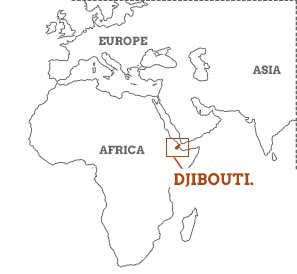
It’s not generally on anyone’s bucket list, but maybe it should be – tiny Djibouti has a strange and dramatic landscape.
Culturally, Djibouti is a mélange of African, Arabic and Indian Ocean influences. Most people are Muslim with Somali the predominant language, and beyond the thriving, multi-ethnic capital, a small population of Afar tribespeople live a nomadic, traditional life in the harsh terrain. Travel here is a walk on the wild side, taking you from Djibouti City’s busy streets to apocalyptic landscapes, baking under the cloudless African sky.

Djibouti is…

a sixth the size of England, but brimming with bizarre landscapes and natural wonders.

Djibouti isn’t…

on most travellers’ radars, but it should be.

Things to do in Djibouti…

Explore its extraordinary landscapes. Little visited Djibouti rewards the intrepid few who make it here with some of Africa’s most out-there landscapes. Highlights are Lac Abbé, with its white salt shores and turquoise waters and Lac Assal where pink flamingos stand out against a landscape studded with limestone chimneys and ripped open by steaming hot springs. Allow time to explore Djibouti city. Some tours only spend a night here before heading into the interior, but this vibrant capital, which blends African, Asian, Arab and European influences, is worth spending time in. Explore its African Quarter, home to iconic Hamoudi Mosque, discover the stalls of Les Caisses Market and see the whitewashed houses and Moorish arcades of the European Quarter, coming across French legionnaires, be-suited Somali businessmen, Afar tribesmen and local women in brightly coloured clothes. Combine Djibouti with other countries. This tiny country boasts amazing natural sights, but you’d be hard pushed to spend a fortnight here. Instead, combine Djibouti with neighbouring Ethiopia or Somaliland, on a trip of nine or 10 days.

Our top trip

Somaliland and Djibouti tailor made tour

Somaliland and Djibouti tailor made tour

A pioneering overland journey through Djibouti & Somaliland

From US $2750 10 days ex flights
Tailor made:
This trip can be tailor made throughout the year to suit your requirements

Contact Us

Responsible Travel, Travel Team

Call us for a chat about our holidays. We are happy to discuss your holiday and help in any way we can. No bots, queues or awful hold music.

Responsible Travel, Travel Team

Things not to do in Djibouti

Forget to greet people properly, even if you’re just doing something mundane like shopping or changing money. Greetings are an important formality in Djibouti and using one goes a long way towards good relations. Mug up on some French or Arabic – a simple salaam aleikum will be appreciated. Photograph local people without asking their permission first. As this is a Muslim country, women should dress conservatively, too, as another courtesy. If you’re finding the meat and rice that’s served throughout Djibouti a bit dull, don’t miss out on the opportunity to have a great meal in Djibouti City. This busy, thriving port has plenty of good hotels, bars, clubs and restaurants and it’s the best place in the Horn of Africa to enjoy a posh dinner. Underestimate the power of the sun in Djibouti and do keep yourself really well hydrated, to avoid heat exhaustion, or the even more serious heat stroke. Remember that dehydration is already happening by the time you feel thirsty – drink sufficient water so that you’re never parched.
Written by Joanna Simmons
Photo credits: [Page banner: Endless Traveller] [Djibouti guide icon: Native Eye] [Is/isn't: Skilla1st - ] [Things to do/not to do: Francisco Anzola]