Equatorial Guinea travel guide

Equatorial Guinea is one of the wealthiest places in Africa, with new ports, motorways and cities springing up in double time. European colonialism, a succession of attempted (and successful) coups and the 1996 oil boom have continually widened the gap between rich and poor – and yet you’ll find that many Equatoguineans meet this with a laidback friendliness that belies past upheavals.
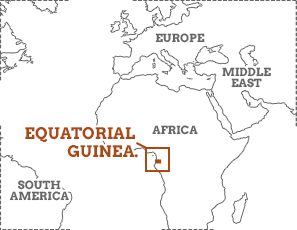
Keep the stories of colonialism, electoral rigging and oil exploitation in mind, but also look beyond them to the volcanic peaks, rainforest communities and sea turtle beaches.
Africa’s only Spanish-speaking nation stretches across a pocket of continental Africa and five volcanic islands. On the mainland (called Rio Muni), tropical jungle and mangroves shelter some of the country’s last elephants, crocodiles, hippos and leopards. It’s also where you’ll find a new city rising above the forest canopy – Ciudad de la Paz, the omnipresent president’s capital in the making. The historical capital, Malabo, sits on Bioko Island. Sink south, and you’ll discover Moka Valley’s sky-high crater lakes and sacred ancestral rainforests, plus primate-heavy national parks. Find out more in our Equatorial Guinea travel guide.

Equatorial Guinea is...

for curious travellers willing to peer beyond the news headlines.

Equatorial Guinea isn't...

an easy country to crack. Reading up on its history will give you a huge amount of understanding, especially when paired with the views of your tour guide.

Things to do in Equatorial Guinea...

Eat outside the hotel, where you’ll find Central African recipes with a Spanish twist. Grilled crayfish, fish barbecued in plantain leaves, sweet potato and peanut stews and spicy pepe soup are all staples. Just beware of bushmeat: monkey is a common sight at markets. Equatoguineans also love their wine, drinking the most bottles per capita of any African country. Sweet palm wine is the cheap (and heady) favourite. Listen out for festivals. While Roman Catholic in name, many Equatoguineans respect tribal traditions revived after gaining independence from Spain in 1968. Christian feast days are a big deal, often combining church blessings and all-women choirs with joyous balélé dancing to zither, harp and drum bands. French and Spanish are the official tongues, but you’ll also hear songs in languages like Bube and Fang. Avoid the malls aimed at expats and oil barons. Markets are the best place for authenticity and atmosphere; friendly haggling is encouraged. Poaching is widespread though, so if that wallet looks like it’s made from crocodile skin, it probably is. Instead, watch out for gorgeously polished wooden bowls, fresh coconuts and CDs of local artists like Latin pop duo Hijas del Sol. Travel with your eyes open. Independent watchdog Freedom House ranks Equatorial Guinea among the ten least democratic countries in the world. President Obiang Nguema has ruled since a military coup in 1979, and the elections and press are heavily regulated. Plus, despite the eye-watering wealth around, most Equatoguineans have a low life expectancy linked to poverty and a lack of accessible healthcare.

Our top trip

Equatorial Guinea small group holiday

Equatorial Guinea small group holiday

The highlights of one of Africa's least known countries

From £3999 to £4199 10 days ex flights
Small group travel:
2026: 11 Jan
2027: 11 Jan

Contact Us

Responsible Travel, Travel Team

Call us for a chat about our holidays. We are happy to discuss your holiday and help in any way we can. No bots, queues or awful hold music.

Responsible Travel, Travel Team

Things not  to do in Equatorial Guinea...

Hobnob with the oil barons. Nothing quite illustrates the gulf between rich and poor like the sight of politicians and businesspeople sinking champagne in the sleek hotel bars of Bata. The rest of the population only glimpses the millions brought in by the offshore oil and gas deposits.Expect to see big game in Monte Alen. This national park in Rio Muni has been touted as one of the most underrated national parks in central Africa. These days, though, neglect has led to deforestation and poaching of the elephants and gorillas that once roamed in their thousands. Technicolor birds, butterflies and insects still mill around the treetops. Leave your passport at the hotel. ID checks are common, so always keep a copy of your passport and visa on you. Bank on getting a view from Pico Basilé. Coming in at 3,011 metres tall,  the highest mountain in Equatorial Guinea can occasionally afford you spectacular panoramas over the whole island and Cameroon. But although the vistas can be magnificent, the weather mostly makes for a foggy drive through forests; if the weather looks good, your guide can drive you to a viewpoint. Photograph government buildings like ports, bridges and presidential palaces. Snapping pictures of these admittedly grand structures can carry a hefty fine.
Photo credits: [Page banner: alarico] [Is/isn't: cros de celis] [Pico Basile: Jmhi]