Eswatini (Swaziland) travel guide
They say good things come in small packages – Eswatini is proof. At no more than 200km north to south and 130km east to west, it’s one of the tiniest countries in Africa. Culture, wildlife, history and beautiful scenery are packed into one small, very accessible package, making it the ideal destination for anyone new to the continent. With 17 protected areas, it’s home to incredible wildlife, while hiking and biking trails, zip lines and canopy adventures provide adrenaline junkies with their fix, too (in case encountering a black rhino in a bad mood doesn’t do it!).
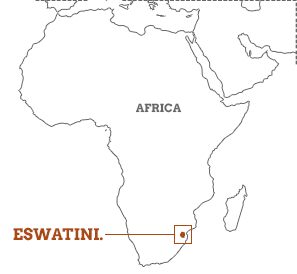

Eswatini is perfect for the first-time visitor to Africa, offering a compact and colourful microcosm of a complex continent.![]()

Eswatini is one of the world’s last absolute monarchies, led by a king who had the power to singlehandedly change the country’s name from Swaziland to Eswatini in 2018, and daily life is informed by tradition but affected by high HIV rates and unemployment. Despite this, Swazi people are famously hospitable and proud of their culture. Many travellers tag on Eswatini to a tour through neighbouring South Africa, but as our Eswatini travel guide reveals, it’s a glorious destination in its own right.

Eswatini is...
a pocket-sized place with lots of heart and soul.
Eswatini isn't...
all about going on safari. Rich culture and warm people complement the wildlife.
Things to do in Eswatini

Mozambique, Zululand & beach small group safari
Relaxing Beach & Bush safari through South Africa Mozambique
From
€2550
14 days
ex flights

South Africa and Swaziland safari
The Rainbow Route from Kruger to Cape Town
From
€2990
17 days
ex flights

South Africa and Swaziland safari holiday
Search for the Big 5 in South Africa and Eswatini
From
£1415 to £2015
10 days
ex flights

Swaziland wildlife and culture tour
Explore Eswatini, one of the smallest countries in Africa
From
£2995
12 days
ex flights

Kruger & coast holiday in South Africa
Explore the incredible Southern Africa
From
£787 to £1125
9 days
ex flights

Family holiday to South Africa & Swaziland
Kruger, Swaziland and Durban with the family
From
£1985 to £2135
13 days
ex flights


Contact Us

Call us for a chat about our holidays. We are happy to discuss your holiday and help in any way we can. No bots, queues or awful hold music.

01273 823 700
Call us until 6pm
Calling from outside the UK


Things not to do in Eswatini…
More Eswatini (Swaziland) articles

Eswatini (Swaziland) and its rich culture is a year-round treat. Our climate charts and expert tips help you prepare.


