Gabon travel guide
Abundant wildlife may not be a unique attribute for an African country, but how about the opportunity to encounter gorillas and chimpanzees in the same stretch of forest, or elephants and hippos strolling along a beach? How about witnessing leatherback turtles nesting on that same stretch of sand, or humpback whales breaching offshore? And what about rare manatees, bobbing around in networks of lagoons? This is certainly no Big-Five-from-a-jeep-type encounter.
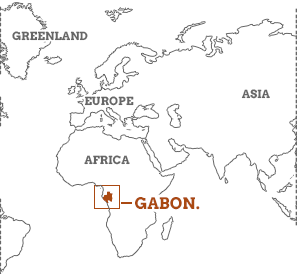

Gabon woke up to its own astonishing natural wealth in 2002, when it created all 13 of its national parks. The rest of the world continues to slumber, however, in peaceful oblivion.![]()

Gabon confounds expectations in other ways, too. It is peaceful and conflict free, despite its 40 ethnic groups, many of whom still lead traditional lifestyles: subsistence farming, fishing and hunting. Oil has made Gabon rich, as can be seen in its contemporary coastal capital, Libreville, with its high end restaurants and chic seafront. Tours of Gabon will immerse you in both its nature and its fascinating culture, both wonderfully preserved and largely unknown to the outside world. Find out more in our Gabon travel guide.

Gabon is…
one of the most forested countries in the world, with almost 80 percent of its land covered in jungle.
Gabon isn’t…
English speaking. French is the official language here and it is widely spoken alongside local languages.
Things to do in Gabon…

Gabon wildlife tour
Track mandrills, black colobus and gorillas in Gabon
From
£8195
10 days
ex flights

Gabon tour
Africa's last Eden, a paradise for wildlife enthusiasts
From
£4149 to £4499
10 days
ex flights

Gabon wildlife holiday, mandrills and gorillas
Track Mandrills, Gorillas, Elephants in the forests of Gabon
From
£8150
10 days
ex flights

Cameroon and Gabon holiday
A pioneering journey through the heart of Central Africa
From
£8299 to £8499
13 days
ex flights

Trans Africa overland expedition, 23 weeks
Overland camping adventure: Gibraltar,West Africa to Cape Town
From
£7995 to £8495
164 days
ex flights

Complete Africa overland expedition, 47 weeks
The ultimate Trans African overland camping adventure
From
£10995
300 days
ex flights


Things not to do in Gabon…

Contact Us
Call us for a chat about our holidays. We are happy to discuss your holiday and help in any way we can. No bots, queues or awful hold music.

01273 823 700
Call us until 6pm
Calling from outside the UK

More Gabon articles


