Zanzibar travel guide

It’s the epitome of exoticism – a name that conjures up magic, mystery and Indian Ocean perfection. The islands of the Zanzibar archipelago may be known for their powder-white coral sands, impossibly clear sea and spectacular diving and snorkelling, but they are so much more than a beach destination, with a unique spice trade heritage providing a rich history and cultural life.
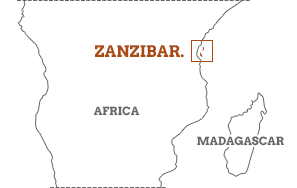
This hot, heady island is African, Omani-Arabian and Indian all at once; a unique Swahili cultural soup seasoned by the spice trade, but haunted by a prolific slaving past.
Swahili fishing dhows ply the perfect coastline, the intricately carved doorways of UNESCO-listed Stone Town hide crumbling opulent courtyards – relics of the town’s spice trading heyday – while tiny, family run plantations still grow fragrant vanilla, pepper, cinnamon, nutmeg and cloves. And don’t miss a walk through tangled Jozani Forest, home to endangered, endemic red colobus monkeys.

Go to Zanzibar if...

You want to dive. Or snorkel. Zanzibar’s near pristine reefs coupled with its exceptionally clear, bath-like Indian Ocean waters add up to some of the best diving and snorkelling on the planet. Chumbe Island is particularly good for snorkelling, while whale sharks can be spotted around the Mnemba Reef September to December, too. You’ve spent a week on safari. Let’s be honest, safaris are exhilarating and awe-inspiring, but with early morning game drives over bone-shaking terrain, rarely wholly relaxing. A few days on Zanzibar’s powdery sand is the perfect antidote for bumped bottoms and safari excitement, with light aircraft plying regular routes from the Serengeti, Selous and Arusha in Tanzania, Nairobi in Kenya, and more. Or take the ferry from Dar Es Salaam. You’re a foodie. Zanzibar’s aromatic mix of Swahili, Arab, Indian, Persian and European influences gives this island one of East Africa’s tastiest food cultures. Don’t miss the evening street barbecues at Forodhani Gardens in Stone Town, where freshly caught fish is grilled to perfection, or local delicacies like pweza wa nazi (octopus curry), mandazi (cardamom spiced Swahili doughnuts) or Middle Eastern-meets-Indian-style mishkaki , marinated meat kebabs.

Our top trip

Luxury Masai Mara Safari & Zanzibar Honeymoon

Luxury Masai Mara Safari & Zanzibar Honeymoon

Luxury safari and beach trip that your honeymoon deserves.

From £6689 14 days ex flights
Tailor made:
This trip can be tailor made throughout the year to suit your requirements

Contact Us

Responsible Travel, Travel Team

Call us for a chat about our holidays. We are happy to discuss your holiday and help in any way we can. No bots, queues or awful hold music.

Responsible Travel, Travel Team

Don’t  go to Zanzibar if...

You want an all-inclusive escape. Zanzibar was once the wealthy enclave of Omani-Arab traders, but today, many Zanzibaris, particularly those in rural areas and in Pemba, live in poverty. All-inclusive resorts abound, but holidays to them generally create limited local economic benefits for local people, and incur a large environmental footprint. Zanzibar’s economy is highly dependent on tourism, and you can spread the benefits of visiting by eating in local restaurants and supporting local tourism businesses during your stay. You expect to live in your bikini or boardies. These are profoundly Muslim islands. While swimwear won’t be out of place on the sand, in the villages, in Stone Town and anywhere outside your resort you will need to dress respectfully. That means no shoulders or knees on show for women, and tops and long trousers for men. You’re not interested in Zanzibar’s history. The slave trade, which saw a million African lives bartered for in Stone Town in the 19th Century, has shaped modern Zanzibar. As has the spice trade which, although in decline, is still one of Zanzibar’s industries. Tour the spice plantations, visit the former slave market in Stone Town and add some context to your beach time.
Written by Sarah Faith
Photo credits: [Page banner: Georgie Pauwels] [Go if: imke.sta]