Guinea-Bissau travel guide
Tiny Guinea-Bissau, sandwiched between its beefier West African neighbours Senegal and Guinea, is overlooked, little known or at best, prone to mixed press. It’s true that political instability and violence have dogged the country on and off since it gained independence from Portugal in 1974, although currently it’s peaceful. Nevertheless, this tiny country is creeping onto travel itineraries and handsomely repays the intrepid visitor with vibrant traditions that rival any of its larger neighbours, interesting wildlife and a lively capital whose residents love to party.
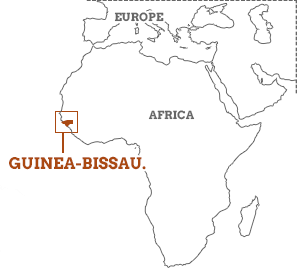

The official language of Guinea-Bissau is Portuguese, just one of the ways this country is unique – a linguistic island within mostly French and English speaking West Africa.![]()

The country’s gorgeous coast is the focus of most tours, and the jewel in Guinea-Bissau’s crown is the Bijagos Archipelago – 80 odd islands where sacred rites and saltwater hippos are among the unusual highlights. Find out more about Bijagos and the country’s other highlights in our Guinea-Bissau travel guide.

Guinea-Bissau is…
An unsung hero of West Africa, with fascinating wildlife, natural beauty and many different ethnic groups and traditions.
Guinea-Bissau isn’t…
Guinea, a much larger country bordering Guinea-Bissau to the south, or Equatorial Guinea, which lies just above the equator.
Things to do in Guinea Bissau…

Guinea Bissau tours
Discover one of Africa's least visited nations
From
£3295 to £3625
8 days
ex flights

West Africa Explorer, Guinea Bissau & Senegal
Historic towns, vibrant tribal culture & the Bijagos Islands
From
£4049 to £4249
14 days
ex flights

Senegal & Guinea Bissau cultural holiday
Discover Senegal and Guinea Bissau on this 14 day group tour
From
£4615 to £4835
14 days
ex flights

West Africa tour, Bissau to Cotonou
Voodoo heartlands, traditional storytellers and lush islands
From
£9899 to £10599
4 weeks
ex flights

West Africa 8 week expedition, Morocco to Benin
An Epic 56 day Sahara to Atlantic Journey Across West Africa
From
£17259 to £18155
8 weeks
ex flights

Western Sahara overland tour, Marrakech to Bissau
Travel from North Africa through the Sahara to the tropics
From
£9799 to £10299
4 weeks
ex flights


Contact Us

Call us for a chat about our holidays. We are happy to discuss your holiday and help in any way we can. No bots, queues or awful hold music.

01273 823 700
Call us until 6pm
Calling from outside the UK


Things not to do in Guinea-Bissau…
More Guinea-Bissau articles

November to April is the best time to visit Guinea-Bissau, outside of the rainy season.

A scattering of over 80 beautiful and fascinating islands off the coast of Guinea-Bissau...


.jpg)
