Ivory Coast travel guide
With reports of coups, civil wars and long term instability, travellers have long bypassed Ivory Coast; but the good news is that the country has emerged from its painful past and intrepid souls are once again discovering its charms. And the country is charming indeed: there are pristine tropical beaches backed by crumbling colonial relics; cool highlands home to waterfalls and untrammelled walking trails; and deep, dark forests where monkeys chatter and mysterious woven bridges appear overnight.
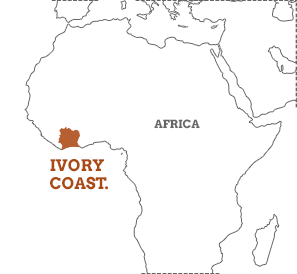

A visit to Ivory Coast is a breath of fresh air; you'll seldom encounter other foreign travellers and its tropical beaches and national parks are unspoilt by overdevelopment.![]()

It is the culture that will really knock you off your feet, though. French-speaking Ivory Coast – Côte d'Ivoire – is a nation of artists and throughout the country talented craftspeople perfect their wares using methods unchanged for centuries, and villagers from different ethnic groups perform vibrant dances, not only to celebrate but also to mourn. In the high flying metropolis of Abidjan, meanwhile, the air throngs with reggae, jazz, Afrobeat and innovative coupé-decalé, a style and music movement that evolved during the long civil war.

Ivory Coast is...
a cultural journey; full of dance, art, food and community interaction.
Ivory Coast isn’t...
a war zone. No longer unstable, the country is ripe for adventurous visitors.
Things to do in Ivory Coast…

The Ivory Coast holiday
Explore the rainforest and culture of Ivory Coast
From
£2249 to £2745
13 days
ex flights

Ivory Coast small group tour
Explore the little known but welcoming Ivory Coast
From
£3795
13 days
ex flights

Ivory Coast discovery tour
Join this escorted tour through Cote d'Ivoire (Ivory Coast)
From
£3545
13 days
ex flights

Ivory Coast tour, culture & history
Discover Côte d’Ivoire, coastal jewel of West Africa
From
US $4115
8 days
ex flights

Ivory Coast cultural tour
Discover magic, traditional authentic dances & rituals
From
€2917
11 days
ex flights

Ivory Coast holiday, ancient Gods of West Africa
Traditional tribal cultures and fading colonial towns
From
£3699 to £3899
11 days
ex flights


Contact Us
Call us for a chat about our holidays. We are happy to discuss your holiday and help in any way we can. No bots, queues or awful hold music.

01273 823 700
Call us until 6pm
Calling from outside the UK


Things not to do in Ivory Coast…

More Ivory Coast articles

The proximity to the equator means it’s always tropical here, so the best time to go to Ivory Coast depends on whether you like it hot and dry or hot and rainy; though the former is infinitely better when it comes to sightseeing. With such rich and diverse cultures, trying to fit in a festival is definitely worth doing as well. Read more details below, including Ivory Coast travel tips from our West Africa experts.


