Mali travel guide

A country steeped in legend, music and incredible natural beauty, Mali is one of the most rewarding destinations in West Africa. Its lifeblood is the Niger River, which bends and twists from the dramatic escarpments and cliffside villages of Dogon Country, through dynamic capital city Bamako, and on to the parched Sahara Desert in the north, passing ancient Sahelian trading kingdoms and the fabled town of Timbuktu along the way.
Mali is West Africa’s beating heart; a country as rich in history as it is blessed with jaw-dropping landscapes and diverse cultures.
Perhaps nothing better symbolises Mali than the Grand Mosque of Djenne, which must mended after every rainy season by the town's inhabitants: it's a fascinating destination, but one that has seen its fair share of hardship. Once the jewel in the crown of West African tourism, Mali’s landscapes, monuments and stories have been off limits to tourists for several years thanks to political instability, Tuareg rebellion, and the increasing influence of Islamic militants. Few intrepid travellers venture to this fascinating place.
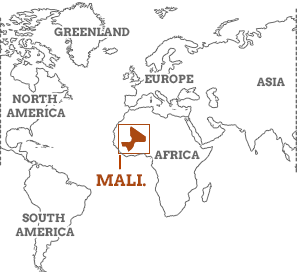
Mali is...

an incredible cultural experience, with a music scene that’s one of the best on the continent.

Mali isn’t...

off limits, but you should always refer to the latest FCO travel advice before considering a visit.

Things to do in Mali…

Get your groove on. A visit to Mali is almost as much about the soundtrack as the sights. Malian musicians such as Ali Farka Touré, Salif Keita, Toumani Diabaté and Tuareg supergroup Tinariwen have achieved worldwide fame, but their counterparts have played a central role as story tellers and praise singers for hundreds of years. Bamako’s music scene rocks with some of the country’s best-loved acts playing the clubs on a regular basis. Sadly, the fabled Festival au Désert has been in exile for years due to security concerns, but the equally exciting Festival of the Niger takes place in Ségou each February. Learn about ancient civilizations. Mali was home to some of Africa’s greatest empires and played an important role in the trans-Saharan gold trade. These great civilisations left in their wake a host of beguiling attractions, including the legendary city of Timbuktu and the traditional hilltop houses and glorious Sudanese-style mudbrick mosque at Djenné. Take to the trails. Hiking may not immediately come to mind when you think of Mali, but in Dogon Country it’s one of the best ways to get to know the people and the landscape. Walking along sandstone cliffs and weaving through local villages to see ancient dwellings and meet the people of the Dogon tribe is one of Mali’s most memorable experiences.

Contact Us

Responsible Travel, Travel Team

Call us for a chat about our holidays. We are happy to discuss your holiday and help in any way we can. No bots, queues or awful hold music.

Responsible Travel, Travel Team

Things not to do in Mali

Mali has yet to experience mainstream tourism. That’s part of its appeal, so you shouldn’t forget your spirit of adventure on a trip here. Road conditions and infrastructure can be poor, there are long distances between attractions, and hotels – especially outside of Bamako – tend to be basic. However, accommodation will be clean and comfortable and a valuable part of the cultural experience. When visiting Mali, don’t miss out meeting local people. Several different ethnic groups call Mali their home, and you’re likely to meet the Fulani, Songhai and Bozo people. In Ségou, you can take a pinasse out on the Niger to discover riverside communities, and in mysterious Dogon Country you’ll get fantastic insight into the long held traditions of the Dogon, who, unlike the rest of predominantly Muslim Mali, are animists with a strong attachment to ritual and ceremony. Mali is a tough place to travel thanks to poor infrastructure and limited public transport, not to mention an ever changing security situation. For this reason, we don’t recommend that you travel independently. If you join a small group tour you’ll travel in a private vehicle and enjoy the services of tour leader and an expert local guide, reducing the chances of anything going wrong and ensuring that if it does, help is close at hand.
Written by Nana Luckham
Photo credits: [Page banner: stormarn] [Is/isn't: sébastien amiet;l] [Things to do/not do: dan lundmark]