Mozambique travel guide
This former Portuguese colony, where the national language is still Portuguese, retains similarities to its former rulers. Not culturally, but in terms of tourism, hiding its glories under a bushel and being upstaged by its neighbours, South Africa, Zambia and Tanzania. Just as anyone who has explored the coast of Portugal and wondered why Spain gets all the brouhaha, Mozambique has some of the most stunning sandy beaches, surf and scuba diving, along its 2,300km of coastline, with the Lebombo Mountains separating sea from savannah.
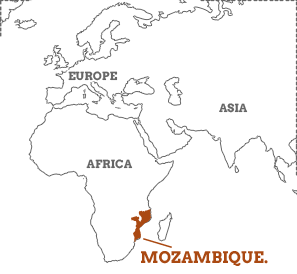

I like to spend some time in Mozambique. The sunny sky is aqua blue. And all the couples dancing cheek to cheek. It's very nice to stay a week or two. And fall in love just me and you.![]()

– Bob Dylan, from his song ‘Mozambique’
Two other great divides are the Zambezi and Limpopo Rivers, each creating meandering magnificence en route to the coast. One thing the Portuguese could neither emulate nor exploit, however, is Mozambique’s archipelagos. With an eclectic mix of posh privacy to camping cool, Bazaruto Archipelago in the south is simply to dive for, and Quirimbas in the north is for kayakers and sailors, a place to paddle and pootle in paradise. Read on in our Mozambique travel guide.
See our Mozambique travel guide for more details.
See our Mozambique travel guide for more details.

Mozambique is…
only just starting to reveal its natural greatness, and with over 2,300km of crystalline coast is a pretty good starter.
Mozambique isn’t…
somewhere to go for the Big Five. Big Five-0 on the beach yes, fecund fauna not so much.
Things to do in Mozambique…

Mozambique marine safari and beach holiday
Whales, dolphins, whale sharks, mantas and more!
From
£3500 to £4500
6 days
ex flights

Mozambique holiday, tailor made
Off the beaten track culture, wildlife and adventure
From
£5465
13 days
ex flights

Southern Africa luxury wildlife & beach holiday
Pristine beaches and rich wildlife on this Southern African tour
From
£9950
15 days
ex flights

Mozambique marine conservation project
Help in integral marine conservation in stunning Mozambique
From
£2199 to £7599
14 days
ex flights

Safari adventure holiday, Zambia, Malawi and Mozambique
An extraordinary camping safari across South Eastern Africa
From
€3150
22 days
ex flights

Mozambique, Zululand & beach small group safari
Relaxing Beach & Bush safari through South Africa Mozambique
From
€2550
14 days
ex flights


Contact Us
Call us for a chat about our holidays. We are happy to discuss your holiday and help in any way we can. No bots, queues or awful hold music.

01273 823 700
Call us until 6pm
Calling from outside the UK

Things not to do in Mozambique...
More Mozambique articles

The best time to visit Mozambique is during the drier months of April to September.

Gorongosa National Park in Mozambique is one of Africa’s greatest conservation stories.


