Everest base camp trek, small group



Description of Everest base camp trek, small group
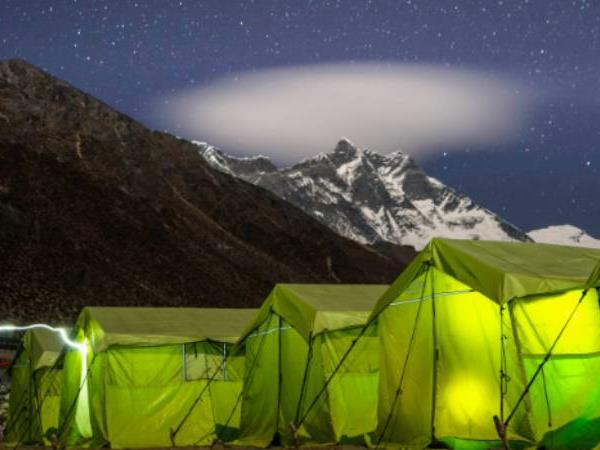
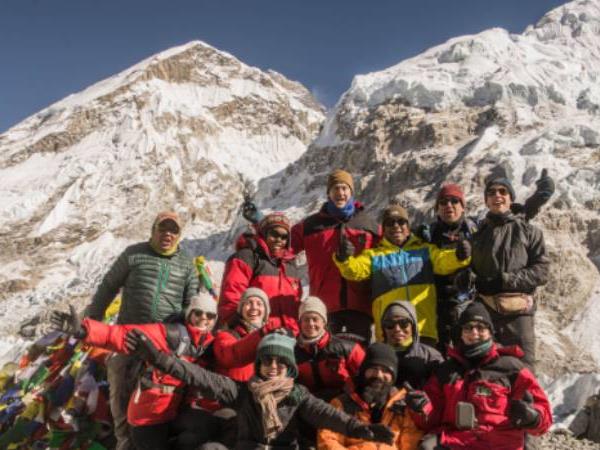
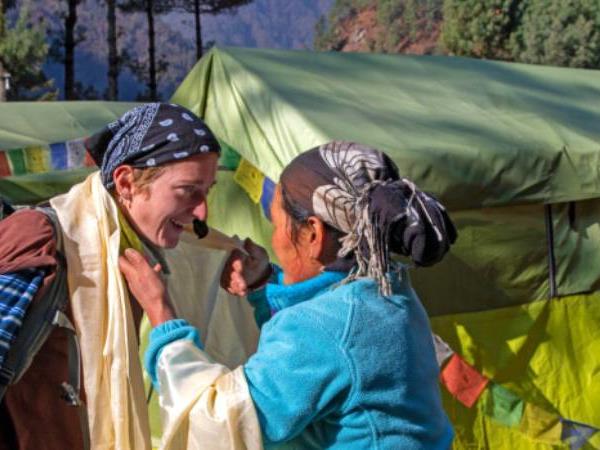
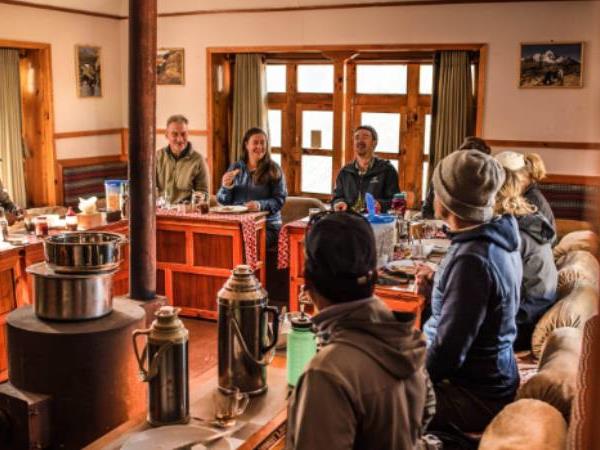
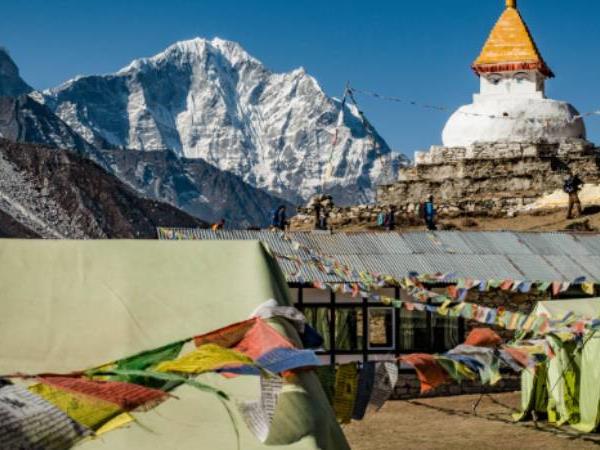
Every ascent of the world’s highest mountain from the Nepal side begins at the South Base Camp. This 17-day trekking experience takes you from the Nepali capital, Kathmandu, to Kala Pattar, the black rocks from where many of the most famous ascent routes are clearly visible. During this unforgettable adventure you’ll be accompanied throughout by a professional team to ensure your safety, and stay in a series of private and comfortable eco camps or guesthouses along the route. You’ll see ancient monasteries, experience Sherpa culture, and learn the many efforts Sir Edmund Hillary and others have made over the years to support this area and make it more accessible.
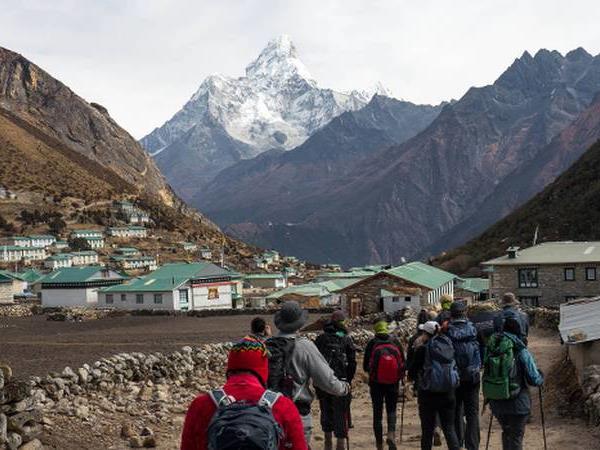
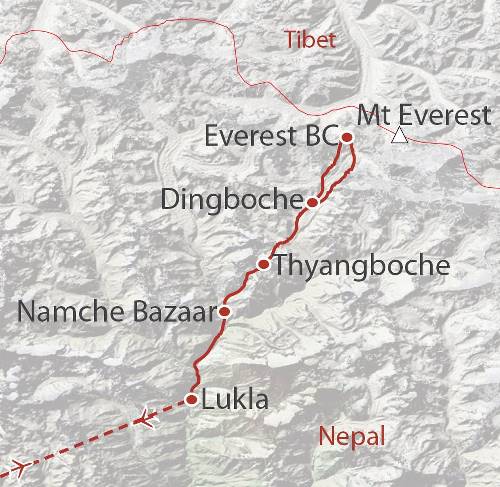
After a day spent getting your bearings around Kathmandu and meeting your crew and fellow walkers, you’ll fly to Lukla, and the airstrip built by Hillary and friends, past the majestic Eastern Himalaya. From Lukla you’ll walk by the river and through thick pine forest over which towering snowcapped peaks gradually begin to appear. Passing Mani walls, you’ll reach the ‘Sherpa capital’ of Namche Bazaar, and your first glimpse of the mighty Mount Everest.
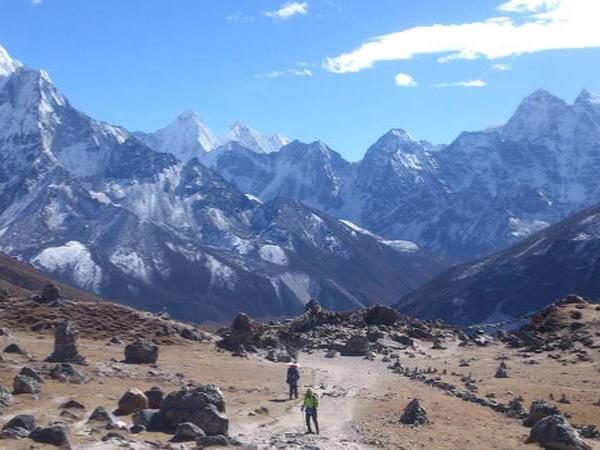
The daily treks will naturally prove challenging, but this itinerary is carefully planned to ensure you have enough time to acclimatise and also appreciate the scenery up here at the roof of the world. As you pass through glacial valleys, grassy meadows and forested ridges full of wildlife (perhaps even a yeti) you are surrounded by spectacular Himalayan peaks including Kantega, Lhotse and Nuptse. Everest itself frequently appears, and only approaching it slowly like this can you truly recognise its scale. Even shrouded in mist, the mountain is an awesome sight.
Map
Price information
Check dates, prices & availability

Travel guides


Reviews
1 Reviews of Everest base camp trek, small group
Reviewed on 10 Dec 2017 by Marie Cook
1. What was the most memorable or exciting part of your holiday?
Getting to Everest Base Camp and travelling with such a wonderful group of people.
2. What tips would you give other travellers booking this holiday?
Be prepared for cold weather at night and don't underestimate the effects of high altitude.
3. Did you feel that your holiday benefited local people, reduced environmental impacts or supported conservation?
Definitely.
4. Finally, how would you rate your holiday overall?
What an amazing experience. We had the best Nepalese guide (Tikendra) and support team. I travelled with an amazing group of people, we supported each other through the hard times and encouraged each other when the going got tough!
Responsible Travel
Planet and people
We stay 8 nights in our permanent exclusive camps and 6 nights in carefully chosen lodges. Why does that make a difference? We want to support the fragile ecosystem of the Himalayas. Many teahouses burn wood to heat their water for cooking and hot showers and we avoid these. This in turn contributes to deforestation, associated erosion and loss of biodiversity. That is why 30 years ago, we pioneered the use of only kerosene above and below the tree-line – to ensure that we are loyal to our policies of making a minimal impact on the environment. Also, we want to stay off the beaten track. We believe that you will get a greater understanding and appreciation of the natural beauty of your surroundings if you are away from the hordes which follow the ‘tea-house trails.’Permanent eco-campsites in the Everest Region:
Ensure the environmental footprint of our permanent campsites is significantly smaller than that of tea house/lodge based treks through close scrutiny of the following components:
Fuel for cooking & heating - all by kerosene & pot belly stoves (fuelled by dried animal dung)
Water usage: all campsites use a rainwater tank
Waste management: all non-biodegradable refuse is carried out & we use composting toilets.
Minimise deforestation to:
Reduce the threat to the biodiversity of the regions flora and fauna.
Reduce the risk of landslips, which can be catastrophic for villages.
Contribute in a positive way to social, cultural and economic aspects of life for the Sherpa people by providing employment and training, purchasing goods locally and interacting with the local people respectfully and with high regard.
To set the benchmark, demonstrating how commercial trekking groups should be operating in this delicate environment.
Our pioneering Porter Policy
Porters are an integral part of your trip, and we have a close association with the IPPG, IMEC and Porters Progress to improve the conditions for porters. As well as paying our guides out of season, and an above-average take-home wage, our porter welfare supplement includes insurance, all meals on trek, appropriate clothing and accommodation for ALL our porters on all our treks. Their safety and comfort is as important to us as our customers.
We have committed US $3000 to sponsor the Porter Rescue Post at Machermo which has been set up by the IPPG. This facility is for the benefit of sick or injured porters in the Everest region and building has already started.
Our Responsible Travel Guidebook
Our philosophy since 1975 has been to leave only footprints and take only photographs. To reiterate this, every customer who travels with us receives a copy of our award-winning Responsible Travel guidebook. This detailed book outlines our environmentally sustainable principles, and outlines how each customer can minimize their impact while travelling.
Global Warming and Carbon Balancing
The root cause of Global Warming is society's dependence on emission creating fossil fuel. Planting trees is not going to reverse this trend or cancel our carbon emissions very quickly or effectively. We believe the way to reduce these dependencies is to create clean energy production. Therefore, we support renewable energy projects like wind and solar power, and we are aligned with Climate Friendly, the gold standard setter in effective, meaningful action addressing climate change. So, while we believe that tree planting can play a small role in greenhouse gas abatement, we have gone the extra mile in promoting a longer term solution. Is this cheap? No. Is it responsible? Absolutely.
By joining this trek you can be assured that you will not be contributing to deforestation or the associated soil erosion and loss of biodiversity but rather you'll be making a significant contribution by supporting our efforts to set the standards for a sustainable trekking service.
Popular similar holidays

Everest Base Camp trek, Nepal
From £814 - £1340 15 days excluding flights
For anyone who has dreamed of seeing Mt Everest

Everest and Gokyo Lakes trek, Nepal
From £1420 - £1570 19 days excluding flights
An alternative trek via Gokyo Lakes

Classic Everest Base Camp trek
From US $1640 12 days including domestic flights only
Visit the Everest Base Camp Trek: A Journey into Oneself