Our Tunisia holidays & tours
For the uninitiated, Tunisia is an amazing surprise. You probably weren’t expecting some of the best Roman ruins in the Mediterranean – but here they are, with very few crowds around them. And you might not have realised how many incredible cities there are here: Tunis, Sfax, Tozeur and Kairouan, to name a few. Add a very long, very sunny coastline and the opportunity to camp in the desert and you have a great holiday destination – and there’s no need to stay in an all-inclusive resort. Our Tunisia holidays are intent on providing an alternative to Tunisia’s enclave tourism: using local guides, drivers and homestays, and visiting with Berber communities.
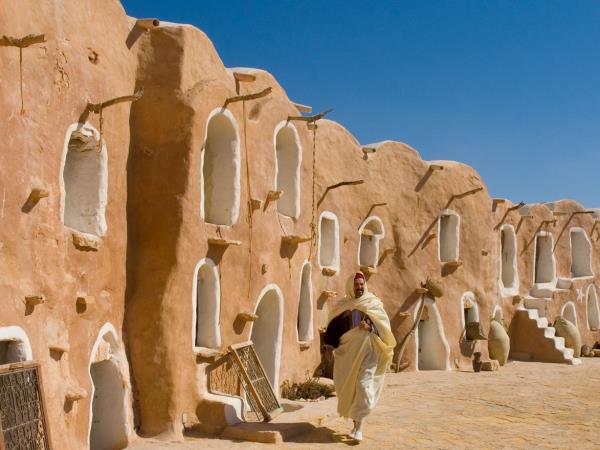
Tunisia tours, off the beaten track
Discover Tunisia's hidden gems on this in depth journey
From
£3349 to £3449
14 days
ex flights
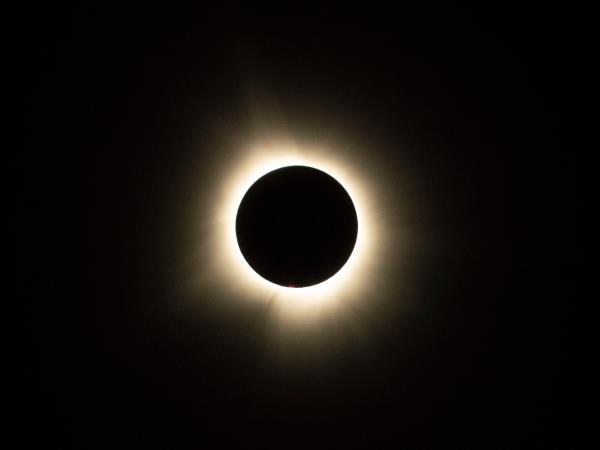
Tunisia solar eclipse 2027 tour
Solar eclipse and Sahara desert adventure
From
£3195
9 days
ex flights
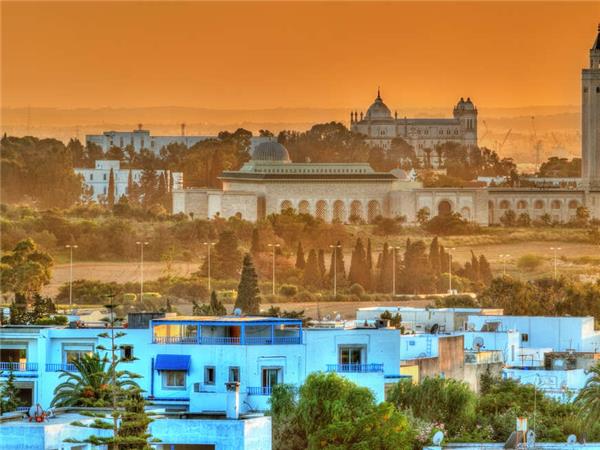
Tunisia small group holiday
Experience the sights and sounds of Tunisia
From
£1895 to £2145
10 days
ex flights
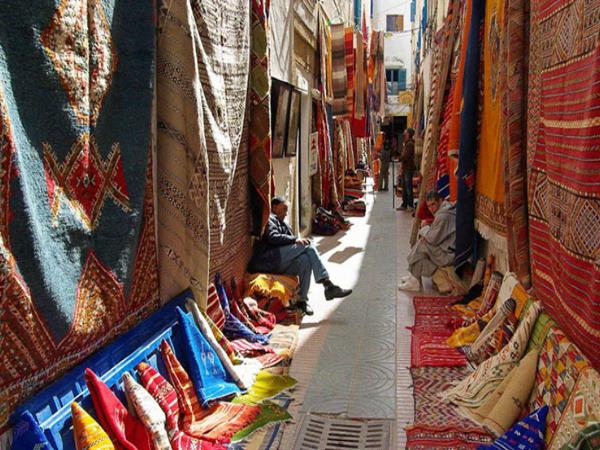
Tunisia tailor made holiday
Classic cultural route from Kasbah to the Sahara
From
US $3580 to US $4180
10 days
ex flights
Tunisia history tour, tailor made
Discover Tunisia's fascinating history & natural sites
From
US $2650 to US $3150
8 days
ex flights
Tunisia summer small group tour
9-day grand tour of Tunisia in summertime
From
£2199
9 days
ex flights


Contact Us
Call us for a chat about our holidays. We are happy to discuss your holiday and help in any way we can. No bots, queues or awful hold music.

01273 823 700
Call us until 6pm
Calling from outside the UK

Tunisia holiday highlights
Visitors who come to Tunisia and sit on a beach are facing the wrong way. The Mediterranean Sea is distracting them from the country’s real treasures – what’s happening inland.
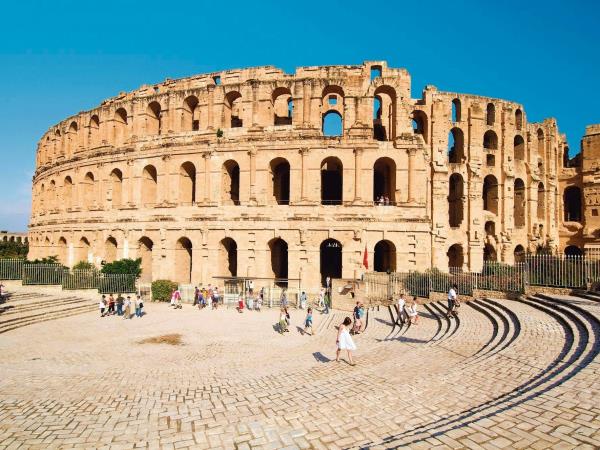
At El Jem, a small town in Tunisia, visitors can see one of the largest Roman amphitheatres in the world. Built around 238 AD, it’s designed to hold 35,000 people and still standing. But how many people are here, looking around it today? A thousandth of that. That’s Tunisia all over: taking visitors by surprise, so long as they get up off the beach – which few still do.
The country is small and easy to get around, with landscapes that range from the surprisingly familiar to – in the case of the Star Wars sets that have been left in situ in the desert – the distinctly alien. Drive three hours from Tunis, to the country’s mountainous north-west, and you’ll find red deer grazing in oak forests. If you were to drive for two hours south from the capital instead, you’d be on the country’s rolling plains, at two very different UNESCO World Heritage Sites. There’s Kairouan, a historic Islamic centre of learning, and El Jem, site of that miraculously well-preserved Roman amphitheatre.
At El Jem, a small town in Tunisia, visitors can see one of the largest Roman amphitheatres in the world. Built around 238 AD, it’s designed to hold 35,000 people and still standing. But how many people are here, looking around it today? A thousandth of that. That’s Tunisia all over: taking visitors by surprise, so long as they get up off the beach – which few still do.
The country is small and easy to get around, with landscapes that range from the surprisingly familiar to – in the case of the Star Wars sets that have been left in situ in the desert – the distinctly alien. Drive three hours from Tunis, to the country’s mountainous north-west, and you’ll find red deer grazing in oak forests. If you were to drive for two hours south from the capital instead, you’d be on the country’s rolling plains, at two very different UNESCO World Heritage Sites. There’s Kairouan, a historic Islamic centre of learning, and El Jem, site of that miraculously well-preserved Roman amphitheatre.

Those idiosyncratic Berber buildings you come across in the desert? They’re ghorfas, stacked rooms used for grain storage
Drive for four hours further south from here, and you’re not in Tunisia anymore: you’re on Tataouine, a destination George Lucas clearly thought was out of this world when he decided to use it as the location for scenes from Star Wars: A New Hope. He filmed here in the 1970s, leaving intact props and sets that can still be visited today. You’re also getting into the Sahara, and it shows in the rocky, sandy hills with scattered Berber villages.
From here, most tours head back up the country – perhaps along the coast to the city of Sfax or to Djerba Island for a few days of relaxation. With sites so close together, the question really should be, why wouldn’t you tour? Road travel is easy, distances are short, and you can go off the beaten track quite quickly, with little effort, cost or time.
Most people do not tour inland. Some 80 percent of all urban areas in Tunisia are coastal, and its where 90 percent of employment opportunities lie. Tunisia’s north-east coastline is awash with beach resorts; it’s oft-touted as a good-value all-inclusive destination, but local people see little benefit from these foreign-owned resorts, and struggle with polluted coastlines. Spending some time inland encourages investment in under-visited inland sites.
The most striking difference between El Jem’s Roman amphitheatre and Rome’s Colosseum, which is of a comparable size, is the stark difference in the number of visitors. The Colosseum gets six million annually – that’s two thirds of Tunisia’s total tourists.
From here, most tours head back up the country – perhaps along the coast to the city of Sfax or to Djerba Island for a few days of relaxation. With sites so close together, the question really should be, why wouldn’t you tour? Road travel is easy, distances are short, and you can go off the beaten track quite quickly, with little effort, cost or time.
Most people do not tour inland. Some 80 percent of all urban areas in Tunisia are coastal, and its where 90 percent of employment opportunities lie. Tunisia’s north-east coastline is awash with beach resorts; it’s oft-touted as a good-value all-inclusive destination, but local people see little benefit from these foreign-owned resorts, and struggle with polluted coastlines. Spending some time inland encourages investment in under-visited inland sites.
The most striking difference between El Jem’s Roman amphitheatre and Rome’s Colosseum, which is of a comparable size, is the stark difference in the number of visitors. The Colosseum gets six million annually – that’s two thirds of Tunisia’s total tourists.
Tunis
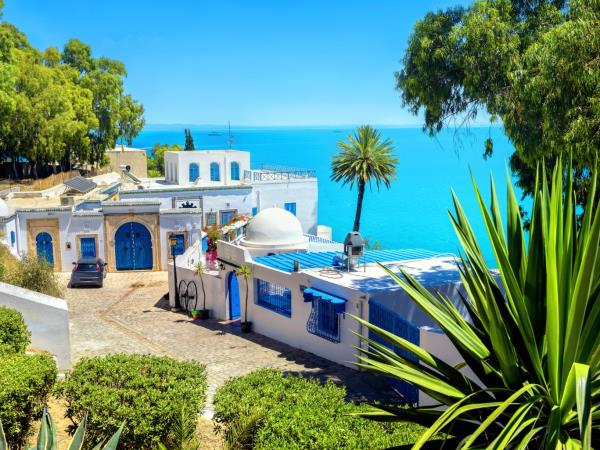
Most tours of Tunisia start and finish in its beachside capital, where you’ll find a historic medina, and cafés with breezy rooftop terraces. Tunis is now so large that the nearby archaeological site of Carthage is within the suburbs of the city. Sidi Bou Said, a nearby fishing town with distinctive blue and white buildings, is a popular trip out for photographers looking to capture typical Tunisian architecture.
Jebil National Park
Jebil National Park is an essential stop for wildlife watchers. There have been several rewilding programmes here, so you can see addax (desert-adapted antelope) – very near extinct in the wild – which have been reintroduced. Night-time safari drives can, with the help of a spotlight, reveal glimpses of elusive desert species, including, for the very lucky, fennec foxes.
Dougga
Dougga, a small town two hours’ drive south-west of Tunis, is dominated by the ruins of a complete Roman city – most impressive are the ancient theatre and a clutch of temples with columns still intact. Like many Roman ruins in North Africa, they are very well preserved, yet far less visited than corresponding sites in Europe.
Djerba Island
Of course, it would be churlish to forgo the beach completely on your Tunisia tour. Djerba, accessible by causeway from the mainland, is a palm-fringed island which sticks very closely to a blue and white colour scheme – white-sand beaches and blue sea are matched in town by distinctive whitewashed buildings with blue shuttered windows. The odd brightly woven carpet, hanging out for a beating, breaks up the palette.
Tozeur
Tozeur is known as the gateway to the Sahara, but its palmerie – a plantation that’s hundreds of thousands of date palms strong – leaves an impression of lushness, not aridity. Near the city is Chott el Djerid, a massive salt lake that’s a popular part of a road trip. For most of the year, the lake is a massive, shimmering salt pan. It’s an important area for birds, including flamingos.
El Jem
The whole population of the town of El Jem could comfortably sit in its massive Roman amphitheatre, which once held tens of thousands of baying Romans. People tend to stop here to see the ruins, undoubtably one of the most impressive Roman sites in North Africa, on the way to or from nearby Kairouan.
Kairouan
Kairouan, which in the 9th century was hub of Islamic scholarship, remains a holy city for followers of Islam . Visitors who aren’t here on pilgrimage can still admire the stately architecture of the Grand Mosque and go into the medina in search of fine carpets and makroudh (date pastries), a speciality in the city.
Sfax
You can tell you’re on the coast by Sfax’s atmospheric fish market, situated within the old city. This city’s old town also has a mosque-dominated medina and labyrinthine souks where you can go off in search of beautiful textiles, emerging some hours later with a hand-woven rug.
Sousse
One of Tunisia’s oldest coastal cities; Sousse’s history is seen in its UNESCO-listed medina and archaeological museum. The museum is well-known for its lovely Roman mosaics, and its setting isn’t bad, either; it’s housed in an old Kasbah.
Mountain oases
Midway down the country, near the Algerian border and not far from Tozeur, there are several remarkable mountain oases. Chebika, Tamerza and Mides in the foothills of Djebel el Negueb mountain have splashing waterfalls framed by pretty palms, and make a welcome stop on a traveller’s desert journey.
Tataouine
Famous because you can visit the remnants of Star Wars sets from the planet Tatooine, the town of Tataouine has Berber architecture, including underground cave dwellings to protect its inhabitants from the desert heat. Most tours of Tunisia don’t go much further south than this; from here on, it’s Sahara desert all the way down.
The Sahara
The Sahara encroaches upon the bottom half of Tunisia. Wildlife tours might start looking out for desert animals – gerbils, foxes and possibly rare sandy cats. The further south in Tunisia you travel the sandier it gets, until you find yourself on the Great Eastern Erg – a field of sand dunes. Tours don’t tend to go this far south – travel advice advises against travelling in the region close to Libya.
Practicalities
What are Tunisia tours like?
Our Tunisia tours use a minibus or car and driver to take you around the sites. Journey times are relatively short and you can fit in a great variety – from beaches to desert, to cities and towns – in a short ten day or two-week tour. Tours will give you a sense of how the culture of Tunisia changes across the country, but what tends to prevail is hospitality and tolerance. Our partners at the destination note that guests often notice the openness of the people and how relaxed the country feels. It can feel like a more liberal space than its neighbours; Tunisians are used to seeing people from other cultures in a way that parts of Algeria and Morocco are not.
Tolerance does not extend to everyone; LGBT rights in Tunisia lag far behind the rest of the world. Visitors may note that rural areas likely to be more conservative in values and dress than the cities. With their focus on meeting local people, our tours will have you visiting guest houses serving farm-to-table delicacies, and family run restaurants. Tunisian food is celebrated. Delicious harissa is a menu staple, as is lablabi – a warming chickpea soup. The country is also a major exporter of olive oil, and there small-batch olive oil producers to meet around the nation.
Tolerance does not extend to everyone; LGBT rights in Tunisia lag far behind the rest of the world. Visitors may note that rural areas likely to be more conservative in values and dress than the cities. With their focus on meeting local people, our tours will have you visiting guest houses serving farm-to-table delicacies, and family run restaurants. Tunisian food is celebrated. Delicious harissa is a menu staple, as is lablabi – a warming chickpea soup. The country is also a major exporter of olive oil, and there small-batch olive oil producers to meet around the nation.
When is the best time to tour Tunisia?
The best time to tour Tunisia is outside of summer, as otherwise the desert is far too hot. April to May and October to November are the most popular times to travel, and this is when many small group tours depart.
January and February are the true off-season in Tunisia, meaning that the country is at its quietest. Tailor made tours still embark in winter, and it’s becoming an increasingly popular time of year to visit.
January and February are the true off-season in Tunisia, meaning that the country is at its quietest. Tailor made tours still embark in winter, and it’s becoming an increasingly popular time of year to visit.
Small group tour or tailor made trip?
You can travel in a small group in Tunisia, or choose a tailor made holiday. Both kinds of holiday tend to make use of local drivers and guides. Whilst public transport is an option in Tunisia, the best way to see the sights, with the least fuss, is with a driver. This way, you can get to remote areas that might not be on the bus route.
Some tours of Tunisia include internal flights to take visitors back to Tunis quickly from the south of the country. For those interested in reducing their flights, there are tours that do not do this, and instead do a driving circuit.
However you tour, from the red stags in the north to the reddening desert in the south, you'll find Tunisia is an intriguing country from top to bottom.
Some tours of Tunisia include internal flights to take visitors back to Tunis quickly from the south of the country. For those interested in reducing their flights, there are tours that do not do this, and instead do a driving circuit.
However you tour, from the red stags in the north to the reddening desert in the south, you'll find Tunisia is an intriguing country from top to bottom.
Our Tunisia holidays reviews
4.5
2Tunisia holidays reviews
Kim Chai03 Jun 2025
Gosh, so many over 2 weeks ... in no particular order: Tunisia's multi-layered Amazigh-Punic-Roman-Byzantine-Ottoman-French history, the otherworldly Amazigh/Berber ksours (no wonder they were used as Star Wars locations), wandering the atmospheric medinas, Kairouan, Zaghouan & Sidi Bou Said's photogenic blue & white architecture, El Jem coliseum, El Ghriba synagogue, vastness of Sahara & Chott El Jerid, learning about date palms and ingenious irrigation system in Tozeur & oases, olive plantations...read more
Glenn Harvey26 Feb 2025
Sleeping out in the Sahara was the highlight.read more